Showing posts with label TAB. Show all posts

Friday, 31 March 2017


The Interpretation of Dreams: 
A Freudian reading of The Abominable Bride (Part 1) 
 (Sherlock meta by notagarroter)


In The Abominable Bride, Sherlock makes reference to “an Viennese alienist”. "Alienist“ is an archaic word for a doctor who treats the insane, or what we would now call a psychiatrist, which makes this a clear reference to the father of modern psychology, Sigmund Freud, who was busy developing his psychoanalytic practice and theories in the 1890s in Austria. In this scene, Sherlock is complaining about John asking questions that are inappropriate from anyone but one’s psychoanalyst. But is there another reason Sherlock might have Freud on the brain?

Possibly it’s because Freud was notoriously experimenting with cocaine at almost exactly the same time the original Sherlock Holmes was concocting his 7% solution.


Or perhaps because most of The Abominable Bride is an elaborate, extended dream sequence, and one of Freud’s most significant works from this era is called The Interpretation of Dreams.

For Freud, dream interpretation is a way of accessing the unconscious mind. What does Freud mean by the unconscious? According to the theory, the unconscious is a part of the mind kept hidden from us under most circumstances. Freud believed that humans are excellent secret-keepers, and there is no one we are more inclined to deceive than ourselves. The unconscious mind holds all of our darkest desires, fears, and obsessions. It affects our daily lives and the choices we make, and yet we only get occasional glimpses of its workings.

Freud argues that dream analysis is one method of uncovering the secrets of the unconscious. Would Sherlock Holmes agree? It’s tempting to assume that Sherlock would dismiss Freud’s ideas as a lot of untestable, pseudo-scientifc blather (plenty of real humans have!). The Abominable Bride, however, gives us some indications that Sherlock is at least willing to play with Freud’s approach.

Freud’s interest in dreams comes from the idea that in sleep, the mind lets down some of its carefully constructed defenses, and allows usually hidden material to rise to the surface (if only in weirdly altered forms). If we believe Sherlock’s claim that he deliberately self-administered a cocktail of drugs in order to unearth clues and make connections about Moriarty’s death, well… that sounds like a pretty similar approach.

That Sherlock should be interested in navigating the unconscious is itself a bit surprising. In Freud’s understanding, the unconscious mind is totally amoral, irrational, chaotic, and pleasure-focused – in other words, everything Sherlock Holmes consciously abhors. Nevertheless, Sherlock appears to recognize that the key to Moriarty’s return is already contained in his own mind, though inaccessible by normal means. This is what Mycroft means when he says "The Mind Palace is a memory technique.” 
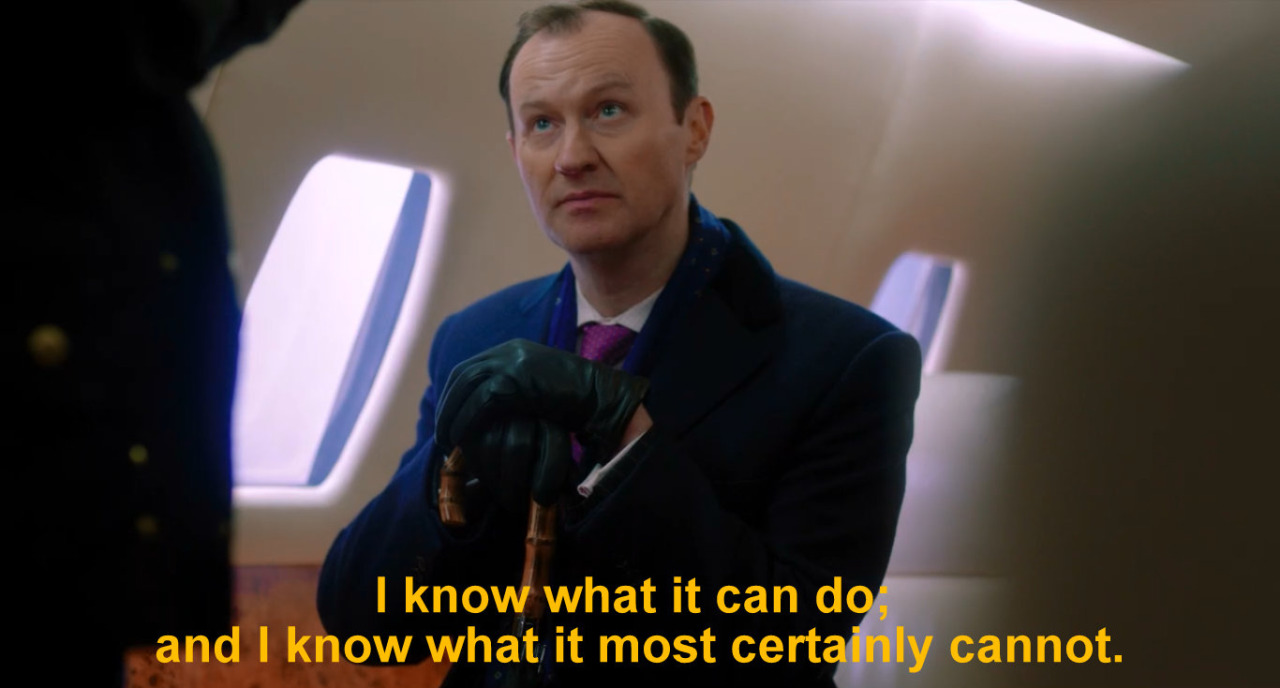

The mind palace is a mnemonic device for accessing memories using the conscious mind. What Sherlock is doing in The Abominable Bride – digging deep into unconscious mind for repressed thoughts and memories – is very different.

In order to understand what Sherlock uncovers in The Abominable Bride, it’s helpful to know a bit about how Freud approaches dream interpretation. For Freud, dreams are incredibly personal and dream imagery is built out of the objects and experiences specific to the patient. There may be symbolic resonances, but they can’t be universalized. It is NOT about simple, generic symbolic readings, i.e. “if you dream about fish that means good luck.” Similarly, he avoids trying to read the whole dream as a coherent narrative and finding meaning in that. It’s more productive to take every object, character, event, and impression in a dream separately than to try to make sense of the whole. This involves talking to a patient and getting to know them well enough to tease out the repressed anxieties and desires that may be represented in altered form in their dream. Since we don’t have Sherlock on the couch in front of us, we can’t exactly pick at his brain to find hidden associations. Instead, we have to rely on what we already know of his character from previous episodes and maybe a dash of ACD canon.

Another caveat: Freud specifically talks about fictional dreams and how little they generally resemble real dreams. Fictional dreams usually contain glaringly obvious symbols because they are the creations of conscious minds, not unconscious, repressed ones. In The Abominable Bride we clearly have a fictional dream constructed by a couple of conscious minds: Sherlock’s dream in The Abominable Bride is WAY more coherent and complete than real dreams normally are. (Necessarily so – if the dream had been as bizarre and incoherent as a real dream, it would have been unwatchable as a story.) So we must be careful of getting carried away with our analysis. That said, the fact that the dream includes a direct reference to Freud suggests that writers were expecting and even encouraging a Freudian-style interpretation of their invented dream. We owe it to them to at least give it a shot! '

In Interpretation of Dreams, Freud puts forward the theory that every dream is the expression of an unconscious wish. This is an extension of his theory of the Pleasure Principle, which states that all human action is governed by the pursuit of pleasure and the avoidance of pain. In dreams, we can do whatever we want, so naturally we would seek out pleasures unavailable to us in waking life. While in some cases (sex dreams, food dreams), the dreamer’s pleasurable wish may be obvious, in the case of anxiety dreams and nightmares, the wish has been disguised because our conscious minds find it shameful for some reason. For example, if you have a test tomorrow, you might dream that a million little obstacles prevent you from getting to the test. People normally interpret this as anxiety about getting to the test on time, but Freud claims this dream is really the expression of your wish not to take the test at all.

So going by this theory, what might be the wish at the heart of The Abominable Bride? The Abominable Bride contains a nightmare scenario where Sherlock fails to prevent the murder of a client’s husband.


Read simply, this could be an expression of Sherlock’s anxiety over failing at his profession. Read as the fulfillment of a wish, however, we might conclude that Sherlock actually wants Sir Eustace eliminated because he has repressed desires for Eustace’s wife, Lady Carmichael. And (Johnlockers, cover your eyes!) there is plenty of support for this reading in the dream: Sherlock directly accuses Sir Eustace of being unworthy of his wife, John later suggests that Sherlock has taken a fancy to her, and Sherlock himself – despite all his denials – admits that she has “admirably high arches”.

But all of this is still surface interpretation and doesn’t get us close to the deeper levels of the dream. According to Freud, when the mind has something it feels guilty or uncomfortable about, it will go to extraordinary lengths to bury the idea and keep this repressed material from becoming conscious.

Freud gives the example of what he calls “kettle logic”. This comes from a story about a man who is accused by his neighbor of having broken a borrowed kettle. The man replies that

1) the kettle isn’t broken
2) it was already broken when he borrowed it
3) he never borrowed the kettle at all.

Any one of these justifications might make sense, but together they become absurd. This is the way logic works in dreams: these kinds of excessive, overlapping, and contradictory rationalizations are a sign that there is a submerged idea or desire that the dreamer isn’t ready to face yet. We see this “kettle logic” at various points in the The Abominable Bride  dream, but most frequently it occurs whenever the subject of Moriarty comes up.


When Sherlock asks himself, “How could he survive?”, Dream!John immediately replies “She, you mean” – a sign that Sherlock’s mind is trying to paper over the momentary inconsistency and distract Sherlock from the buried content of the dream. And again:


The “miss me” note appears out of nowhere on Sir Eustace’s corpse, and its message bears no relevance to the case at hand.

Then in the Diogenes Club, when Sherlock says, “His body was never recovered”, Dream!Mycroft replies, “To be expected when one pushes a maths professor over a waterfall”, even though that’s not relevant to the modern mystery Sherlock’s actually trying to unravel.

But Sherlock’s dream self participates in this misdirection too. Sherlock says, “He’s trying to distract me, to derail me”, presumably from the “real” case of Mrs Ricoletti. But in fact, Ricoletti doesn’t matter at all. The whole Ricoletti case was only ever intended as a tool to get him closer to Moriarty.

Within the dream, the only one who really gets this game of repression and revelation is Moriarty himself. Sherlock tells Moriarty that he chose to come here, and Moriarty replies, “Not true. You know that’s not true”, suggesting that they both know nothing happens in this dream space without Sherlock wishing for it. Then Moriarty proceeds to lecture Sherlock on what we’ve called “kettle logic”. He points out the logical impossibility of him showing up at the scene of Sir Eustace’s murder. He emphasizes all the points that don’t add up, that don’t make sense. He insistently reminds Sherlock that the whole Ricoletti case is little more than a screen over what really draws Sherlock: Moriarty himself.


But why is Moriarty’s appearance in 221b, in the crypt, and at the waterfall a fulfillment of Sherlock’s unconscious wish?

There are a lot of ways we could take this. The most transparent is that Sherlock needs to solve the mystery of Moriarty’s apparent reappearance, and for that, he needs to consult Moriarty. That makes sense, but it’s a little dull, and it’s not clear why Sherlock’s mind would go to such lengths to disguise this motivation.

The most fannishly appealing explanation is that Sherlock wants Moriarty for ~sex stuff~, but can’t admit it. And hey, let’s not pretend there isn’t a TON of evidence for this reading:


Plus, it would be pretty typical of Freud’s patients to be repressing sexual desires with a very inappropriate person: an arch-enemy, say, or better yet, a corpse. So far, still pretty obvious. But what if we went deeper still… Is there anything else?

Oh, yes. Read more in part 2: The Pleasure Principle and the Death Drive.


The Pleasure Principle and the Death Drive: 
A Freudian Reading of The Abominable Bride (part 2) 
 (Sherlock meta by notagarroter)

A continuation of my meta on TAB and The Interpretation of Dreams. 

In my previous meta, I talked about Freud’s theory that every dream is the expression of a wish. If so, what is the unconscious wish hidden in Sherlock’s drug-fueled dream in The Abominable Bride?

Sherlock’s in kind of an unusual situation here, because where most of us dream as an accidental side-effect of sleeping, Sherlock has consciously set out to have this dream to serve a particular purpose. According to Sherlock (when conscious), the purpose of this whole exercise is to figure out whether it’s possible for Moriarty to have survived their encounter on the roof of Barts.


So that’s Sherlock’s conscious wish. But what about his unconscious?

Officially, the question Sherlock is asking in The Abominable Bride is, “How could Moriarty return from the dead?” But underneath that question, I want to suggest a deeper concern of Sherlock’s: “Why did Moriarty kill himself?”

In a way, Sherlock’s world would make more sense if Moriarty did fake his death, just as Sherlock did. We might not know how, but we would certainly understand why. But if Moriarty really and truly did kill himself just to force Sherlock’s hand on that rooftop… the real mystery is, why? What pleasure or satisfaction could Moriarty hope to gain from all his carefully laid plans if he is dead?


As many other meta-writers have eloquently observed, Sherlock has personal reasons to be interested in this question: there have been many indications throughout the show that Sherlock has at times considered suicide.


He might well believe that understanding Moriarty’s motivations could help him better understand his own.

But how could suicide be the fulfillment of an unconscious wish? According to Freud, wishes are supposed to be about pursuing pleasure and avoiding pain, right?

Well, this is where I need to complicate that idea a little. Because it turns out, Freud didn’t stand by the ideas in The Interpretation of Dreams all his life. Interpretation of Dreams was written early in his career. Years later, towards the end, Freud posited the existence of something he referred to as The Death Drive. He invented this idea to account for the fact that, over the course of his career, he ran into a lot of human behaviors that did not seem to fit his model of pleasure-seeking/pain-avoiding. Why, Freud asked, do people sometimes do things that cannot bring them any pleasure, and actually cause them more harm than good?

In his book Beyond the Pleasure Principle, Freud guesses (and believe me, this idea remains plenty controversial) that there might be some other drive competing with the Pleasure Principle, and causing us to seek our own destruction. The reason why this might be and the mechanism for how it might work are pretty flimsy, as even Freud acknowledges. He’s really just putting this forward as a hypothesis for discussion. But whether or not this is a real drive that exists, it may nevertheless be of interest to Sherlock as he contemplates Moriarty’s apparent suicide.

And indeed, the conversation between Sherlock and Dream!Moriarty is haunted throughout by the specter of death.


MORIARTY: That’s all people really are, you know: dust waiting to be distributed. 

This idea actually gets very close to Freud’s theory of the death drive – that people are irresistibly drawn to the state that they are destined to become: ashes to ashes, dust to dust.


The cannibalism angle just adds a disturbing element of pleasure to the idea of destruction. It suggests that death itself serves a pleasurable purpose—that it can feed our secret urges as much as other physical indulgences.


Dream!Moriarty goes even further than Freud, suggesting that death and pleasure might not be opposing drives at all, but inextricably linked. Death is pleasure… and maybe pleasure is itself a kind of death.

Which brings us to another player in Sherlock’s dream who has something to tell him (and us) about the relationship between pleasure and death:


Dream!Mycroft gives us a few more clues to the mystery at the heart of Sherlock’s unconscious. On a simple level, we get John’s admonition that Mycroft’s gluttonous behavior is unhealthy and, pleasurable though it may be, could result in his early death. This falls in neatly with Freud’s early theory of life as a balance between pleasure-seeking and pain-avoidance, and could be construed as merely a warning to avoid pleasurable excess.

But what’s particularly interesting is the way Mycroft doesn’t balk at the threat of death, but embraces it. Like dream!Moriarty, Mycroft isn’t interested in avoiding death or even ignoring it. He is actively courting it.


In fact, one gets the idea that chasing death (i.e., the death drive) may actually be the greater motivator for Mycroft than whatever dubious pleasure he receives from devouring three plum puddings in a sitting.


Some readers have read elements of this scene as foreshadowing Mycroft’s death in some future episode, but it’s important to remember that this Mycroft has very little to do with the actual character. Instead, he has everything to do with Sherlock’s repressed desires, anxieties, and fixations.

Despite Sherlock’s grand plan to use this dream to solve a real life mystery, ultimately a dream can only lead the dreamer back to himself. As Dream!Moriarty insistently reminds Sherlock, there is no new information to be gleaned from a dream:


In other words, a dream can only give very limited information about someone else – a regurgitation of what the dreamer already knows. The real revelations are necessarily going to be about Sherlock himself.

Thus, the Mycroft figure in the dream is really just a tool to allow Sherlock to investigate his own repressed urges without admitting to them. It’s not really about Mycroft’s weight or his pleasure or his health, but about Sherlock’s repressed desires and what might happen if he gave into them.

And what are those desires? Drugs? Food? Sex? Love? I’d argue: yes, all of the above. Dream!Mycroft is the literalization of Sherlock’s fears about what might become of him if he lost control and allowed himself to indulge in any or all of his various urges. Sherlock fears he could become something grotesque – too big, too much.


Perhaps even to the point of death.

Or is that death not merely an unfortunate side effect of indulgence, but what Sherlock ultimately desires most of all? Sherlock, who takes drugs that “usually” aren’t fatal, and who fantasizes about jumping into an open grave?


Sherlock, who ends his dream by throwing himself, alone, off of a waterfall:


A triumphant moment within the context of the show, but surely a somewhat morbid one as well.

Why does he do it? Yes, he says he “always survives a fall". But he is also subtly invoking the common superstition that if you die in a dream, you won’t wake up. This is no idle risk for Sherlock, as we know that in real life, he is actually overdosing on a drug cocktail. There is a very real threat that he won’t survive this “fall”.

We don’t get a really firm answer to this “final” problem – indeed, I doubt one is possible. But there may be a hint in Sherlock’s certainty at the end of The Abominable Bride that Moriarty really is dead. That suggests that Sherlock’s unconscious has convinced him death did have a compelling appeal for Moriarty, against all logic. And if for Moriarty, why not for Sherlock too?

Sunday, 19 March 2017


If Sherlock is in love with Molly (a woman) why did he imagine her dressing up like a man, acting like a man in his mind palace?
   (Sherlock meta by thenerdyfan and waytoomanyhobbies)

thenerdyfan:

Shots fired Sherlollys. Your move.

waytoomanyhobbies:

It’s not a difficult question for Sherlolly in any way, shape, or form. On a functional level it was a way of handling the misogyny of the Victorian Era when a woman wouldn’t have been allowed to become a doctor. And on the thematic and subtextual levels it only strengthens Sherlolly.

Let’s go back to an old Moffat interview with The Guardian from 2012 for a moment [x]
But how did Moffat and Gatiss solve the most vexing mystery, Sherlock’s sex life? “There’s no indication in the original stories that he was asexual or gay. He actually says he declines the attention of women because he doesn’t want the distraction. What does that tell you about him? Straightforward deduction. He wouldn’t be living with a man if he thought men were interesting.” 
Moffat is not saying that Sherlock, like Austin Powers, misplaced his mojo. “It’s the choice of a monk, not the choice of an asexual. If he was asexual, there would be no tension in that, no fun in that – it’s someone who abstains who’s interesting. There’s no guarantee that he’ll stay that way in the end – maybe he marries Mrs Hudson. I don’t know!” 
I included the entire section pertinent to our discussion, but I bolded his main points. Between the two paragraphs Moffat confirms that Sherlock only lives with John because Sherlock is not attracted to men and it will therefore pose no distraction for Sherlock, who is trying to avoid romantic entanglements as a conscious choice in his life. Other folks interpret Sherlock differently, and that’s great. Putting aside Moffat’s apparently limited understanding of asexuality, I do see Sherlock in this series as Moffat described him here.

That immediately explains why Sherlock starts out TAB by picturing Molly as a man… he is trying to suppress his attraction to her. This fits the type of tension that Moffat describes as interesting, Sherlock’s temptation and struggles to fight against his inherent desires. Molly is so threatening to Sherlock’s celibacy that he needs to mentally deny her womanhood and imagine her in a less threatening form.

Despite Sherlock’s attempts at burying this attraction, he is very much succumbing to it. That’s why John, the more socially perceptive side of Sherlock, immediately recognizes that Molly is a woman. (You can also see parallels to the A Scandal in Belgravia Christmas scene where Sherlock is the only one unaware of Molly’s romantic attachment to him.)

Sherlock himself can’t keep running from it, and his realization of Molly’s true sex (her sexual nature and identity) is tied to the denouement of the mystery. Part of this whole mental journey is Sherlock allowing himself to see Molly’s in this new light. “This is a war we must lose." Sherlock has been at war with himself about how he sees and treats the women around him, and Molly is important in this war he must lose.

Molly has a very special role in TAB. She is a woman he desires to do better by–hence his fixation on Molly’s anger towards his drug relapse carrying over into the Hooper persona as a result of his guilt. A woman both demanding and deserving of his respect and his attention. A powerful and intelligent woman whom he envisions in a key role amongst the avenging brides in this power struggle between men and women.

It’s an internalization of the sexual power dynamics at play. Molly is the woman who saved Sherlock’s life from Moriarty, inextricably linked with those events in his mind… and while mentally reexamining these cases, he’s also confronting his growing and changing feelings for her from accepting her as a skilled colleague to acknowledging her as a desirable woman.


And for the record, it’s not shots fired when you’re inviting us to explain a subject that we love to discuss and have discussed at some length multiple times in our tags. *shrug*

Monday, 6 March 2017


Here’s a thought (about Molly)
 (Sherlock meta by creamocrop)

Sherlock Holmes imagined Molly Hooper as a progressive Victorian woman who risked her reputation and life just so she can study and practice pathology (her obvious passion), and fight for a cause that she believes in.

High-as-a-kite Sherlock Holmes, subconsciously think and (therefore) imagined that Molly has the courage and determination to pursue being a pathologist in a time when women were confined to minimal social roles.


His subconscious revealed that he believed that if Molly was born during the Victorian era, she would fight for her dream, such that she would actually take the dangerous route of pretending to be a male, just so she can pursue and practice her dream.

He believed that Molly has what it takes to get what she wants.


Sherlock sees Molly as a strong, independent woman.

If high-as-a-kite Sherlock Holmes can see this, why are there people who still look at Molly as a weak character?


This is also the same woman, who in the midst of tremendous emotional distress, showed a rebellious streak by making Sherlock Holmes (the same stubborn man who walked into Buckingham Palace wrapped in a sheet) say. it. first. 


 And while we are on that topic, the same Oh-look-at-me-sitting-inside-Buckingham-Palace-with-just-a-sheet man, said it…


TWICE…


Saturday, 25 February 2017


A massive part of the Sherlock special was literally about women’s struggles
 (Sherlock meta by bassfanimation and thecutteralicia)

bassfanimation:

[...] This was so beautifully done, I am having a hard time actually forming coherent thoughts. I want to write so much but my fingers are just wanting to type animal noises…

The symbolism. Just. All of it together was about women being invisible. 

Molly Hooper appearing as a man has nothing to do with J-lock, it has everything to do with her gender and profession during that era. If she was in fact cross dressing, it means she HAD to do it for fear of repercussions, such as losing her job. If she was not cross dressing, and it was Sherlock seeing her as a man, it means he was effectively ignoring her femininity, denying her that identity. Do you guys even know what that means? Women who do certain jobs being seen as less than feminine? This has zero to do with shipping, good gracious please open your eyes and join in this beautiful conversation.

The Bride herself, she was shrouded, faceless. The congregation of women, covered, faceless. Mrs. Hudson, not being allowed to speak, to be heard. Mary being told to stay out of the way, to go home, ignored. John’s housekeeper being spoken down to, it all pointed in the direction of women being ignored, unseen, undependable, unintelligent.

At the end, when Molly and Sherlock address each other, “Holmes”, and “Hooper”, there was such an acknowledgement and respect there. It was a show of “Here I am, look at me, Sherlock”. And he did. He looked upon her face, her feminine face, her hair, and her dress, and he SAW her. That’s all she wanted. That’s what so many of us want. To be seen, respected, heard, allowed to BE, allowed to DO. Sherlock saw, and he acknowledged his wrongdoing towards her, and Janine, and Mary, and any other women he’s used or ignored.

Sherlock Holmes was held accountable for his poor behavior towards the women in his life. He acknowledged how he was blind to them, cold to their emotions, how he used them. He didn’t deflect blame, or whine, or point a finger, he simply knew he’d done wrong and that it was time to end that behavior. Good God I just can’t clap enough.

Please give this episode the respect it deserves. Can we drop shipping for just a moment and appreciate how important it is that the writers of our favorite show are acknowledging how much we, as women, want to be seen and heard? They’re saying they agree. We should be seen and heard, and treated as equals. I think that’s damn fine.


thecutteralicia:

Something which I really liked in this episode is also something that, from comments, seems to have flown over the head of some of my fellow American feminist Sherlockians. I’ve seen commentary basically taking issue with the suffragettes for being “violent” or “vengeful.” But a crucial part of the history of women’s right in the U.K. are the militant activists of the early 20th century, most notably the Women’s Social and Political Union.

While the early American suffragettes have the popular image of passive and nonviolent resistance, some contemporary leading British suffragettes took the view that nonviolent resistance had failed to provoke a change in the movement (note that the same debate about protest methods would later flare up in the American civil rights movement of the mid-century). Those British suffragettes began a campaign to meet male violence with violence via acts of vandalism, arson and bombings.

The most obvious parallel to Emilia Ricoletti, I thought, was British suffragette Emily WIlding Davison. Emilia’s flashy, publicly staged suicide (with the aid of her underground women’s group) recalled Davison’s publicly staged “suicide,” when she was killed after stepping in front of the king’s horse on the track at the Epsom Derby in 1913. While many people now contend that she was actually just trying to tie a “Votes for Women” banner on the horse and was accidentally hit, at the time the public and media thought Davison had deliberately committed a grand suicide in front of (newly modern) news cameras to sacrifice herself for the cause.

Saturday, 18 February 2017


Hooper
 (Sherlock meta by odamakilock)

Ok, Talk to me for a minute about Molly here, because I re-watched the speech last night and I am about 99% certain I heard Lestrade say (and I’m paraphrasing from memory) “Dr. Hooper, I invited him here. Co-operate; that’s an order”

Let me repeat that.

“Doctor Hooper, I invited him here”

Doctor. Hooper.

Doctor. 

So, First of all: YAAASSSSSSSSS HELL YES MY GIRL IS A DOCTOR THANK YOU.

Secondly: Let that sink in. Victorian Molly Hooper is such a bad ass. At some point she realised she was clever, she had a vocation for medicine and her whole world said ‘shut up, female, you will get married and produce babies and be nothing’ and she replied with a resounding ‘NO’. As far as the realities of her story define, as a young woman she decided to up sticks and fake it till she made it, and she made it. 

She didn’t walk into that morgue on the heels of the Ricoletti conspirators, she must have been already THERE. For her to be there must have taken YEARS of work. She got herself through the end of school perhaps as a boy. She got herself through university as a man. She got a job, not a big glamorous practice, but she got a job where SHE was in charge and people had to call her by a title she could only ever have earned and never could have married to obtain. She’s angry and strong and a fighter and a murderer because she lives in a world where she decided she had to be.

Modern Molly is softer and kinder but modern Molly didn’t get a ‘no’, she got an ‘Go ahead if you must’. To which she gave a firm ‘I must’, and then did it.

NEXT: I think we should tally Molly up with more credit for the Ricoletti murders. She was at the house; she was the bride slipping out of the window, it’s not improbable to assume she was the one who stabbed Sir Eustace. She’s a doctor, she knows how to stab people.

She may also have been the gun holder who made the martyr of Emilia Ricoletti. Ricoletti needed a doctor; she was dying of TB. She also needed someone she could safely confide in; why not Molly? Molly had to be there to assist in swapping the bodies and painting ‘YOU’ in blood on the mortuary wall. Molly had to find the corpse looking like Ricoletti too- this was planned; they could only proceed once Molly was able to pop up from Barts and say ‘I’ve got one!’. Molly would probably have known how to do the makeup- she’s got her own moustache, wig and sideburns. She’s got some kind of theatrical cosmetics experience.

AND: Ok, OK so it’s all in Sherlock’s head but nonetheless, it still gives us a big spotlight on Molly Hooper as a character and her relation to the main characters. John Watson is a good doctor; in Sherlock’s head at least a bit of him thinks that Molly Hooper is absolutely John’s professional equal. He knows John is capable of being a soldier and killing. He thinks Molly Hooper given the right conditions, could be just as capable. He assigns her a lot of credit in this.

Molly Hooper is a bad ass.

LAST: (and this is just my personal rambling non-concrete musing so feel free to skip this)

To drag out the meta a bit further, here’s something I wondered about: There’s this flip flop of gender. Molly’s dressed as a man but she’s clearly not one nor does she perceive herself as one. John knows, which means Sherlock knows, though he plays ignorant. She appears at the end and we can see she’s very much a woman fighting for women and she hasn’t even cut her hair to make ‘Dr Hooper’ easier for her. Her man persona is temporary; just an inconvenient costume to help get what she wants, like the ghostly bride is just a costume. She’s not The Woman, she’s not the Highly Intelligent Lady with Rare Perception but I think that’s almost the point of Molly Hooper. She’s exceptional by being her, not a symbol of irregularity from her gender.

Sherlock’s behaved badly to her, and assumed things about her, and now he’s reached the point where (perhaps for the first time) he actually knows a person who happens to be female. Molly’s not really there to be sexy (even though she fancied him and flirted). She’s not trying to get between him and John (She wants to be Molly Hooper to him, not John 2.0). She’s not a client. She’s not his opponent. She’s there to get her job done, and if he’ll get his head out of his arse, be his friend at the very least. They’ve moved past the ‘silly girl with a crush’ stage long ago. She raised her standards and started making him scrabble to meet them at the bare minimum.

John is very much in Sherlock’s brain narrative trying to make him a man. An adult with standards and a grasp on how to be a functioning human with feelings and impulses, even if they’re different to other people’s. John’s there ultimately to make him a ‘good’ man despite himself. Yet… John in every incarnation is shit with women. To the point where even Mycroft is better. 

Maybe Molly is there, in his head, as a hand in the murder of powerful, patriarchal misogynists, as a sign of Sherlock wondering about what type of ‘good’ man he should be.

Saturday, 28 January 2017


Why was Anderson working in the morgue in TAB?
 (Sherlock meta by mae-jones)

Alright, so this seemed a strange place to have Anderson to me as he and Molly have never worked together in the regular series. He should have been chumming with Lestrade but he was instead the intermediary between Sherlock and Molly’s morgue confrontation. So, as you know, I like to grasp at any Sherlolly straws I can get!

Remember, the TAB special largely takes place in Sherlock’s mind, including this scene. So, who is the one known canon Sherlolly shipper in the BBC show? Well, it’s Anderson who imagined them lip-locking in ‘The Empty Hearse’. I have no doubt Anderson repeated that little theory of his enough times that Sherlock knows about it.

Do you see where I’m going? Anderson is the only one who believes Sherlock could have real feelings for Molly. I think if Sherlock was adverse to that idea, he would keep them very separate in his mind palace. His placing of Anderson subservant to his queen gave me a lot of feels. Even in his mind, Sherlock places Molly with someone who sees her worth and holds her in high esteem (as well as wants to see them connected).

Haha, put that in your shipping pipe and smoke it!

Wednesday, 25 January 2017


 “Amazing…what one has to do to get ahead in a man’s world” 
                                            (Sherlock Meta by Ivy Blossom)


“Amazing…what one has to do to get ahead in a man’s world” 

You know, though this scene in TAB, I understood that Molly had to be male in order to just do the work, I got that. And that’s clearly where story ended up going; what we see in Hooper is a woman pretending to be a man in order to do the work she loves. 

But on the first watch, I thought Molly might be trans, presenting as a man because he is a man, which makes John’s “oh but I know what you really are even if Sherlock doesn’t” speech pretty damn mean. And it seemed to me that John clearly wrong. Sherlock does know that Hooper wasn’t assigned male at birth. I thought he was respecting Hooper’s gender presentation and not being a dick about it. 

It struck me how often John is the dick in TAB instead of Sherlock. (”Not at all, dear! We’ll be hungry later!” etc.) Interestingly, Sherlock isn’t much of an example of Victorian masculinity and attitudes in TAB, while John certainly is. John is fighty, anti-feminist, and paranoid about everyone from socialists to the Scots. It’s tempting to speculate on what this means about Sherlock’s thoughts on John’s opinions and failings. Does he see John as traditional to a fault? 

But I don’t think that’s the point, exactly. I could be wrong, but I don’t think Victorian!John’s dickishness is about John qua John. Sherlock has immersed himself in late VIctorian London, so everyone has to be modulated to fit. Independent Mary is a suffragist, pathologist Molly is presenting as male, and John Watson, former soldier, doctor, and Victorian man, has average, run of the mill Victorian male opinions. He’s the equivalent of the Victorian Vitruvian man. 

Which makes sense: Sherlock is the one controlling the fantasy, when he is in control of it, which is most of the time; he’s the modern man with modern opinions in a Victorian environment. He’s the one putting on a costume, while the rest of them live there. He’s a man out of time.


Why didn't Sherlock see through Molly's disguise in TAB?
 (Sherlock meta by penfairy)


I’m seeing some people say that it’s unrealistic for Sherlock not to see through Molly Hooper’s disguise in The Abominable Bride, but remember that this is all in his mind. Sherlock is seeing what’s appropriate for him to see.

Since they recreated the scene where Sherlock flagellates the corpse, I expected them to introduce Molly in the same scene. But they didn’t, because in Sherlock’s worldview Molly did not exist in that scene. She was too unimportant to take any real notice of. Later on, she’s introduced to us as Hooper, and she’s effectively neutered by her male disguise, rendered sexless. She is nothing but the slightly argumentative doctor who provides valuable assistance with his work. “I don’t count” is her famous line in S2, and it takes Sherlock some time to realise “You do count. You’ve always counted and I’ve always trusted you.” He didn’t see the real her and who she truly was until much later on, just as he doesn’t in the special. That is why it’s such a shock when she doffs her disguise and he sees her as a woman, and why one of the biggest revelations he has in his mind palace is “I’ve treated the women in my life horrendously and I need to make amends.”

Of course the real Sherlock would have seen through Hooper’s disguise in a second, but in his mind Sherlock doesn’t because it reflects his changing perceptions of her in real life. John, on the other hand, sees the value in people right from the start, and he cared for Molly’s feelings in real life from the moment he met her. Sherlock knows this, and that is why John recognises her in the mind palace before he does.

Saturday, 14 January 2017

 What happened to Sherlock's revelations about himself in TAB?
 (Sherlock Meta by 57-circlesofhell and sussexbound)

57-circlesofhell:

I keep thinking… We saw sherlock go through tab. We saw “it’s always two of us.” We saw Sherlock leaping off the waterfall and accepting his emotions. So why doesnt that seem reflected in his character in TST? Instead of taking “it’s always two of us” to heart, Sherlock often ignores or fails to appreciate John, puts too much trust in Mary, and runs off on his own without John’s input. I think that’s part of what feels off to me. Sherlock doesn’t seem much developed by the “events” of TAB, and i wonder why that is.

sussexbound: 

I know I’ve done a couple posts about this. One right after TAB I think. And my point then was that it was amazing that Sherlock had so many revelations about himself and his feelings in TAB, but going out into the real world and now actually putting those revelations into action–well, that’s the real work.

And I saw hints in this episode that Sherlock is mad in love with John and knows it, and accepts it, but my god sometimes he looks at John like a shy middle schooler with his first crush. It’s so new, and fresh, and John is not free, so how does Sherlock assimilate all these feelings when they can only be expressed in such small and limited ways?

Sherlock seems to choose to fixate on the work and on his vow. We have never seen him pour himself into his work in such a manic way. And everything he did re: Mary was about keeping that damn vow, because to Sherlock, keeping that vow is the greatest expression of love he can give to john. It was a vow born of pure love, and was a lifetime commitment, and keeping that promise was the only way I think Sherlock felt he was allowed to show john how much he loves him. He would do everything in his power to protect John’s family. In many ways Sherlock was more invested in the Watson marriage than the Watson’s were.

Also worth noting is that I think that a lot of the stuff with Emelia, the band of women, the Carmichael case, the missing body, etc., was being processed at such a deep level of Sherlock’s subconscious (and aided by substance) that when Sherlock woke up again he lost it, or at least his brain tossed out the details but he never managed to interpret them correctly. Like when you wake from a dream, remember a lot of disjointed details, but can’t interpret them. I think this is why he kept getting premonitions in TST. It was his brain still trying to process the stuff from TAB.

I think this also explains weirdness like the increasingly bright skull picture in 221b as Death draws ever closer in the form of the Abominable Bride. In the next episode I think this is going to start to get worse and worse, triggered by stress and grief, and also probably by whatever sick games Culverton is playing.

TAB is the dream that his brain and heart is going to spend this entire season interpreting and putting into practice. The TAB waterfall scene where Sherlock makes all those beautiful realizations about His love for john, John’s commitment to him, and the fact that they can only truly defeat Moriarty together, is the famous waterfall scene from the ACD canon story, “The Final Problem”. The last episode of this season is called “The Final Problem”. They have never used a direct canon title before. So that is significant. By the end of this season Sherlock will have found his way back to that waterfall moment, but in real life. And in that moment, when he makes dream a reality, when he puts all those inner lessons into practice, love really will conquer all!

Sunday, 1 January 2017


One Last Little Pre-S4 Molly Meta 
 (Sherlock meta by theleftpill)

[...] So I was thinking this morning about TAB, and how it’s all about *women*, both their importance in the world and Sherlock’s (raging hard-on) High Regard and Esteem for them, and thinking about the various metas written about why Sherlock initially sees Molly as a man. A lot has been said about her needing to be in disguise to hold her position in the Victorian era, about whether Sherlock knew or didn’t know that she was a woman, but one idea I haven’t seen:

Molly’s reveal in the church reveals her to Sherlock (and to the aware audience) that she’s a woman. This happens in Sherlock’s Mind Palace. They share a tender moment of recognition. This is the moment when Molly changes for Victorian Sherlock from a trusted and equal colleague, a professional in a professional capacity, to a real human being, to a woman, to a personal connection.

This is the moment in Sherlock’s brain when Molly shifts. Ever so slightly, if you weren’t paying attention you would miss it, but Molly changes for Sherlock here. She’s no longer just the pathologist, she’s no longer a trusted and dear friend. She’s now a woman.

Series 4 has answers. Let’s see where it goes.

Saturday, 6 February 2016


The Progress of Sherlock Holmes*
 (Sherlock meta by Ivy Blossom)

I was thinking about The Abominable Bride, and all the ideas swirling around about what statement its making about the relationship between Sherlock and John. Perhaps an unpopular opinion, but I don’t think it says a whole lot about it. The story is mainly (thought not only) about Sherlock trying to work out how someone who shot themselves in the head with an audience might still be alive. So much so that I found it slightly odd that there isn’t even room for Sherlock to feel any relief about being released from his death sentence. Where’s his joy and being able to go home and take his life back, even if it’s just for a short while? He’s all work all the time, that guy.

But then I started thinking sideways about what kind of statement The Abominable Bride makes about Sherlock’s relationship with John. Look how far he’s come since series one, where he abandons John all over the place, and how he waited until John left the flat to sneak off and meet Moriarty that time. He is a solitary figure in the early days, even as his partnership is getting started. He ditches John most terribly at the end of series two, as if he’s still a completely independent actor without any ties to bind him. And in series three Sherlock is gobsmacked when he discovers that John considers him his best friend. As he’s dying and seeking comfort and control, Sherlock has his demons for company, but John is completely absent. He’s very much outside of Sherlock’s reach, and Sherlock is very much alone in his head. As essential as they are to each other, there is still a distance and disjointedness between them.

At the end of The Abominable Bride, while Sherlock’s wrestling with his demons as they threaten to consume him, for the first time John steps in and saves him from himself. Sherlock is no longer alone in his battles. From here on in, there’s always two of them; two of them on a case, two of them against the rest of the world, two of them saving Sherlock from the things that haunt him. He started out stubbornly independent, all doors shut to vulnerability and personal connections. But now, it seems he’s left one of those doors ajar, and John has slipped in.

So that’s something.

* Self-plagiarism is a thing.

Tuesday, 26 January 2016


What is John thinking here?
 (Sherlock Meta by Ivy Blossom)

aconsultingdetective:

Legit Johnlock Scenes
You’ve been reading John’s blog. The story of how you met.


I’m a bit irritated that I don’t know what John’s thinking here. I mean, clearly he’s surprised that Sherlock considers his blog useful on a personal level. He didn’t know that. Generally John’s blog seems to be only irritating or amusing to Sherlock, though it’s in the end their main source of advertisement and therefore revenue. John has argued with him to recognize the value of his blog for that reason I don’t think he would have guessed that Sherlock would value it for another.It’s a sad statement on so many levels. John is describing reality, and Sherlock keeps calling him romantic. Sherlock thinks John paints him as “so much cleverer” than he actually is. He wants to live up to John’s image of him, not only morally, but intellectually. John surely thought he had that side covered!I don’t know what John’s thinking here, but I think he’s…I don’t know, touched? The way he was during Sherlock’s speech, perhaps. Maybe that’s not a strong enough word. He’s having a strong feeling. I’m struggling to find the right word for it. Gratefulness, affection. Touched. Is that the right body language?aconsultingdetective:

Legit Johnlock Scenes
You’ve been reading John’s blog. The story of how you met.


I’m a bit irritated that I don’t know what John’s thinking here. I mean, clearly he’s surprised that Sherlock considers his blog useful on a personal level. He didn’t know that. Generally John’s blog seems to be only irritating or amusing to Sherlock, though it’s in the end their main source of advertisement and therefore revenue. John has argued with him to recognize the value of his blog for that reason I don’t think he would have guessed that Sherlock would value it for another.It’s a sad statement on so many levels. John is describing reality, and Sherlock keeps calling him romantic. Sherlock thinks John paints him as “so much cleverer” than he actually is. He wants to live up to John’s image of him, not only morally, but intellectually. John surely thought he had that side covered!I don’t know what John’s thinking here, but I think he’s…I don’t know, touched? The way he was during Sherlock’s speech, perhaps. Maybe that’s not a strong enough word. He’s having a strong feeling. I’m struggling to find the right word for it. Gratefulness, affection. Touched. Is that the right body language?aconsultingdetective:

Legit Johnlock Scenes
You’ve been reading John’s blog. The story of how you met.


I’m a bit irritated that I don’t know what John’s thinking here. I mean, clearly he’s surprised that Sherlock considers his blog useful on a personal level. He didn’t know that. Generally John’s blog seems to be only irritating or amusing to Sherlock, though it’s in the end their main source of advertisement and therefore revenue. John has argued with him to recognize the value of his blog for that reason I don’t think he would have guessed that Sherlock would value it for another.It’s a sad statement on so many levels. John is describing reality, and Sherlock keeps calling him romantic. Sherlock thinks John paints him as “so much cleverer” than he actually is. He wants to live up to John’s image of him, not only morally, but intellectually. John surely thought he had that side covered!I don’t know what John’s thinking here, but I think he’s…I don’t know, touched? The way he was during Sherlock’s speech, perhaps. Maybe that’s not a strong enough word. He’s having a strong feeling. I’m struggling to find the right word for it. Gratefulness, affection. Touched. Is that the right body language?

You’ve been reading John’s blog. The story of how you met. 

I’m a bit irritated that I don’t know what John’s thinking here. I mean, clearly he’s surprised that Sherlock considers his blog useful on a personal level. He didn’t know that. Generally John’s blog seems to be only irritating or amusing to Sherlock, though it’s in the end their main source of advertisement and therefore revenue. John has argued with him to recognize the value of his blog for that reason I don’t think he would have guessed that Sherlock would value it for another.

It’s a sad statement on so many levels. John is describing reality, and Sherlock keeps calling him romantic. Sherlock thinks John paints him as “so much cleverer” than he actually is. He wants to live up to John’s image of him, not only morally, but intellectually. John surely thought he had that side covered!

I don’t know what John’s thinking here, but I think he’s…I don’t know, touched? The way he was during Sherlock’s speech, perhaps. Maybe that’s not a strong enough word. He’s having a strong feeling. I’m struggling to find the right word for it. Gratefulness, affection. Touched. Is that the right body language?


Awkward Conversations 
(Sherlock Meta by Ivy Blossom)

Sherlock was high as a kite while in his fact-based Victorian fantasy, but if you accept that he was at least partially in control of it, if only enough to remain aware that it wasn’t real (at least most of the time), then he knew the conversation he endured with Watson in the greenhouse was his own projection. It was his subconscious getting personal.

Was it something he had been anticipating with some dread? Had he wanted to just get it over with? Or was it a kind of fantasy, something he wanted to happen? John has hinted at this sort of conversation before, though much more gently. Sherlock knows it might come up again, if the right circumstances occur. Does he prepare himself so that he has a witty retort on hand? Or is he longing for John to understand him, to know the degree to which he’s been lying about who and what he is, and guess the real dimensions of his very human heart?

Sherlock himself knows that the emotionless persona he adopts is a sham. He knows he has impulses, feelings, a desire for companionship and love. His subconscious is fighting him on his decision to remain alone and pretend it comes naturally to him. He projects John as the one to make these obvious deductions about him and confronting him about them. Does he want to be revealed? Or does he fear the revelation? Or both?

Monday, 18 January 2016


Mary and the Abominable Bride  
(Sherlock Meta by Ivy Blossom)  

I’m still working through some thoughts about this. I understand why Moriarty was the main problem for Sherlock to solve in The Abominable Bride. But it’s Mary I’m still thinking about. She’s the bigger mystery, to my mind. So what does TAB say about Mary?

At first I thought that there’s less suggested about Mary than there is about the Watson marriage. There’s a lot suggested about that, but of course it’s the foreground version of the backdrop, which is poor relations between the sexes in general. The macro version being the vigilante women, and the micro version being ignored wives, like Mary. They’re marriage is not working in TAB.

In any universe, Watson can’t help but run after Holmes. We started TAB with exactly what we all asked for: John and Sherlock together again, hanging out in 221b. In a way the story starts without Mary, as if she’s not there, as if Sherlock’s forgotten about her. John is with him, they’ve been in the countryside for a while, no one knew when they would be back. They are free to do as they will, like before, the good old days. John has abandoned Mary, just like he does in the original stories, without comment or concern.

On some level, I wondered if the whole plot of TAB wasn’t built as a statement to Arthur Conan Doyle’s treatment of Mary. They do enjoy poking fun at his continuity failings, like Watson’s wandering war wound and the two James Moriartys. (”It’s never twins!”) Mary gets ignored in the original stories and unproblematically abandoned by Watson as he wanders off on his Holmesian adventures. She’s lost her function in the narrative, so to speak. So I appreciated that the first appearance of Mary in TAB is as a client, because it’s the only way for her, as a woman, as Watson’s wife, to get any agency in a Sherlock Holmes story. (It’s criticism with love, of course.)

So aside from that, what’s the story got to say about Mary? She remains competent, full of hidden skills, with a double life she keeps from her husband. The relationship is strained, because they don’t spend any time together. Not only because Watson abandons her, but because she likewise abandons him.

I’m pleased to be able to say that, because I think it’s the one thing Mary needs to do in a modern Holmes story. If Watson is going to abandon her, she needs to abandon him right back. She needs to have her own adventures to leave him out of. And so she does.

Are Mary and John actually compatible? Can that relationship work? If this is Sherlock’s subconscious, I’d have to say he doesn’t think so. Twice in the story Watson has to confront his abandonment of her. “We’ve been neglecting each other,” he says to her in the church. He can’t seem to help it. He tries to stop, but gets dragged back into Holmes’ world. As always, Holmes is Watson’s top priority.

And there’s no baby. That was strange: no baby. Sherlock has absolutely no thoughts about a Watson baby. I don’t know what to make of that.

One thing is very clear to me: Mary is not the abominable bride. Moriarty is, not Mary. Her story, I presume, is more complicated.

I can’t wait for series 4.


Does Sherlock know he’s in his Mind Palace in TAB? 
  (Sherlock Meta by Ivy Blossom)

He certainly does. Not the whole time; but most of the time. When Sherlock says he’s a user, not an addict, he’s certainly lying to himself, but he has some basis for saying so. His use of drugs is controlled. Dangerous, stupid, and emotionally motivated, but still (mostly) controlled. Just not entirely.

How do we know that Sherlock is aware that he’s inside a Victorian fantasy?

When he’s in the morgue examining the body of Emelia Riccoletti, he’s meant to be trying to solve her deception. But in line with his stated purpose inside his Mind Palace, Sherlock says: “Gun in the mouth; a bullet through the brain; back of the head blown clean off. How could he survive?” Why does he say that? Because he knows he’s not actually trying to solve the Riccoletti case. He’s trying to determine whether or not Moriarty could have fooled him. If he had forgotten that he was in his Mind Palace, he wouldn’t have made that mistake.

Later, in the greenhouse, after telling John that “I made me,” that he is alone because he chooses to be, he hears a dog crying and scrabbling against a door or the floor. A dog? Is that the Carmichael’s dog? Sherlock doesn’t consider that. Aware that he is in his Mind Palace, he thinks this difficult and personal conversation is bringing his other heartbreaks into the room with him and John: he says, “Redbeard?” If he were not aware that he’s inside his Mind Palace attempting to solve a crime, he would not imagine that his modern-day childhood dog was suddenly inside the Carmichael’s greenhouse.

The point where Sherlock begins to lose control of his Mind Palace is when Moriarty officially enters the 19th century, sends a “MISS ME?” message, and becomes a topic of conversation between Sherlock and Mycroft. He is suddenly a 19th century maths professor that Sherlock threw off a waterfall, not the criminal mastermind of Sherlock’s real, 21st century life.

And his mind catches the slip, warns him that he’s collapsing into his fantasy.

Mycroft tells him: “You’re in deep, Sherlock, deeper than you ever intended to be. Have you made a list?” We know what that means: Sherlock is reminding himself about the drugs he’s taken, and about his promise to his brother to keep a list. That’s real world stuff. Sherlock does not give Mycroft the list in the fantasy. He’s not ready to give up no it, not yet. He’s not done, even though it has become dangerous. He is about to lose control over it.

Sherlock is in too deep, but he opts to fall deeper into the fantasy and forget that that’s what it is in order to get his answers. He returns to speaking to Mycroft about Moriarty as if he is a 19th century man, and rather than argue or return to the topic of Sherlock’s modern day drug overdose, Mycroft snaps back into place as a 19th century version of himself: “If Moriarty has risen from the Reichenbach cauldron, he will seek you out.” At this point, Sherlock has slipped fully into the dream. He is out of control. And this is where things get weird.

The two universes blend together. He can’t tell the difference between them. There are echoes of reality in his fantasy, and echoes of fantasy in his reality. Watson is disappointed and angry about his drug use; modern-day John appears in the train carriage; the costumes and gongs appear; the women in the church (Molly, Janine) appear in the modern day incarnations as well as their 19th century ones; Moriarty appears, inexplicably, as a bride. This narrative is completely off the rails, so much so that Sherlock is becoming aware of it again.

But not for long. He dreams he’s waking up on the plane, and goes off to dig up Emelia Riccoletti’s body. He thinks he’s conscious, but he isn’t. He’s abandoned by John and digs up an entire grave before realizing that he’s still in his head. Only a supernatural element (the skeleton starting to speak and move) jolts him back.

Finally, he returns to Reichenbach Falls, the setting for the death of the 19th century Moriarty. He says: “Congratulations. You’ll be the first man in history to be buried in his own Mind Palace.” Moriarty is Sherlock’s weakness, he’s his overdosed brain, he’s the tail end of Sherlock’s inability to remain conscious and keep a grip on what’s real and what isn’t. But he’s in control again, aware that he is battling his inner demons rather than external ones, protected by Mind Palace!John. He can jump off a cliff to wake himself because he knows the cliff is a fantasy.