Showing posts with label Mycroft Holmes. Show all posts

Saturday, 1 April 2017


Sherlock and The Social Dots
 (Sherlock meta by bassfanimation)

I keep seeing people continue to fight over Sherlock and the meaning of Eurus’ tests so I wanted to write a little thing on it. I’m doing this with a wrist brace on and heinous fibro-turd pain, so forgive any misspellings.

The way I have personally absorbed Sherlock and the meaning of Eurus’s tests is that it’s about Sherlock as an empty person. He is an incomplete picture until he begins connecting the dots that are his social connections and even more importantly, his emotions. Let’s look at his relationships one by one and I’ll explain.

Dot 1: Greg Lestrade 
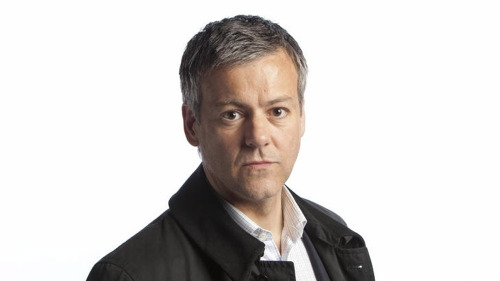

Lestrade represents respect for authority. In fact, he is the only real authority figure in the series. He’s Sherlock’s ‘boss’ in a way. Bosses need people they employ to be reliable, respectful, and trustworthy. Sherlock treating his boss/mentor like crap, making fun of his intelligence and skirting around him at every chance he gets is terribly disrespectful. Sherlock is childish and arrogant and disregards Lestrade in most cases, even refusing to acknowledge his name. We’ve all had those bosses when we were young that we didn’t respect, so we act like spoiled brats about it even though those people probably have way more experience than we do. They have earned their position via the rout of hard work and being reliable and respectful. By the end of the series, however, Sherlock shows us he has resolved the issue of his respect for Lestrade by politely asking him, by name, a first for the entire series, to please take care of his brother. Sherlock is no longer a bratty child and he has connected the social dot of respect.

Dot 2: John Watson 


John represents friendship, pure and simple. John is literally the “replacement” for Victor, Sherlock’s best friend who was killed when he was very, very little. That left Sherlock as the empty shell that we see at the start of the series. The loss of his friend at such a young age meant that he essentially shut down the part of him that he felt could even have friends. He rejected the idea of personal connections with other people entirely, so that he wouldn’t suffer loss again. John, through all their trials and tragedies, has now healed that wound for Sherlock. Even more, John as Sherlock’s friend, has helped him connect all the other dots. He walked with him step by step to do it. Without John’s companionship, Sherlock would still be empty. John’s maturity helped Sherlock grow up and be the man he was supposed to be, had he not suffered such a terribly traumatic event in his youth.

One other thing John represents is family, brotherhood to be specific. Mycroft was very cold to Sherlock in their youth, even though it’s obvious it wasn’t always that way. In the family videos we are shown, Sherlock absolutely loves his brother. It isn’t until later, after Victor, that he feels so alone. It’s obvious Sherlock loved Victor just like a brother, like the brother he really needed but was taken from him. Sherlock says John is “family” in The Final Problem, and he means it. It also shows just how much emotion Sherlock has. His love is that strong. His friend was his brother, a part of his own blood, even if they wren’t born as brothers.

Dot 3: Mrs. Hudson 

Mrs Hudson represents a parent’s love. It’s clear that Sherlock has a very strained relationship with his parents. He doesn’t hate them, but he doesn’t appear to believe that they care for him. They’re not around when he is still basically a child in a grown man’s body. He has cut them off in his mind. Maybe they weren’t there for him in the past so he continues to believe they’re not there for him now. Meanwhile, Mrs. Hudson dotes on Sherlock, brings him tea and food and generally ‘takes care’ of him. She’s kind but not a pushover. She’s also led a life that is about as tumultuous as you can get, which I think appeals to Sherlock. He always surrounds himself with people who aren’t “regular” people. Mrs. Hudson holds enough action and adventure in her life that she appeals to Sherlock, and she is also loving and sweet to boot. Mrs. Hudson is the connected parental dot for Sherlock.

Dot 4: Irene Adler 


Irene Adler represents sexuality. What’s even better is that Irene represents fluid sexuality, and more importantly, the rejection of labels. Regardless of how everyone has interpreted this, when you get down to the simplicity of it, it is simply about rejection of boxing one’s self in. Sherlock’s box was his own making, his image as the “higher power” that Irene pointed out. Irene’s own box was her sexuality. Both of these people had discovered during the episode that their boxes weren’t taped shut all the way. There was wiggle room. Back to the sexuality part, Irene awakened Sherlock sexually. The entirety of A Scandal in Belgravia was loaded with sexuality, from Sherlock being naked and looking extraordinarily dashing, to the very naked Irene appearing to completely disrupt his logical thinking power. It’s as close to canon as one can get that Sherlock did sleep with Irene after Karachi (judging by Eurus’s reaction to his violin song for her). Sex and intimacy was something Sherlock had very much refrained from in his life and Irene connected that dot for him.

Dot 5: Molly Hooper 


Molly represents authentic love, or “romantic entanglement” as Sherlock puts it. Everything about Molly and Sherlock’s interaction falls in line with how everyday romantic relationships blossom. They began just like kids, with Molly having a crush and Sherlock being a jerk to her, ignoring her, or thwarting her attempts to date other men. As they grow together, they begin to close the gap between them. Molly earns Sherlock’s complete trust, which was monumentally difficult for her to do considering Sherlock’s fear of connecting with people too closely. Molly loves Sherlock through his best times and his worst times, unconditionally, even though he doesn’t appear to return her feelings. From small things we’re shown, however, it feels as if Sherlock does feel something for Molly, but he has compartmentalized it and buried it as deep as he can underground out of fear. Eurus’s test is what forced Sherlock to dig up that box, that box he’d put his heart in and covered it underneath the earth. Eurus forces that box open, and connects the dot of romantic love for Sherlock.

Dot 6: Mary Watson 


Mary represents, I think, coming to terms with one’s self, and the different shades of the self. She represents acceptance. Mary connected with and accepted Sherlock instantly because they were the same. They both came from dangerous lives, they are both morally gray, and they both have a need to be accepted for who they are, the good and the bad. Mary was in many ways, a reflection of Sherlock’s own duality. I think Mary made him question things about himself (no not sexually), and I think she also taught him how much he is worth as a person. She showed him that even though you are this person you’ve constructed out of your own pain, you don’t have to live just as that person. You can have anything you desire and still be you. You can live with shades of yourself, and those around you who truly love you will accept you as that. They will love you for the good that you are, and forgive you for the bad that you are. Mary connected the dots of acceptance for Sherlock.

Dot 7: Jim Moriarty 


Jim represented fear. He represented who Sherlock would have been, had he not had some form of love and connection in his life. He was a madman, a true sociopath. He showed Sherlock what it really would be like if he was who he said he was. We learn very quickly, however, what Moriarty already knew. Sherlock can never be like him because he does have a huge capacity for love. He’s hidden it, denied it, but it is there. Anywhere Moriarty appeared, it caused great fear in Sherlock. Even after his death, Moriarty was in Sherlock’s mind, chained up in a padded room like a some kind of caged monster. As much as Sherlock tried to be like him, he really feared becoming that. He also feared that Moriarty would be the undoing of his friends and family, forever a threat to their lives. Moriarty was an endless threat to Sherlock, an endless fear of madness and murder. Jim connected the dot of fear, true fear, for Sherlock.

Dot 8: Mycroft Holmes 


I admit this one’s tough. I feel Mycroft represents weakness. For all the power Mycroft wields in the government, he’s very fearful of being out in the world. He keeps people as distant as he can manage and still be a part of functioning society. He also did a terrible thing and locked up his little sister and lied to his family about it because he feared confronting it. All along in the series, we see Mycroft chastise Sherlock for things like having friends, being close to people, tangling with psychopaths, etc. Mycroft is a very soft, fearful person, which makes his nickname The Ice Man sort of ironic. Its not that he doesn’t care, he’s just far too soft to care. We see his softness demonstrated with Sherlock, time and time again. He cares so much for his little brother and fears so much for him that he constantly keeps watch on him. Mycroft also tried to help Sherlock by proxy, using John as a means to help Sherlock heal his wounds. In the end, Sherlock comes to realize his brother isn’t a bad person, and that he loves him deeply. In fact, he loves his little brother enough to die for him so that he won’t be left like he was as a child, without his best friend. I think Mycroft regrets being as weak as he is, because he didn’t do more to help his siblings. It just required too much care, and he wasn’t able to fulfill that. In the end, it is Sherlock who is the stronger of them, and he is stronger because of his connected dots. The last dot is connect by Mycroft, and that is Sherlock understanding that he is capable of protecting the weak, that he is stronger thanks to his mind, heart, and soul now being complete.

_____________

That’s about all. I only included the major characters here, the ones we see almost every episode. I’ve already talked a bit about how Eurus forces Sherlock to confront trauma, so she represents that last little bit which Sherlock needs to connect everything together. She wasn’t a dot, so much as the one who helped him see the entire picture he’d made. Also, Rosie helps Sherlock in her own way, as Sherlock now has this capacity to care for the smallest of people: children. Rosie is a teeny, tiny, adorable dot.

I mostly wrote this because I had wanted to for a while, but also because some people are still arguing about the 'I Love You' scene. They’re missing the forest in favor of the leaves. The bigger picture is pretty clear on what everyone’s purposes were in the show, and how they affected Sherlock as a man. To become a great man, he needed to be a complete man. All these connected dots make him that man.

Wednesday, 29 March 2017


On Mycroft, Molly and Sherlock 
and the Christmas scene at Bart's
 (Sherlock meta by penelope1730 and theleftpill)

penelope1730:

How do Mycroft and Molly know one another? I understand this is Mycroft, who has greater vision than the All Seeing Eye of Sauron, but he seems rather comfortable – all things considered – in thanking Molly for her help. [...]

The Christmas scene from ASiB is the awkward gift that keeps on giving. Mycroft tells Sherlock he had Irene’s body brought to Bart’s, Sherlock’s “home away from home.” Molly is there to present the body for identification, with Sherlock telling her she didn’t have to come in.

Sherlock’s comment has always bothered me, though, beyond the lingering weirdness shared between he and Molly. Maybe it’s just me, but I thought it was a bit pretentious to tell Molly she didn’t have to come to work and, like, do her job. Although he’s self-employed, it’s doubtful Sherlock doesn’t understand that people actually have to show up for their employment when expected, even if he somehow feels entitled to tell them they don’t. Nice of him to want to spare her his presence, tho.

Molly’s reply also doesn’t make sense — “It’s okay, everyone else was busy with…Christmas” — if it’s actually her job to be there. Something along the lines of —- “Ummm, Sherlock, I’m not simply showing up for your convenience, especially as you were rude as fuck to me. This is my job and while it sucks to have to work on Christmas, it’s double-time with holiday bonus pay — cha ching! Let the other schmucks enjoy their turkey or goose – I’ll still be able to fit into my skinny jeans tomorrow.” would seem more appropriate.

Okay, so Molly probably wouldn’t say that – she hasn’t quite got her righteous snark down yet – but you get the drift.

Unless, of course, she wasn’t scheduled to work or on-call, which Sherlock might know, and someone (ahem, Mycroft) called her personally. Then Sherlock’s comment “You didn’t have to come in, Molly” makes sense, along with Molly’s “I don’t mind, everyone else is busy with…Christmas.”

So, if that’s what happened (and not saying it did), why would Mycroft call Molly, or have her on speed dial? Why not let the morgue attendant deal with the body, especially when one is always working? What difference would it make? It’s not like the morgue attendant would care. Was it about convenience? Mycroft circumventing normal channels? Moffat and Gatiss just wanted to give us one more angsty / awkward scene between Sherlock and Molly?

Or, did Molly decide, having just experienced the *worst Christmas party* in history, that going to work was like the best thing ever?

I gotta give Molly props for wanting to know who the dead, naked women was – and actually asked, without hesitation. She asked Mycroft, Mister Warm and Fuzzy, and people don’t think this chick has got a spine, or that she only grew one post Reichenbach. HA! And, then, later on – when she pumped Sherlock for info about whose phone he was x-raying. Seriously – how many people actually pump Sherlock for information, where he actually answers? This girl is far from spineless.

Any thoughts anyone???

theleftpill:

I think it’s clear from the context of this scene and the one before it that Molly’s presence in this scene is out of the ordinary - she’s not just “doing her job.” Since she was just at the party it’s clear that she had the night off, so simply fulfilling her duty isn’t at play here.

On a superficial, basic-viewer level, Molly’s there for subtle comic relief. She’s just been humiliated by her crush, (presumably) leaves the party when it breaks up with Sherlock’s departure, and takes a “hey can you come in to work, we’ve got a situation” call to get her mind off things. And is immediately confronted by same crush who identifies a woman by “not her face.” On the surface it’s another sucker-punch. But as I’ve asked before - Why Molly? Why is it Molly attending the viewing? Why not the on-duty attendant, or, given the political sensitivity of the matter, a government official? You’ve hit another key moment showing Molly’s importance, which I think goes deeper than quick comic relief.

I think you can safely draw the conclusion that Mycroft had Molly called in (I doubt he would have called her himself.) He’s working very hard to control the situation; he has control over the location and therefore would also have control of personnel. This is not just his brother’s conflict; it’s also a security risk. Mycroft trusts her with this rather delicate security situation - in a small way, she’s in the inner circle. He trusts her to be discreet and professional.

But the biggest reason, if you’re digging deep, is clear from Mycroft’s establishing line: “We had her brought here, your home [away] from home.” Mycroft understands that this moment is going to throw Sherlock. He’s trying to soften the blow as much as possible - putting him in a comfortable environment, surrounding him with people he trusts. Mycroft knows that Molly will handle the situation with delicacy and care. She can be trusted not only with the security risk but more importantly with Sherlock’s psyche. He must be aware of some emotional connection Sherlock has to Molly; in this delicate moment, if he’s controlling the environment, he’s not going to bring in someone who would upset Sherlock. He’s going to bring in someone who represents grounding and comfort: Molly.

And note who’s already present in the scene when Mycroft says “home (away] from home.” Home is not just a location, a structure. Home is where those you love reside. Home is where the heart is. Molly is the one who lives in that “home.”

And I love your points about Molly confronting both Mycroft and Sherlock in the following moments/scenes. I never gave much thought to this scene between Molly and Mycroft, but it goes so much further to prove Molly’s importance to Sherlock. Beautiful catch.

Saturday, 11 March 2017


Why is Sherlock mummy's favorite?
 (Sherlock meta by thediogenes, harriet-spy and anarfea)


Q: Why do you think Sherlock is mummy's favorite son? (she favors him) Beside his drug addiction, he doesn't make an effort to please his mother. On the other hand, Mycroft is the non problematic son with a stable and respectable job.

thediogenes:

I’m an elder sibling with a similar age gap between me and my brother and my educated guess is I think it’s down to the following reasons:

  • Mycroft is considerably older than the other two so is almost certainly held to higher standard of maturity and behaviour from the get go. 
  • Mycroft is emotionally closed off, secretive, cold, snarky, pragmatic to the point of moral ambiguity, all that good stuff which makes having a nice warm relationship with him a bit of a challenge. Sherlock, for all he can be similar isn’t anywhere near as bad imo. 
  • Mycroft is not ‘non problematic’ - your fave is very much problematic, especially when viewed through the eyes of the parents. He’s hidden the fact their youngest child is alive from them for years. He’s always on the periphery of Sherlock’s little transgressions with drugs and danger, and I’d put money on him being blamed for them every time. “You should have kept a better eye on him” etc etc. He also gives the impression he has to be dragged kicking and screaming to family events (such as Christmas in His Last Vow, and Les Mis in The Empty Hearse). I’d guess that for all he tries to do the right thing and do his best his parents - especially Mummy - know he’s just going through the motions to try to please them. 
  • We actually know next to nothing about what Mycroft was like as a child or teenager. The flashbacks and information we’re given in The Final Problem about their childhood are very much from Mycroft’s perspective, and we know he’s willing to censor or re-tell past events with a different spin. Pretty much all we have to go on is his own version of what happened. For all we know he could have been an absolute nightmare child who drove his parents up the wall. I highly doubt he was, or that he’d be the type to act out for the sake of it, but given his snark and harshness now I can only imagine what a hormone-riddled teenage version would be like. I could imagine him being outright nasty with his tongue at times without even really meaning it – can you imagine the “everybody dies, caring is not an advantage” stuff coming from the mouth of a puberty-raging 12/13 year old? I bet he really did upset Mummy. Several times.
  • (Did I mention he’s the eldest and we get blamed for literally everything.)

harriet-spy:

Three other thoughts:

* Parents can take respectable, successful children for granted, especially when there is a more troubled child to focus on. This can cause tensions on all sides. Especially because, unfortunately, people do tend to attribute a higher “value” to the things they’ve been denied, so the child who doesn’t show up just seems more valuable than the child who does. This is a story so old it’s actually Biblical.

* I suspect that Mycroft was a child unresponsive to affection, solitary, self-sufficient in an eerie way. That is genuinely hard on a parent, who ordinarily invests so much of their own love and care in a child and naturally hopes for the child to return it. It takes a particular kindness and strength of character to keep offering that love when it doesn’t seem to be returned, and not everyone has it. (Thinking about it like this is about the only way I can summon up a scrap of empathy for Mummy Holmes in particular.)

* Neither Sherlock nor Mycroft seems to respect their parents. But it’s far more noticeable in Mycroft because Mycroft actually goes through the motions of family gatherings and such. I’m sure at least Mummy knows, and, while she downplays it, as an ex-successful mathematician her ego must be tied to her intelligence to some degree, so I’m sure she’s visited by the occasional “Who do you think you are, you little shit?” thought when Mycroft is condescending.

anarfea:

This. Sherlock, though he can be an arsehole on occasion, is actually pretty motivated by a desire to please people whose validation he craves. I headcanon him as a really affectionate child who was always clamoring for his parents’ attention, Mummy’s especially. And I suspect they almost lost him on a couple of occasions when he was deep into drug use, so that makes them appreciate him more.

Mycroft, [on the other hand], probably wasn’t much trouble as a child (in part because he couldn’t afford to be–Sherlock and Eurus were such handfuls, and it seems like a lot of the work of wrangling them was foisted on Mycroft). But he doesn’t strike me as someone who ever tried to earn his parents’ approval. If he was well-behaved, it was because he’s naturally fastidious, or because he realized adults would treat him more favorably if he behaved as expected, not because of any genuine desire to be “good.” He almost certainly broke whatever rules he thought were pointless when it suited him and he knew he wouldn’t get caught. And Mummy in particular has to at least have suspected that Mycroft was like that and resented him for being two-faced and secretive. And even though he was probably successful in school and later at work, Mycroft isn’t nice. If we look at the Christmas scene and see Mycroft ad Mummy snarking at each other; he seems continually irritated with her and she knows it.

Also, while Mycroft is “successful” in the sense that he has power and money and isn’t a drug addict or a psychopath, I’m not sure that his parents approve of his career. The Final Problem seems to imply that it was Uncle Rudy who got Mycroft involved in shady government work. Mycroft seems to have had a closer relationship to him than to either of his parents, and it’s possible they disapproved. Even if they don’t actively disapprove of his job, they don’t think much of it (or at least Mummy doesn’t):

MRS HOLMES: Mikey, is this your laptop? (Standing at the end of the table, she points down to a silver-grey laptop on the table, half-obscured by a chopping board on top of it which has several whole peeled potatoes and the peelings on it.) 
MYCROFT: On which depends the security of the free world, yes … (he smiles rather sarcastically up at her) … and you’ve got potatoes on it. (Sherlock glances over towards them.)
MRS HOLMES: (to Mycroft) Well, you shouldn’t leave it lying around if it’s so important. [x]

Also, in that scene, Mycroft continually snarks about how very much he hates spending time with the family, “How can it only be two o’clock? I’m in agony.” He doesn’t exactly come off as a dutiful son. Even if he does take them to see Les Mis. It’s gotta be clear to them there are other places he’d rather be.

Which is not to say that Sherlock does any better. He literally pushes his parents out the door in The Empty Hearse because he’s ashamed of them. But they almost lost Sherlock, multiple times. He’s just come back from exile in The Empty Hearse, and then in His Last Vow he gets shot and has just come home from hospital. Mycroft has always been around, and they take him for granted. Possibly they even blame him for Sherlock’s disappearance (what good is his supposedly powerful government job if he wasn’t able to dispatch Moriarty before he could do Sherlock so much harm). And Mycroft isn’t even pleased Sherlock is back. “Am I happy too? I haven’t checked.”

Anyway, Sherlock being the Holmes’ parents favorite child I can totally believe. I know a lot of fanfic shows Mycroft as the favorite, model son and Sherlock as the dysfunctional drug-addict who gets disowned. But the canon doesn’t bear that out I don’t think. What I don’t understand is why Mummy tells Sherlock “you were always the grown-up” at the end of The Final Problem. Because that seems to be completely untrue and I’m sure she knows it. Sherlock is clearly the baby of that family, even if Eurus was younger. The only reason I can think of is that she says it to hurt Mycroft. He has just admitted to concealing her daughter’s death from her.

Sunday, 5 March 2017


Why did Sherlock hand the gun to Mycroft first?

notagarroter:

In the scene where Eurus wants them to kill the Governor, I mean. Just curious about people’s headcanons, since Sherlock doesn’t explain his reasoning.

anarfea:

Sherlock has built Mycroft into an almost god-like figure: omniscient, omnipotent, not-quite benevolent. He’s the Voice of Authority in Sherlock’s mind palace, where he appears with what look like a halo and angel wings.


And while Sherlock resents Mycroft’s meddling and intrusion, he also relies on him. Whenever he OD’s, he makes a list for Mycroft. When he shoots Magnussen in the head, he expects Mycroft to get him a pardon “like a proper big brother,” (and Mycroft does him one better by making it look like it never happened). And even though Sherlock and Euros spell out “fuck off” when they’re wandering the streets, I think Sherlock takes comfort in knowing that Big Brother is watching over him.

Mycroft has cultivated this image, probably from a pretty young age. The Final Problem shows us how quickly Mycroft grew up; he watched his sister kill his brother’s best friend, threaten his brother’s life, and burn down the family home when he was 12-13. The more we learn about Mycroft, it’s clear that “caring is not an advantage,” is something he says because he knows the pain of caring too much. So he buried his heart deep, and cultivated his Ice Man persona. And it appears to have worked–his code-name is Antarctica, which shows his colleagues, at least, believe it.

I think Sherlock believes it, too. He thinks that Mycroft has succeeded in entirely suppressing sentiment–a behavior he initially tries to emulate in S1. By S3, he’s learned that there are advantages to having friends, and he tries to encourage Mycroft to find himself a goldfish. But while Sherlock transitions from wanting to be like Mycroft to wanting Mycroft to be like him, his belief that Mycroft doesn’t form attachments is constant.

I think over time, because of whatever resentments and feuds and unsettled scores lie between them, Sherlock has come to believe Mycroft doesn’t care for him, either. His comment, “then why didn’t you want me to take it?” re the suicide mission to Eastern Europe is only half-jesting. And Mycroft realizes that he’s made a mistake by guarding his heart so closely even Sherlock has come to suspect he doesn’t have one. So he tells him, “Also, your loss would break my heart.” And Sherlock chokes on his cigarette; he’s that unaccustomed to sentiment from Mycroft. But Mycroft continues to let Sherlock see through the facade. At the end of The Abominable Bride, he tells him, “I was there for you before, I’ll be there for you again, I’ll always be there for you.” I think, even though Sherlock brushes him off, it’s gotten it through his thick skull that Mycroft cares about him. But the goldfish? Not a chance.

So he hands Mycroft the gun because he thinks it should be easy for Mycroft to do this for him. Mycroft has always fixed all his other problems, and anyway what’s one more dead goldfish to The British Government? I think he’s shocked when Mycroft refuses. (So was I, and I’m still not entirely convinced that that moment was in character). If I try to defer to the fact that Mark Gatiss is writing a character and playing a character he knows well, the best explanation I can come up with for Mycroft’s behavior is that he’s already seeing how this is going to end–he knows how Euros thinks, and he’s terrified that Sherlock and/or John is going to die and it’s all his fault. And I also think having to kill the Governor in particular hits him especially hard because of the threat he makes when they first arrive to Sherrinford: “I find any indication my sister has left this island at any time, I swear to you, you will not.” I’m not saying that was an idle threat, but I don’t think Mycroft can deal with being forced to carry it out. While I suspect that Mycroft has, even if he’s never murdered anyone himself, at least sanctioned murder before, I don’t think he can deal with getting blood on his hands when he’s not the one making the decisions.

Anyway, he can’t do it. And Sherlock is surprised, I think, because it doesn’t fit with the image of Mycroft that he has. I think a huge part of The Final Problem is about Sherlock remaking his image of Mycroft, realizing he is not a demigod but a man. Mycroft if fallible, Mycroft isn’t always clever, in short, Mycroft isn’t as strong as he thinks he is. Or as strong as Sherlock thought he was.

But he did his best.

harriet-spy:

I have had very similar thoughts about the failure to shoot myself. I would add that the moment seems to have arisen from a tension between the demands of theme and of plot. As we’ve been told, the point of The Final roblem, and of Euros’s tests, was to force Sherlock to choose emotion and human connection over Mycroft and mere reasoning. Which means that, all along, Mycroft should have been advocating for the ruthless/”logical” choice in every test. But if he did so, it wouldn’t have been much of an episode. They had to find some way to avoid his simply short-circuiting every supposedly riveting moment of emotional suspense by killing a bitch or three, and the best they could come up with was to vaguely cripple/sideline the character, regardless of continuity.

Many, many things about the treatment of Mycroft in The Final Problem bothered me, but I do think that, in order for Sherlock to become more mature, he needs to take a more realistic view of Mycroft. His response to Mycroft’s perceived infallibility has always incorporated a large element of childish abdication of responsibility. That’s something he is only likely to get over at this late stage in his life by recognizing that the infallibility has its limits. To me, this is the most legitimate of what I will (in extremely petty fashion) refer to as the attacks on Mycroft in this episode, the one that is most psychologically sound generally, and most consistent with prior episodes. And yet, to be honest, I’m not sure that the writers fully thought it out, and I wouldn’t be surprised if any S5 showed regression on this point.

(now if only they could’ve bothered to construct their plot so it supported their conclusions, rather than having a lot of random loud! exciting! stuff! happen and then informing us that it meant this or that…) 

anarfea:

I do agree with you that The Final Problem has a lot of tension between plot and theme, and also between plot and character. I find the reading of The Final Problem that I like best is to look at it as almost an allegory about the show rather than an actual episode (not sure if that makes sense). All of the characters feel symbolic on pretty much every level. I do agree with you that while there were some moments in The Final Problem which I loved and which gave me lots of Mycroft feels (the whole flashback sequence where adult Mycroft is interacting with the Holmes children, for example, and the bits about Lady Bracknell, and of course the Holmes killing Holmes sequence) I was upset about a couple of decisions they made, particularly the clown sequence. I can come up with satisfactory (to me, at least) explanations for why Mycroft couldn’t shoot the Governor.

I cannot reconcile the version of Mycroft we see in Serbia, who clearly has field experience and trusted himself enough to go in and get Sherlock out of there, with the Mycroft who is apparently incapable of dispatching an intruder in his own home. Much the way I cannot reconcile the idea that the Holmes’ family had an ancestral home in the countryside with the version of Mummy and Daddy Holmes we see in The Empty Hearse. I was arguing in my multi-shipping meta that I almost think of the different series of Sherlock as existing in parallel universes or something. Up until now, all my longer fics have been canon compliant, but I now feel like there are too many inconsistencies for me to come up with a coherent narrative. At this point I’m just going to use the parts of canon that I like and ignore the bits that don’t make sense.

cumberbatchitis:

I have always thought he simply considered Mycroft responsible for the whole mess, so in his eyes he was supposed to be the one to deal with it. And also he did not want John to face such a task. But yeah, all points mentioned are very reasonable.

thecutteralicia:

I must say, I’m surprised that so many people have a hard time with Mycroft being unable to shoot the governor. Serbia was different, as Mycroft had control of the situation and also no one died (that we know of) - if he had, for example, been forced to kill the man beating Sherlock, it would have been in defense of his brother (and himself). Being prepared to shoot a home invader is self-defense. Should I find it disturbing that so many people can’t see a difference between those situations and being forced to murder an innocent person with one’s own hands???

John is a soldier. In the first episode, he killed Jeff Hope with zero remorse. Yet no one seemingly had a problem with his inability in The Final Problem to carry out the murder of the governor. In his case, people seem to realize that just because someone is a soldier - and prepared to shoot a person who is actively a danger to others - doesn’t mean they’re automatically okay with the willy-nilly murder of innocents. Why isn’t the same extended to Mycroft?

We know Mycroft is in intelligence and probably his orders have resulted in the deaths of others. However, every indication in the show is that Mycroft specializes in counter-terrorism and homeland protection. His goal is to protect as many people as possible - we see that in The Final Problem, too, with his thought that they should have the girl crash the plane into water or away from civilization, so more people don’t get hurt. His job is to have pragmatic thoughts like that - if the girl and the plane’s passengers can’t be saved, then obviously the next best option is to have the plane crash in a place where people on the ground won’t be at risk.

The situation with the governor is different. For one thing, Mycroft is not in control. They are being manipulated, and the choice is either one person dies or two people die, and really, there’s no guarantee Eurus wouldn’t just kill the governor’s wife anyway. The prospect is to kill a person with his bare hands - something we have zero evidence Mycroft has ever done (and Sherlock has done, FFS). Furthermore, we have the psychological weight of the situation: this is the place (Sherrinford) and the person (Eurus) Mycroft is supposed to be able to control. This is the sister who has haunted him his entire life suddenly having power over him.

Mycroft has spent literally most of his life trying to contain Eurus, and now it’s all gone wrong. As a child, he witnessed his baby sister turn into a psychopath and kill another child, then threaten to kill Mycroft’s adored baby brother. Then she burned down the home with (presumably) the entire family in it, which could have killed them all. Then Mycroft was burdened with the secret of her captivity and pressed by his uncle into being complicit into a huge, groundbreaking lie to this own parents. Mycroft then spent years tending to his drug addict baby brother by himself. The man has more issues than Vogue, and in Sherrinford they all began to collapse in on him.

anarfea:
"if he had, for example, been forced to kill the man beating Sherlock, it would have been in defense of his brother (and himself). Being prepared to shoot a home invader is self-defense. Should I find it disturbing that so many people can’t see a difference between those situations and being forced to murder an innocent person with one’s own hands??? "
No one in this thread is arguing that killing a home invader and being forced to kill an innocent person is the same. What I specifically said is that while I think it makes sense that Mycroft was unable to kill the Governor, the bit I really feel was OOC for Mycroft was the clown sequence. Like you said, the clown is an intruder. Killing him would have been self-defense. Serbia!croft would have skewered that clown.

I get that Mycroft was in charge in Serbia and he feels out of control when he thinks Eurus is in his house. Even so, I feel like the reason Mycroft panics and runs down the stairs instead of killing the clown is because that’s what he has to do for the sake of the plot. And I do think that writing Mycroft OOC for plot reasons was a disservice to his character.

Also, when people are talking about Mycroft’s hypocrisy, again, the comparison isn’t really between killing a home invader vs. killing an innocent person. The comparison is between ordering an assassination and pulling the trigger yourself, or between authorizing an operation which will result in people dying and killing someone yourself. We know from The Six Thatchers that Mycroft employed AGRA. We don’t know what exactly he utilized them for, but we do know what kind of work Mary did. We know from The Final Problem that he authorized the purchase of a number of “patience grenades” that will presumably kill a bunch of people.

And yes, you can argue that there’s a difference between ordering the assassination of a terrorist and killing an innocent person. But innocent people die in counter-terrorism operations too, and their deaths are written off as collateral damage. People try to justify the deaths of those innocents by making the utilitarian argument that more deaths may have been prevented, and we see Mycroft employing that argument:
"His goal is to protect as many people as possible - we see that in TFP, too, with his thought that they should have the girl crash the plane into water or away from civilization, so more people don’t get hurt."
Quite so. And if you carry that argument through to its logical conclusion, he should have shot the Governor so that just the Governor died instead of the Governor and his wife. Fewer people would have been hurt. That was the utilitarian choice, and presumably when running counter terrorism operations, Mycroft makes utilitarian choices.

But he couldn’t make that choice in The Final Problem because he didn’t want to get his own hands dirty. And the reason people are saying that he’s a hypocrite for that is because his hands are already unclean.

thecutteralicia:
“What I specifically said is that while I think it makes sense that Mycroft was unable to kill the Governor, the bit I really feel was OOC for Mycroft was the clown sequence. Like you said, the clown is an intruder. Killing him would have been self-defense. Serbia!croft would have skewered that clown.” 
He tried to kill the intruder. He pulled out the gun and pulled the trigger, but Sherlock had removed the bullets in anticipation of that so no one would get hurt. As for skewering him, you can’t stab someone who is many feet away and out of your reach.

As for the rest of your post, the talk of “collateral damage” runs into a philosophical debate about war that I’m not interested in having in this context. I don’t think it’s OOC for Mycroft (nor John, for that matter) to not have wanted to shoot the governor in the head as part of Eurus’ games, no matter their pasts or what they’ve done to protect others (and again, it astounds me how many people forget that we’ve seen John shoot someone already on the show).

Friday, 3 March 2017


What was Mycroft going to say?
  (Sherlock meta by penelope1730)

Q: In The Final Problem, towards the end of the ILY scene, Mycroft steps forward and says, "Sherlock, however hard that was..." What do you think he was going to say?

A: [...] Great question and one I’ve thought about a lot. I think there’s a multitude of answers that would fill in ‘the blank’ nicely. My initial thought when I first watched the scene is that Mycroft was going to offer words to console…perhaps something along the line of reminding Sherlock that Molly is alive and for now that’s what matters - he would be able to explain everything later and make things right.

That answer still makes sense to me because, in that moment, that’s what’s true and about the only thing Sherlock has control over. Mycroft can see that Sherlock’s been laid vulnerable and wants to help him regain some emotional balance. It’s interesting to watch that part of the scene, as John has been taken out of the frame leaving only Sherlock and Mycroft. Watching Mycroft’s reaction when Eurus tells Sherlock he “lost” is very telling - as though Mycroft now has a full grasp of Eurus’s end game.

I think it’s also important to consider what Mycroft knows, not just what he might have said. He’s learned that Sherlock and Molly love one another, but it was a forced acknowledgement, which left both in a place of emotional pain and uncertainty. For as tough and cold as Mycroft can be, we’ve discovered his soft side that allows romance and sentiment - especially where his family is concerned.

So, whatever Mycroft was going to say - I believe it was fueled with the knowledge that his brother is in love and that Molly’s loss would have been unbearable.

[...]

Tuesday, 28 February 2017


Eurus and Mycroft’s Gambit in The Final Problem 
 (Sherlock meta by mild-lunacy)

I was thinking of the recent @thepurplecarbuncle post about what Mycroft told Sherlock at Baker Street in The Final Problem: “the man you are today is your memory of Eurus”. I agree with her incredulous response, in that I can see how it sounds false, like a pure retcon– it sounds ridiculous– because it *is* ridiculous and it’s meant to be, on one level. Obviously, if it’s taken to be literally about Sherlock’s deepest self, his best self, that can’t be true. Sherlock is a kind man, a ‘good man’, as Lestrade says later in the same episode. So it’s textually not *literally* true. But at the same time, Sherlock’s not *only* that man that he’d become thanks in part to John Watson, is he? As Ivy told me so eloquently, the whole point, whether here or in Mary’s reference to who Sherlock and John 'really are’, is about the *duality* in Sherlock and John’s natures.

Sherlock is kind and good, but that hasn’t always been the persona he’s been inhabiting, is it? Him standing with Moriarty on that rooftop, promising Moriarty that he’s not one of 'the angels’ wasn’t all that long ago, and Sherlock had shot Magnussen while proclaiming himself to be a 'high-functioning sociopath’ just recently. And that persona, including Mycroft’s spiel in A Scandal in Belgravia about heartbreak being inevitable and how 'caring is not an advantage’, had always seemed to be tied to Mycroft and his influence. Still, you can’t just take Mycroft at face value, 'cause he’s playing the role he’s always played. If anything, he’s more obvious about it in The Final Problem than ever before, explicitly taunting John to Sherlock’s face 'cause he knows Sherlock would always choose John– would always choose *sentiment*– and he wants to make it easier on Sherlock. As usual, Mycroft tests and prods both John and Sherlock at Baker Street, rather than being straightforward. Mycroft certainly isn’t simply saying that Sherlock is some kind of Eurus lite™, and he always has been his whole adult life. He’d just called Sherlock a 'dragon slayer’ in His Las Vow; he *knows* Sherlock for real. The point is that he *hasn’t* been like Eurus, but Sherlock’s made some deeply unnatural and unnecessary choices to shut himself off from friendship and emotional intimacy because of trauma from events related to Eurus he cannot remember. Of course… that’s not established text, at least until The Final Problem. We just have clues and foreshadowing. In The Abominable Bride, Sherlock insists 'I made me’ (although he then thinks of Redbeard when there’s a dog barking in his Mind Palace). And indeed, Sherlock’s choices in response to Eurus– at the beginning and the end, in The Final Problem– are shown to be very much his own. He certainly made himself what he is by *choice*, even if he’s not conscious of it afterwards.

The Final Problem has various callbacks and parallels (the big one to The Hounds of Baskerville, for example, that I’ve discussed recently). Besides the differences in the vector (Sherlock’s own mind rather than a hallucinogenic drug with Henry), I think it’s important to note that Sherlock *chose* to forget in a way Henry didn’t. Sherlock isn’t just a victim of a crime, but still the active protagonist. His conversation with Mycroft at Baker Street can also be a callback to A Study in Pink. That’s where we first heard Mycroft say John could be the 'making of’ his brother, 'or make him worse than ever’. As Ivy summarized, The Final Problem works as the resolution of Sherlock’s arc, and so we had to answer the question of why does Sherlock actually say he’s a 'high-functioning sociopath’? Why does he say being alone 'protects’ him? When people dismiss the entirety of The Final Problem, it’s easy to miss the issues of characterization continuity and the sense in which things may actually make sense in unexpected ways.

I should emphasize that I don’t think Sherlock’s trauma is meant to be definitive to his personality. The question of whether Mofftiss always intended this reveal since Series 1 is interesting but ultimately irrelevant in practice. It’s enough to say that Sherlock’s always worn part of his 'Sherlock Holmes’ persona, the 'high-functioning sociopath’ self, as armor. It’s never been natural. It’s not because he’s naturally a misanthropic loner (like Mycroft), who thinks of other humans like goldfish. This doesn’t mean that he’s *not* different in his own way, or that he didn’t mean it when he told Mycroft in The Empty Hearse 'why would anyone mind?’ But unfortunately, Sherlock struggles to fully accept or accommodate his own humanity even after The Empty Hearse (though the process has begun at that point). In His Last Vow, he regressed from his touching, emotionally open wedding speech to tell John that romantic love was 'human error’, and in The Abominable Bride he actually cries, overcome when Watson acknowledged his humanity. John has had a tendency to believe Sherlock could work miracles– in The Reichenbach Fall, he wanted him to not be dead as 'one more miracle’– which had long been an ongoing issue, as @stephisanerd described in her classic meta. So it’s more like this childhood trauma is just the specific trigger to what was always an ill-fitting illusion of all-knowing supremacy that Sherlock put on as a defense mechanism. And *that* is Eurus’s fault (indirectly, at least); essentially, Eurus herself is the DFP personality with nothing underneath, in a much more personal, less metaphorical way than Moriarty had been. If Moriarty is the 'virus in the data’ in The Abominable Bride, Sherlock’s response to Eurus had corrupted his operating system in this metaphor.

Whether Eurus was intended from the start or not, I essentially think she is simply the mechanism. It was always pretty clear that Sherlock was carrying around some pretty toxic ideas about what kind of things he should aspire to for himself. There were some unrealistic standards he held himself to, but he also has some extreme convictions about sentiment and 'romantic entanglement’ leading only to heartbreak. In a sense, we’d always blamed a sibling for this: we’d just blamed *Mycroft*. Mycroft said lots of insensitive things and provided a sense that Sherlock’s family life was cold, or at least complicated (especially pre-S3). Then we met the Holmes parents, and it seemed like Mycroft and Sherlock were actually a product of a 'normal’, happy home… if one with a math genius mother. But Mycroft’s clear resentment at Christmas (and his 'file’ of complaints about his parents) and Sherlock’s avoidance and awkwardness still seemed… a bit odd. Clearly, some kind of issues were not being addressed. A lot of issues, as it turned out, although in some ways the Holmeses really were a supportive, even ordinary family. The parents just really didn’t know what to do with Mycroft and Sherlock, let alone a girl like Eurus, it appears.

I think it’s clear that Mycroft always felt he had to take care of things invisibly, to be 'the adult’ (even if Mummy didn’t appreciate it in the end: another statement there’s no need to simply accept at face value). He couldn’t just tell Sherlock that he thought he wasn’t dealing with the issue properly; if anything, sentiment really isn’t Mycroft’s area, as he said in The Empty Hearse. But he worries about Sherlock… 'constantly’, as he told John from the start. Mycroft has always placed a lot of stock on other people’s potential influence on his little brother. He’s seen how sensitive he is; how deeply he can be hurt. So of course, if he thought John Watson could be 'the making of’ Sherlock after 24 hours, he’s the type to blame Eurus’s bad influence for Sherlock’s unfortunate conviction he was a 'high-functioning sociopath’ (a descriptor he’d be most likely to have heard applied to Eurus, not himself). Mycroft’s gambit in A Study in Pink was that John could break through to him, somehow, though this didn’t mean he’d start suggesting Sherlock open his heart anytime soon. Both brothers had been burned, and Mycroft was very, *very* protective (after Eurus came the drugs, after all). Mycroft always knew how much both John and Sherlock resisted and doubted him and anything he said, so he *couldn’t* be straightforward even if he wanted to. It’s true that even at the wedding, Mycroft still warned Sherlock not to 'get involved’. It’s not that he meant the opposite, necessarily– but he really does worry about Sherlock and his tendency to have 'danger nights’, after all, and this wasn’t baseless, as His Last Vow demonstrated. However, surely Mycroft still believed John to have been a good influence. Even if both of them admired Eurus a little too much, surely Mycroft knew Sherlock would need to choose John, and could be counted on to choose John in The Sign of Three.

In the end, Mycroft asked John to 'take care’ of Sherlock after his overdose in The Abominable Bride: the ultimate sign of trust. He definitely thinks John has fulfilled his early promise in A Study in Pink, and could be trusted with Sherlock’s future– Mycroft’s only pressure point. Even so, in The Final Problem Mycroft suggests Eurus remained a hugely formative influence, primarily in negative ways. And in certain ways, I’m sure that’s true. The man Sherlock is today is a product of his past, just like any other man. However, that’s not *all* he is, and I think that by the end of The Final Problem, Sherlock’s made peace with that.

Tuesday, 21 February 2017


“I made me” vs. “Eurus made you”: some rambling and likely incoherent thoughts on this apparent contradiction
 (Sherlock meta by unreconstructedfangirl and anarfea)

unreconstructedfangirl:

Something I really liked in the story from The Abominable Bride to The Final Problem is the whole question of what made Sherlock what he is – and indeed, I think it’s the central question in The Final Problem. I’ve read lots of comments on this in people’s meta around here, and wanted to have a go at saying what I liked about the storytelling in this particular regard.

Many have noted the apparent contradiction between Sherlock’s “Nothing made me. I made me” and Mycroft’s saying that everything Sherlock is, ever decision he’s ever made is because of Eurus. I feel like a mistake we make is taking everything the text tells us as a thing we are being told directly by the text, rather than thinking about how reliable what the text is telling us really is, considering the source and the character who says it.

I loved Sherlock’s “I made me” in The Abominable Bride. It was one of my favourite moments. I loved the idea that in his mind, he was able to take responsibility for himself, and know, somewhere deep inside, that he was the one making the decisions that kept him separate and alone. I feel like, if we can realise that WE choose things, then we have some kind of agency, and power over them, and I like the idea of his having that kind of power over his own narrative. So, when this story of Eurus and young Victor comes along, and Mycroft tells us of that this isn’t true – in fact, Eurus made him? If I’m to take that at face value, it’s disappointing – childhood trauma made Sherlock what he is.

Dull – and done to death, right?

The thing I love, though, is that they are both right, and both wrong, and I really enjoyed thinking about what the constellations are in the spaces between them.

What we all do, every day (and I think being in love with and retelling this story is part of this effort for many of us) is tell ourselves the daily story of what we mean and who we are. In the words of Neurologist Oliver Sacks, we “throw bridges of meaning over abysses of meaninglessness” and create ourselves via narrative – the stories we tell ourselves about who we are. This is what makes us human beings – this continual myth-making – and this narrative of who we are and what we mean is a construct of our minds.

So…Sherlock told himself a story – he made himself. It was a defensive mechanism, and it coincided with his emotional withdrawal, a mechanism he used to protect himself from the pain of love, loss, grief, and importantly, horror. Sherlock made himself, and part of making himself was denying the fact that other people have the power to shape us, and reshape our narrative. He radically claimed agency in defiance of pain. But, it’s not quite true, and what’s more he can’t quite stay away from a world full of horror, can he? As a detective and a junkie, he tries to solve the mystery of horror and pain over and over again while keeping emotional reality at a distance.

Mycroft, meanwhile, sees Sherlock from the outside – sees him as a victim of trauma whose subsequent decision not to feel has kept him safe from further trauma, and he encourages it: “…caring is not an advantage … don’t get involved … Redbeard!” Mycroft sees Sherlock as fragile, prone to self-destruction, and in need of protection – as powerless, and he’s not wrong. Sherlock is compulsive, an addict, and a person in denial of his own heart. Mycroft acts out of love in a paternalistic manner towards not only Sherlock, but the whole family, because that’s the story Mycroft told himself… and the story tells us that this is “limited”, and it is. It’s nice that in the end, Sherlock is able to see that Mycroft did his best, though. That’s real progress.

The fact that both of these things “made” Sherlock isn’t a contradiction, it’s two seemingly contradictory things that are both true from different perspectives; two data points that allow us to see what’s happening when Sherlock remembers Victor and opens his heart to his Eurus, and then chooses the path that will allow him to remake himself, having integrated what he knows into a truer version of events. He DID make himself, and also, she made him. We are not impervious to others, but we do choose which way we go. Sherlock chooses love.

The experiments Eurus runs to try to find out who Sherlock is – what he will do given the choices she gives him all lead to this question of what he will do with her when he knows the truth – and she needs him to know, or she can never come down from her metaphorical plane. She loves him and she needs his love, so she is trying to find out how his love works throughout the episode. Because, Eurus did something terribly damaging, and she needs her brother to know it. She also loves him, and needs him to love her. I love that Sherlock, because of everything that he has been through and felt and experienced is able to have the empathetic response that he has. That he realises that he has a role in healing something in her, as she has healed something in him by finally helping him to see that he is not, never has been, and can never be an island.

And I love, at the end, seeing Sherlock embrace the fact that who we are is a co-creation – a relationship between the people we love and our responses to them. We are not islands of independent myth-making. Sherlock Holmes is not an isolated freakish genius – he is a person of some experience and the wisdom that came from it – he has a past, he lived a life.

The final scenes, in which John and Sherlock embrace what they can be together, and rebuild their home and their hearts to include all that they have experienced and become because of love, and they are surrounded by their village of loved ones were really moving to me. In fact, when I watched it again, I didn’t even hate Mary’s voice over – she was an important part of their shared story, she loved them both, and she belongs there. I really like this as the beginning of them BEING WHAT THEY ARE in legend – a brilliant, humane detective and his astute storyteller who is smarter than he looks, and now the myth they are making is their partnership. It’s a story with both horror and love, and the only way it is what it is, is in partnership. I mean… I loved that! [...]

anarfea:

So, I agree with your analysis but one of the things that always got me about the line, “you do remember her, in a way. Every choice you ever made, every path you’ve ever taken, the man you are today: is your memory of Eurus.” is how true this is –of Mycroft. 

Mycroft says, “what Uncle Rudi began, I thought it best to continue.” Locking Eurus up wasn’t Mycroft’s choice. If we decide that they took Eurus away when she was five (which I’m basing solely on child Eurus’ apparent age and Mycroft’s comment to the governor that “she’s been capable of [enslaving people] since she was five”), then Mycroft was thirteen. He was a child. Rudi decided to lock Eurus up in Sherrinford with the “uncontainables” and lie to Mr and Mrs Holmes about the fate of their daughter. Mycroft simply carried on the lie. Again, he was thirteen and presumably traumatized by knowing that his sister killed his brother’s best friend and his brother no longer remembered her. Presumably he thought it would be best if his parents could also, if not forget that Eurus existed, then move on with their lives thinking she was gone.

But that decision irrevocably changed Mycroft’s relationship with his parents, and with Sherlock. It isolated him from his entire family (ironically, except for Eurus, the only one in on his secret). Mycroft spent Christmas with Eurus and Jim Moriarty and then went home to drink alone while Sherlock celebrated at 221b surrounded by friends.

Uncle Rudi also seems to have set Mycroft on his career path. He seems to have been some kind of shadowy government spook, and put Mycroft on the path to shadowy government spook. Who knows who or what he might have been if he hadn’t spent his entire life protecting this secret.

So yes, Mycroft is the man he is today because of Eurus. And IMO, he’s projecting when he says that about Sherlock. It’s true for him, so he thinks it’s true for his brother. And on some level, it is. Someone on my dash (i think @themissadventurer?) was saying that when Sherlock says “I made me,” in The Abominable Bride, we hear a dog barking in the background and he says “Redbeard,” immediately after. Of course his childhood trauma influenced him. We are all shaped by our childhood traumas (or at least I know I was). So Eurus having shaped them is the truth.

But the truth, as Oscar Wilde said, and The Final Problem keeps reminding us, is rarely pure, and never simple.

Sunday, 19 February 2017


"Don’t be alarmed, it’s to do with sex"
 (Sherlock meta by mae-jones and o0katiekins0o)

[Mycroft: Don't be alarmed, it's to do with sex.
Sherlock: Sex doesn't alarm me.
Mycroft: How would you know?]

mae-jones:

Some took this to mean Sherlock was a virgin, especially with Sherlock being referred to as “the virgin” later. However, one could extrapolate many things from these exchanges.

Mycroft’s “how would you know?” could be a dig at how Sherlock has utilized sex to get what he wants. Sherlock is the ultimate control freak at this point in time. He has never been in love with a potential partner. He very well could have had sex a million times but I imagine he would have done so for perfunctory reasons. So, of course sex wouldn’t alarm Sherlock if it was always on his terms and he was in complete control of his emotions.

Mycroft’s ‘how would you know?” could very well be, “how would you know what it’s like to be so desperate for someone that you lose your mind with them and get turned inside out by your physical desires?”

As per “the virgin” comment, it could be the same vein of thought. Without being into someone, with having the emotional connection to them, sex would be functional for someone like Sherlock. Sherlock, for all intents and purposes, is a virgin when it comes to romantic love and I think that is the ultimate message they were trying to instill in us as viewers.

In series 3, this comes full circle when Mycroft says, “I’m not lonely!” Sherlock uses his brother’s words against him. Again, it’s a parallel in emotions, not physicality. Sherlock is stepping out of the “virgin” emotional role. It shows how his feelings are developing, how he’s come to recognize the absence of romantic love in other people’s lives.

Sherlock’s physical virginity is ultimately irrelevant (as it really is irl). The sex part of the equation is unimportant, it always has been. ie/ Emotional context.

PS - From a Sherlolly standpoint, it’s kinda cool to think that the creators may have ALWAYS intended for Sherlock to fall in love romantically. These little hints are insights into where they were going with the show, not just opening Sherlock up, but a complete transformation. That’s what the virginity trope has always been about, not the fetishism of the physical, but how love can change us.

o0katiekins0o:

And it was brought up again in The Final Problem when Mycroft said he’d asked Eurus if she felt pain and she said “Which one’s [pain]?”

How would you know if sex alarms you if you have never been able to make the connection between sexual expression and romantic love?

How would you know that you’re lonely if you fail to connect your isolation with your unhappiness?

How do you know what pain is when you feel so intensely that you can’t suss out one emotional state from another?

I have said for a long time that the Holmes weren’t born with the empathic connection of emotional state and cognition.

Sherlock actually tries to make the connection on a very basic level aided by John: X means happy, Y means sad, Z means angry. We watch him learn to form these connections through the progression of the series.

The only emotional-physical state Sherlock seems to inherently understand and respect is fear. In The Hounds of Baskerville he gives his “body betrays me” speech and in The Abominable Bride when he told Lestrade “Fear is Wisdom in the face of danger”.

If you subscribe to the notion that all emotions exist on a spectrum between fear and love, then it starts to look as though the entire show is Sherlock starting at fear and working his way through the entire spectrum leaving “The Final Problem” aka Love.

Thursday, 9 February 2017


Mycroft ft is insecure 
 (Sherlock meta by asherlockstudy)

A beautiful but sad moment in TEH is when Mrs Hudson interrupts the silly conversation of the Holmes brothers and says:

“He’s secretly pleased to see you, underneath all that.”

I think that in this scene Mrs Hudson outwits both brothers again and again. And after that last spot-on observation, Sherlock looks at her lowkey impressed and remains silent.


This means that Sherlock sees the (double) truth in her words and doesn’t deny it.

On the other hand, Mycroft asks her with a sudden mood shift for the better : “Sorry, which of us?” to which Mrs Hudson replies: “Both of you.”


This is fanastic physical acting by Gatiss here. Mycroft tries to look indifferent and above all that, but he actually feels contentment and great curiosity.

The fact that he, Mycroft Holmes, fails to instantly understand which one of the two Mrs Hudson meant and can’t keep himself from asking an almost childish question tells us that his insecurity about Sherlock’s feelings clouds his judgement.

The sad thing is that, unlike Sherlock, Mycroft doesn’t know whether his young brother actually cares about him like he does. Despite all the hostility, Sherlock knows deep inside that Mycroft loves and looks after him.


When Mrs Hudson responds “Both of you”, Sherlock turns to look at Mycroft playfully, but it is loving and affectionate. He looks at him straight in the eye, which means that he’s finally eager to become more open with his older brother and he would like it if Mycroft did this too. He’s like “See, the goldfish reads us better than we can read each other, brother mine”.

Mycroft may be able to see through Sherlock very easily, but he can’t do it when he’s personally involved. He is afraid that Sherlock truly loathes him. He fears that this is not just a childish sibling rivalry or that Sherlock never forgave him for some deed of the past. He’s very insecure and yearns for some sort of brotherly affection, so he literally clings to whatever information Mrs Hudson might give him. Does Sherlock care about him? Is the “seemingly insignificant” landlady right? Is he loved?!

Mycroft needs Sherlock just as Sherlock needs him, if not more.

I require a hug.

Friday, 3 February 2017


Blaming Mycroft, blaming the parents...
(Sherlock meta by bbcsassdeadass, anarfea, mollymatterrs, 


bbcsassdeadass: 

This. This made me so angry because she’s blaming him again. She is blaming a poor kid that tried to make everything better for his God damn family and all he gets is this response. Like do you think about what age he was when shit started? When Euros killed Redbeard and he had to comfort and change his brother’s memory. Can you imagine how guilty he felt? Do you think about how stressed this man is about everything and the fact that he is raising your God damn children and makes sure that Euros gets what she wants? Where were you when Sherlock was using drugs? Why aren’t you making a list? Where were you when he searched for his little brother? Do you think about the fact that he is always wearing that gun-sword-umbrella because he is always in a defensive mood because when he took the job he knew the risks it involved? So no lady, he shouldn’t have "done better". You should’ve raised your children. You should’ve done better. You should’ve thought about the brother that raised your other children when you weren’t there.

anarfea:

And this is why Mycroft has a file …..

mollymatterrs:

I feel inclined to remind people that Mycroft continued what their Uncle Rudy had started, that it’s implied Eurus was taken away from the family against their wishes, that Mycroft explicitly told his parents that Eurus was dead, burned in a fire, that Mummy Holmes didn’t have the resources Mycroft has had, and she was just moments earlier told that all of that was a lie and her daughter had actually been alive for years, kept as a prisoner.

She’s mother, who has just learned her daughter’s been locked away and grown up without her in a remote island prison. How do you think she’d react?

“I’m so sorry Mycroft, that you purposely took on this burden and didn’t involve us, didn’t allow us to make the choice when it came to our own child.”

This is a broken family, for lots of reasons, and I am so angry that people are shafting the parents to bolster Mycroft. They made mistakes, Uncle Rudy made mistakes but, hell, let the men suffer concequences too. 

introspectivenavelgazer:

It’s more interesting that he messed up by not telling his parents. Like his attempt to protect backfired SPECTACULARLY.

strawberrypatty:

I feel the need to also mention: Mycroft encouraging Sherlock’s memory suppression is NOT a good thing. Sherlock has had childhood trauma that had impacted his ability to form relationships and most likely contributed to his drug abuse. Repressing that doesn’t make it go away, it just buries it. Mycroft has good intentions, but he does do things he shouldn’t. Sherlock should’ve been able to heal from his problems. Eurus should’ve had human interaction other than solving things for the government.

We know very little about the Holmes family dynamic, but we do know there are three children who from a very young age thought they were smarter than their parents. Uncle Rudy (who I’m guessing is very much like the Holmes children) also thought he was smarter. People made decisions for Mr and Mrs Holmes about the way their children should’ve been raised.

nctanthcaarchive:

[...] This is not okay. As an older sibling myself I can empathize with Mycroft so much. This is not fair to him in the slightest. Also his Uncle is the one that helped him with Eurus. Why is darling Uncle Rudy not in trouble as well?

Mycroft has done everything in his power, practically his whole life, to protect his family. No one, NO ONE, is more dedicated to watching out for them than Mycroft Holmes. So don’t you dare tell him that he could have done better. You are the parent. You could have done better.

I do realize she didn’t know her daughter was alive but even for Sherlock it doesn’t seem as if she has done much to help him since he moved out. She just expects Mycroft to do everything. I understand the fact that parents have to let their children make their own life choices. But you can’t decide that and then decide that it is your other child’s fault for not interfering with his sibling’s downward spiral.

Wednesday, 1 February 2017


The most important person
 (Sherlock meta by afirewiel and iamazonian)

Anonymous asked: [...] Sherlock did not say Molly was the most important to HIM, he said she was the most important in reference to the success of his fake suicide.

afirewiel answered: Here’s the exact quote: “Moriarty slipped up. He made a mistake. Because the one person he thought didn’t matter at all to me, was the one person who mattered the most.” The words “to me” are very important and clearly show that he wasn’t just referring to her helping him out with faking his suicide.

iamazonian replied: Also technically, the most important person in Sherlock’s suicide plan was Mycroft. Molly was very important in the plan, sure, but it’s a bit of a stretch to say that she could’ve carried out the entire plan without Mycroft (almost everything and everyone in the plan was under Mycroft’s authority). Mycroft, on the other hand, might have been able to find another pathologist who could’ve done Molly’s work and then just killed him afterwards or made him swear an oath (to protect the secret), but I suppose Sherlock insisted on the only pathologist who he really literally trusted with his life. In terms of sheer ability to produce and execute such a plan, as much as I love Molly, the British Government trumps St. Barts’ pathologist. In the plan, Mycroft was the indispensable one, not Molly. (Not to say she wasn’t important, or heroic. Of course she was. Also, imagine the level of trust that Sherlock and Mycroft has in her.)

With that said, logically, Sherlock wouldn’t have said Molly mattered the most to him if he were only referring to the suicide plan, since he knew very well Mycroft was the one who orchestrated the entire thing (in this case, Moriarty did miss, or at least couldn’t really touch, Mycroft and as such he made a mistake because it led to Sherlock surviving). So why was he saying this speech to Molly instead of Mycroft? Kinda makes you think there’s another reason… and a rather sentimental one at that.


Mycroft and Molly: The two most important people inside of Sherlock’s Mind Palace
 (Sherlock meta by doortotomorrow)

This would be a great time to talk about the two most important people inside of Sherlock’s Mind Palace and what they symbolize inside of Sherlock’s subconscious.

In the entirety of the Mind Palace sequence, Mycroft and Molly are the two most prominent people we see and Sherlock’s reaction to when they switch places is a great way to gauge what they mean to Sherlock.

When Molly is by his side, Sherlock is able to speak, he’s able to breathe easier, and he’s open and receptive to communication. He’s more in control of the situation, and just thinking about Molly has placed him in a more relaxed state meaning he can think through the problem easier.

However when Mycroft shows up, Sherlock completely shuts down. He’s not able to speak, his breathing becomes erratic, and now he’s back into panic mode. He’s not able to think the problem through rationally; he’s paralyzed.

So what does this mean? It means that Sherlock associates Molly with being in control and being in a relaxed state of mind. She represents safety, security, and in this situation, life. Molly is Sherlock’s lifesaver when he’s been thrown overboard.

And even though we know that Mycroft loves his bother regardless of what he says, the way Sherlock perceives him is the absolute opposite. Sherlock has always felt intimidated, inferior, and has felt like a failure in comparison to him so that’s exactly what Mycroft represents. He represents fear, failure, and ultimately death in this scene.

So what we have here is an epic battle between Mycroft and Molly for superiority. Molly and Mycroft are fighting for the key to Sherlock’s heart and ultimately in the end when Sherlock reaches the deepest recesses of his subconscious, the last word we hear him utter is “control”. In the end, Molly overthrows Mycroft and sends him packing as Sherlock’s brought out of the limbo between life and death.

We already know that Mycroft has been paramount in forming Sherlock as a person due to how he was treated when he was a child, so what does that make Molly then? The person who’s been helping him become a man, and that’s why she matters so much to Sherlock.

Whenever there’s a big leap in development concerning Sherlock’s character, Molly’s almost always there to start it. She’s the catalyst, and in the end, she has made a profound impact on Sherlock’s life if she’s been able to reach this far into his mind.

All hail the queen.

Saturday, 28 January 2017


The Holmes Siblings
 (Sherlock meta by cogentranting)

So the Holmes parents, two brilliant but relatively normal people, have a son who’s a genius. And Mycroft grows up seeing through the workings of the world, knowing how people think, being able to manipulate and predict etc. etc. He’s acutely aware of the fact that he’s different. Other people aren’t like him, and probably don’t like him, so he’s very isolated and very lonely. He sees food as a comfort and gains weight. But while Mycroft isn’t very good with people, he does understand them. So he becomes very concerned with appearance. It leads to dieting as an adult, and above all a very high sense of propriety. Myrcroft follows the rules. Mycroft does what’s right. Mycroft never has a hair out of place. Mycroft wears the best suits. Mycroft doesn’t care what you think of him. Mycroft is in control.

After Mycroft comes Sherlock, seven years later. And things are different for Sherlock. He’s a genius too, also doesn’t get along well with others. But Sherlock isn’t alone. He has Mycroft. He’s not the only genius- there’s someone else like him, someone he can look up to. So he has the same problem the same isolation, the same feeling of being different from everyone else, the same loneliness. But just a little less.

Mycroft is the oldest, held to the highest standards of behavior. But it’s been seven years and the Holmes parents are a little more lax on the rules with Sherlock. And he’s seen his brother do things, break the path. And on top of that Sherlock and Mycroft have an interesting relationship. There’s a lot of love (despite what they say). Mycroft cares for his brother, wants to protect him and so he looks out for him. But sometimes he does so in odd ways that looks a little more like bullying. And sometimes he resents him a little bit for being that little bit less lonely, that little bit better with people. And Sherlock looks up to his brother. Believes he’s the smartest person in the world (because he’s, of course, the second smartest). So while Sherlock takes after Mycroft in certain ways, he’s very determined not to be like him in a variety of other was. So where Mycroft decides to give the appearance that he doesn’t care what others think by being above reproach, the perfect gentleman, Sherlock decides to show he doesn’t care what others think by spinning out and being different in whatever way he wants. Mycroft is above it all. Sherlock has abandoned it all. Mycroft wants control, Sherlock wants excitement. And Mycroft’s control, his protection and just the fact that he went first, gives Sherlock the room and the safety to be the pirate and the adventurer and the dragon slayer.

And then, a year after Sherlock comes Eurus. So Sherlock not only has a role model, for a time he has a peer. Someone like him, someone close to him. Between this difference, the freedom he has to be himself whatever the consequences and just his natural friendliness, Sherlock manages to make a friend. Little Victor Trevor, his co-pirate. And Sherlock gets to be almost normal for a time at least.

And Eurus might have been more like Sherlock. Except that she was a little bit more than genius. Smarter than Mycroft or Sherlock. And her emotional and interpersonal issues didn’t stem from her situation, being isolated or lonely because of her intelligence. No for Eurus there was actually something off, something not right. And it probably hid a bit behind the fact that something similar had developed in her brothers. So maybe her parents thought at first that it was the same thing but more. Eurus for all her genius couldn’t quite understand the world in some ways that counted. And so instead of adjusting herself to deal with the world the way that Mycroft and Sherlock did, she tried to bend the world to her shape.

Sherlock was her peer, close when they were young, and she wanted to relate to him but couldn’t quite figure out how. She ends up hurting him, and it puts a wedge between them. Then Sherlock manages to do what no other Holmes child was able to- he makes a best friend. And it really drives Sherlock and Eurus apart. Because Victor can bridge the gap for Sherlock and connect. Sherlock isn’t good enough with people, with forming connections, to make up the difference for what Eurus is lacking. But Victor can make up the difference for Sherlock. And Eurus gets jealous. In a regular child this wouldn’t be that big of a deal. Hurtful, formative, maybe. But Eurus doesn’t understand people so she tries to change them. She doesn’t understand Victor, so she gets rid of him and in her own way asks Sherlock to come back to her. And she can’t quite understand the reason why he doesn’t. Why he’s so upset. Why he won’t let her replace Victor. And so she gets angry and tries to change Sherlock- she sets the house on fire. Which of course leads to her being locked up and taken away (combined with the fact that the family is pretty sure she’s the reason behind the neighbor boy’s disappearance).

Sherlock might have grown up really pretty normal. Nice parents, a protective if somewhat mean older brother, a sister he was close to, a best friend. But then his sister murders his best friend, tries to kill him and is taken away. And Sherlock, naturally, is traumatized. So his mind rewrites his memories to get rid of the trauma- he forgets Eurus and Victor. But he can’t quite write out the pain so his mind creates something new as the source- Redbeard, the dog that he loved that died.

And the pain and the trauma create in him a fear of attachment and affection. His parents are devastated by the loss of their daughter, they feel they’ve failed her. But they also feel incredibly guilty, thinking they allowed her to kill a little boy and allowed her to hurt their son. They don’t know how to help their traumatized son who suddenly can’t remember his own sister. And because now they’re desperate to protect him, they decide maybe it’s best that Sherlock doesn’t remember any of it. So they lie, and let Sherlock believe his mind’s lie. Mycroft does too. Which sets the example for him for some of his later decisions- particularly faking Eurus’s death.

Meanwhile Sherlock gets older and his parents can’t quite bring themselves to keep him in line. Because they feel guilty about what they let happen, because they excuse his behavior as a symptom of his trauma and his intellect. And because he’s their baby and they’ve already lost one.

So Sherlock, wanting to embrace standing out, afraid to form attachments, afraid to love, becomes prouder and ruder and more insensitive and meaner. And wanting excitement and adventure and a challenge he becomes more and more self destructive and more impulsive. He gets into drugs. He becomes fascinated by crime (a subconscious effect of the Victor mystery) and eventually becomes a consulting detective addicted to danger (and heroin).

All this continues until Sherlock stumbles into a group of people (John and Mrs Hudson and Molly and Mary and Lestrade) who love him despite his worst qualities, despite the fact that he’s made himself unlovable and unable to love them. They love him anyway and so he slowly begins to accept that. And he begins to heal and begins to love them. And when he’s healed enough to admit that he is loved and he does love them, then he reaches out to his brother first, then his sister and starts to help them heal too, in what small ways he can help.

So in the end, the Holmes siblings find that, for the first time, none of them are alone in the world.