Wednesday, 25 January 2017


The Johnlock ship is a political problem
 (By mid0nz)

Question: Hi, I understand if you don't want to elaborate on this since you've now several times stated that there's something personal that happened that changed how you feel about the show. But could you explain what political reasons you have for the ship being a problem? I feel like maybe I don't get a connotation here, not being a native speaker. Thanks!

Answer:

KISMET. 

I believe it was my soul’s fate to happen upon Sherlock post S1 and to become so obsessed with it that I did what I’d never done before which was join a fandom. I came to the show having studied film theory in grad school- film sound, the technology of filmmaking, film semiotics, the inner workings of film scores, the materialism of film production. I had studied narrative theory for years and years. I taught film and television narratives as a university literature instructor of undergraduates for over 15 years. I came to Sherlock prepared to recognize the show’s semantic nuances quite clearly and to delight in them until what was meant to happen for me happened. While I waited unawares I wrote meta.

I wrote Johnlock meta for fun. I found the ship (once I figured out what a ship IS) exciting, titillating. I wrote some mediocre fic. I meta’d like the pro I was. I got hung up on the cinematography, a topic I’d dabbled in but didn’t understand in any honest, practical depth until later. And I began to try to explain how shot selection and camera movement and light and color helped make meaning which I’ve always maintained is the work of the viewer ultimately. I used shipping as my case study. I waffled back and forth, argued with myself and others for the sake of fun and exercising my brain and trying out thoughts. (Wank happened but I’m not interested in talking about tjlc right now.)

So I’d written a lot of meta post S2 about my fave episodes and it turns out that they were lit by the same Director of Photography who also happened to have operated “A” camera on the eps. (Not all DoPs operate and if they do, they don’t always operate “A” camera.) I was meant to meet him. Kismet. Destiny. That was the point. I didn’t know it at the time– I just did what I was compelled to do which was to fangirl. And anyway I had no way to contact him until S3 production began and he began tweeting. I eventually asked him if he meant the real lost Vermeer of TGG to be visible in the cinematography. It was THERE but was it conscious? Yes, it turned out it was. I feel that I have been interested for years in the question of authorial “intentionality” and the transmission of a predetermined, transmitted/telegraphed meaning in narratives for the express reason that I was supposed to recognize this one person’s intelligence– the intelligence of that one person behind the camera. That was my destiny. Sherlock was just the conduit in the end for us to meet and for our acquaintanceship to grow into a cherished friendship.

We had many conversations over the years– both joking and philosophical– about Johnlock. I knew from the start that it was never consciously imprinted into the text in any way by him or the directors he worked with. The phenom kind of mystified and mildly amused him at first. Johnlock eventually grew and grew as a pop culture phenom after S3 so we did have some nuanced discussions about it from time to time- conversations about things like this, for example:


Johnlock was a topic that came up prominently in our final entanglement.

We were friends and have become estranged. But this was right, and we do not want to conceal and obscure it from ourselves as if we had reason to feel ashamed. We are two ships each of which has its goal and course; our paths may cross and we may celebrate a feast together, as we did - and then the good ships rested so quietly in one harbor and one sunshine that it may have looked as if they had reached their goal and as if they had one goal. But then the mighty force of our tasks drove us apart again into different seas and sunny zones, and perhaps we shall never see each other again; perhaps we shall meet again but fail to recognize each other: our exposure to different seas and suns has changed us. ― Roland Barthes


Looking back now it was inevitable I suppose. The context of our last musings on Johnlock and its consequences made it crystal clear to me that the ship is this dangerous kind of cosmic lightning rod. If there are concepts that have mythic-level powers then that ship is one of them. John and Sherlock are these other worldly archetypes with the ability to utterly entrance people, to blind them to sense and to make them fall into a deep obsession with the world of 221b. It’s been that way since “A Study in Scarlet” found its first audience. Imbue Sherlock and John’s story with sex and/or romance and what do you get? I have mainly experienced incredible turmoil and massive psychic destruction.

What do you see going around you now in the fandom after The Final Problem?


Our problem. The final problem. Have you figured it out yet?


Sherlock beguiles us. Johnlock entices us from our moorings.

THE FINAL PROBLEM IS FUCKING JOHNLOCK.

The bastard form of mass culture is humiliated repetition… always new books, new programs, new films, news items, but always the same meaning. -Roland Barthes

What is the meaning of Johnlock? How in rereading it might we disarm its power over us?

OH YEAH, THE POLITICAL PART! 

Here is one example of Johnlock at play in the wild. How many months were spent by how many people (most of them female let’s be honest) who were convinced that is would have been a Very Good Idea for Mofftiss (an imaginary entity) to HIDE the sexual attraction/romance between two men for YEARS until a grand reveal- a reveal that was, however, only anticipated, only visible to those in the know, with the secret keys to decode The Love That Dare Not Speak Its Name?


Why the draw? It’s not just powerful adults brainwashing the queer youth as tumblr would have you believe. No. Johnlock is a vortex, a shorthand for every kind of power implied by the inner workings of its narrative. Sex, drugs, infidelity, secrecy, shame, hubris, ego, hedonism, desire, bodily fluids. Johnlock is inherently political.

Johnlock is the pattern formed when magnetic shavings collide on a table. It’s the phallus, the phalluses, in the steel dust.

How many problematic things come to fruition in The Final Problem? Sexism. The erasure of race (a non issue). The worship of the male genius, the pathologizing of the female, the fetish for the trappings of wealth, class difference as comedy, the unbearable romanticization of the Byronic…junkie, smackhead, who everyone serves. (How does Wiggins get by I wonder?)

I loved the episode– not because it wrapped everything up in a bow of domestic bliss and semantic certainty, but because it did quite the opposite. It blew apart– literally blew apart– the domestic petri dish that gave birth to Johnlock. And in the 221b explosion went the trappings of some twisted homonormative imperative marriage plot demanded by the show’s most obsessed, most rabid fans in the name of queer representation “a happy ending.” Those fans who degraded and damaged hundreds of real people in the name of fidelity to the coupling of TV show characters and the author-gods they made and worshiped like…dads.

Somehow The Final Problem broke the fucking spell. It derailed the fantasy and dismantled, in many permanent ways, the Johnlock “community.”

Moffat and Gatiss laid waste to Mofftiss.

We laid waste to us.


Explaining Molly Hooper and the ILY scene
 (Sherlock meta by penfairy)

A lot of these posts “””defending””” Molly Hooper after that last episode are really rubbing me up the wrong way, because I swear NONE of y’all have given a single shit about Molly until now. I’ve had to endure 3 years of people saying it’s “pathetic” that Molly slapped Sherlock because he “didn’t return her feelings” (WHICH IS NOT WHY SHE HIT HIM OH MY GOD), and I’ve had to listen to people say her silly crush on Sherlock is embarrassing or that she needs to grow up and move on. Even when she’s been praised, she hasn’t been praised as an engaging and interesting character, as the sweet, kind and intelligent young pathologist she is, she’s been praised because she allegedly serves as a prop to further a relationship between two gay men. Which - guess what guys, IS NOT PROGRESSIVE.

But oh, now that her feelings have finally been vindicated, now suddenly it’s poor Molly and Molly deserves better. But listen. I’m the first person to say that Sherlock’s got major problems with writing women. Ask me about Mary’s fridging sometime. And yes, I wish to God Molly had more screentime, but this idea that her final scene is about glamorising abusive relationships or that Molly was nothing but a prop is killing me.

Do you know what I saw when I watched that scene with Eurus and Molly?

I saw a character who had undergone tremendous growth over the past four seasons. Originally intended as a one-off, but so spellbindingly brought to life by Loo Brealey that she was made a non-canon recurring character, Molly has grown from timid, mousy and submissive to a woman more than willing to stand up for herself, whose kindness is her strength and whose love was the undoing of Moriarty. She’s smart - she’s the literal embodiment of medical and pathological knowledge in Sherlock’s mind palace. She proved you can be soft and strong, that vulnerability doesn’t have to mean weakness, and that you can stand up to someone and demand better treatment in a gentle voice.

And, God forbid, she’s also in love with a man. But she’s never been given the opportunity to say so. Her feelings, which have been a strength and a weakness, are visible enough to us and everyone in the show, but she’s never said it out loud.

Now, truth in fiction is a rare substance. It always takes a tremendous amount of pressure for two people to be completely honest with each other, especially if that truth concerns feelings of love. The question, “what will it take to make Molly tell Sherlock she loves him?” is answered in this scene. And the answer is: Sherlock needs to say I love you first.

And do you know who was in control in that scene? Molly. Every single step of the way. At any moment she could have told Sherlock to stick it up his arse and hung up. There would have been no repercussions for her. Sherlock tries in myriad ways to get an I love you and she blocks him every time, says “leave me alone,” tells him she won’t let him make fun of her, tells him she’s not an experiment. She hasn’t been treated well by Sherlock and John this season, is still grieving over Mary, is probably suffering depression, and she’s sick of Sherlock’s nonsense. She’s willing to help if it’s urgent, but she’s done playing games.

She tells him she can’t say it because it’s true. It’s always been true. She’s always loved him. Do you have any idea how long we’ve waited for her feelings to be validated? At last, no, it’s not a stupid girlish crush, it’s not infatuation, it’s a beautiful, selfless love that she cherishes for him. She loves this man. She saved his life. She stood up to him. She refused to tolerate shabby treatment from him. She was happy to be his friend. She moved on and found a new man, but when Sherlock came back, she had to be honest with herself, and she decided it would be better to be alone than marry a man she doesn’t really love. She is so brave, and so selfless, and she’s never once made her feelings his problem. That’s why she begs him - don’t make me say it because it’s true, it’s always been true.

And then, still feeling like this must be a game somehow, she challenges him to say it first. Go on. If you want me to make a fool of myself, then you have to go first. I’m not jumping until you do. Molly can see through him; he can’t manipulate her like he did in S1. She’s not that person anymore. And he’s not that person anymore, either. Eurus didn’t rig Molly’s flat with explosives, and Sherlock didn’t win when he supposedly saved her life, because it wasn’t about that. It was about torturing Sherlock emotionally, and where once he manipulated her without a second thought, hurting Molly now is like vivisection to him. Eurus - Molly - both get him to admit “I love you” - twice. Once, because he was trying to save her life - the second time because he realised it was true. As a friend, or something more, who even cares, he loves her and he realises just how much.

And still, Molly is in control. She can hang up, if she wants. She contemplates it. But then, almost kissing the phone, perhaps having recognised the note of sincerity in his voice, she whispers, I love you. 

Too often an unrequited crush ends when a character suddenly finds a new man or woman, falls in love, and gets over their old feelings, and has a happily ever after with this random new person. But I’ve always found that maddeningly dissatisfying, and even though it comes from horrific circumstances, I’m so glad that Molly’s feelings were validated, not because Sherlock returned them, but simply because those feelings are hers, and they are real, they’ve always been real, and it hurts, god it hurts, but at least she was able to be honest. The cut has been made, the truth is revealed, and now she can begin to heal. She doesn’t have to keep those words festering inside her. Molly loves Sherlock, and it took him telling her he loved her to admit that.

And Sherlock’s a wreck afterwards. He caresses those words “I love you” and thinks about how he always believed caring was not an advantage. He thinks about selfless, kind Molly Hooper, who had always loved him, and saved him, whose love was her strength, whose love was doomed, who would not suppress or deny her feelings, but merely kept them to herself to spare him discomfort and then -

He thinks about Molly in that coffin. He thinks about losing her. He thinks about what he’s just said to her. He thinks of how he’s hurt her.

No.

He loses control. Always, he’s pretended to be pure intellect, has always clung to rationality, but in this moment he is nothing but emotion. Rage, pain, fear, sadness, needing to destroy this coffin, smashing it to pieces, screaming in agony because of how much he feels for this woman.

Molly loves Sherlock. We’ve known for a long time. And I truly feel that Molly being allowed to own those feelings, because they are hers, regardless of whether they are reciprocated or not, is far more powerful than sweeping them under the rug and pretending they never existed or that she got over them just fine. This is how she feels, and no she won’t tolerate poor treatment because of them, and no she won’t put up with him playing games, but yes - she will be there when he needs her, because that’s just who she is.


Molly's behaviour in TFP were symptomatic of depression
 (Sherlock meta by penfairy)

jacobs-jottings: 

I thought maybe [Molly was] pregnant at first [as an explanation to her mood before the phone call]. But I think she's just meant to be run down, plus, it'd be odd to make a character possibly pregnant whilst establishing uncertainty on any new series, and also, that she's still not over her love for Sherlock (she deserves better tbh!!!) But yeah, they're also all general symptoms of depression, and by the analysing of her coffin, we gathered her life isn't so good. Then that was reaffirmed by her isolation and general sadness on the phone.

penfairy: 

Yeah, I think they would’ve made it explicit if she really were pregnant. Plus, thinking about it, it’s far more powerful if her behaviour were symptomatic of depression. Sherlock’s voice broke when he said “alone” and I think that’s what it all pivots around. Molly has no close family; her father is dead and she had no-one besides the Baker St crew to spend Christmas with in ASiB. She had Tom for a while, but it’s clear he was there to fill the void and she didn’t really love him, and in a decision that would have taken an enormous amount of courage, she decided it was better to be honest and break it off with Tom - better to be alone than marry someone she didn’t really love. Then she became godmother to Rosie, and had to deal with the aftermath of Mary’s death, trying to look after Rosie and keep John and Sherlock from falling apart while she was grieving too. She had to watch the man she loved slowly killing himself through reckless behaviour. She was tired, so tired. She’d had enough. She stood up to Sherlock in that phone call, wouldn’t agree to any games or experiments, didn’t even want to pick up the phone because she was so sick of it all. And that’s fucking heartbreaking. The only family she’s got has been torn apart, and she was slowly buckling under the strain of keeping it all together.

So when we see her she’s sad. And alone. She couldn’t even find the strength to go to work that day.

When Sherlock said he loved her, and she said the same to him, it was a moment of release and catharsis. The second time Sherlock said those words, he meant it - and it’s up to us to decide whether he meant it romantically or platonically - but he fucking meant those words, and he meant it when he called her his friend. And even though it hurt both of them - even though it was torture, vivisection, being cut open - it means they can start to heal now.

Just look at Molly’s smile in the montage at the end. Her big smile as she greets her friends - her family - at 221B. Things were rough for Molly. I don’t doubt that she developed depression, or at least suffered a depressive episode. But what Eurus did was allow Sherlock and Molly to tell the truth for once, and once they’d said those words and revealed their darkest secrets, they could move on, and Molly could recover. Whether or not Sherlock returns her feelings romantically is irrelevant; we know she’s going to be all right. She has friends who value her and treat her well, she has a god-daughter and all her work colleagues too. She’s not alone.


Eurus wanted Sherlock to hurt Molly, and hurt himself in the process
 (Sherlock meta by penfairy)

Eurus wanted Sherlock to hurt Molly, and hurt himself in the process, but more importantly that was her way of making him admit he loves Molly. She set up the game so that Sherlock thought he had to make Molly say those words - but when he fulfilled this aim, he lost. He lost, because Eurus’ aim was actually to make Sherlock sincerely say I love you.

Eurus can read people in seconds, and she knew that the only way Molly would ever admit she loved Sherlock was if Sherlock said he loved her first. Molly was always so careful to keep her feelings to herself; she made sure her unrequited crush was her problem and not his; she respected his boundaries and didn’t let it get in the way of their friendship. So of course, only one thing could make her speak up. Molly’s challenge for Sherlock to say it first was initially rooted in fear that this was a game, and she refused to make a fool of herself unless he did. He stumbles out a clumsy I love you, blinks in awe, and says it again, this time truly, sincerely. It is the second I love you, ringing with a note of tragic truth, that makes her whisper it back instead of hanging up.

Think about how Eurus set this up. Think about the fact that the “I love you” is written on Molly’s coffin. If Molly were inside that coffin, as we are meant to imagine her, then those three words would necessarily have been engraved there by someone else. They are not Molly’s words. Those words on Molly’s coffin are FOR Molly - an epitaph, from someone who loves her. Mycroft was wrong. The question to ask was not “who loves you?” but rather “whom do you love?” because if Sherlock did not love this person in return, then where would the emotional context be? Those words are Sherlock’s.

The platonic or romantic argument is another matter, but the point is that Eurus was vivisecting Sherlock here, and she wanted to see HIM come to terms with his love for Molly, and to see him grapple with how much he wants to protect her and how painful it is for him to hurt her in any way. It’s this heady brew of emotions that makes him absolutely lose his mind. He trashes the coffin and screams in agony, because he loves her, because he hurt her, because it is pure torture to be cruel to her or to think of her in that coffin, with “so many words unsaid.” Particularly those words - his words, for her.


About Molly Hooper being lonely
 (Sherlock meta by penfairy)

Anonymous: I think Molly Hooper is a lesbian! (attracted to unattainable men, (sherlock + 'jim from i.t.') or in a relationship with a poor substitute for that first unattainable man (tom) who she doesn't really care for) what do you think? also I hope you've been having a nice day!

penfairy ehhhh… as a wlw who’s been in a relationship with men/convinced myself I was attracted to men (thanks strict Catholic upbringing, small town life and compulsory heterosexuality, you sure did a fucking number on me there) Molly’s behaviour doesn’t strike me as that of a closet lesbian. She’s missing the feelings of terror, guilt, entrapment and horrific self-loathing that come with dating a man in those circumstances, and she certainly enjoys sex with Tom. I think her attraction to Sherlock is real and valid, and her relationship with Jim and Tom comes from a desperate need to be loved. Jim flattered her and gave her all the attention she wanted to ensure he’d get close to Sherlock. Tom, though she doesn’t love him, brings company, normality and stability to her life, which is as close as she can get to fulfilment.

The thing is with Molly, she’s lonely. Remember that Christmas party where Sherlock was so cruel to her? She volunteered to to go down to the morgue afterwards because, “everyone else was busy with Christmas.” As in, they’ve all got friends and family but I don’t, so I might as well work. She had nowhere else to be that night, no other friends and family besides that little group of misfits. She was close to her father, once upon a time, and she watched him die a slow death. Now he’s gone and she has no close family left. But Molly is so kind, and so full of love, and even though she’s lonely and she’s been hurt and rejected time and again, she keeps reaching out to people. She doesn’t isolate herself to make it hurt less, doesn’t pretend she’s better off alone, she still loves with her whole heart and is prepared to help any friend who asks.

A big reason for her isolation comes from the nature of her job. She’s a pathologist, and her work, and her attitude towards her work is alienating to others. In Sherlock’s mind palace, Molly is the embodiment of medical and pathological knowledge. He calls on her for help when he’s shot. Not John, the doctor - he turns to Molly for expert knowledge. When it comes to the human body - dead people in particular - she knows more than Sherlock. Mycroft, Sherlock and Scotland Yard all count her as the best and most trustworthy pathologist in Britain. Considering her relatively young age, that’s pretty phenomenal. She has an amazing passion and talent for this work and she loves the thrill of helping to solve cases. This is why it’s so wonderful to see her becoming a part of the Holmes crew, because amongst an army doctor, a pregnant ex-assassin, a consulting detective, the ineffable Mrs Hudson and Scotland Yard’s finest, this mousy pathologist fits right in. You might even say she has a family now.

I personally see Molly as bi, and I think she just wants to be in a relationship with someone she genuinely loves and someone who loves her in return. Someone who understands her and who will fulfil her desire for family as well as understand and accommodate her passion for her work. I mean, we saw her sigh over Sherlock flogging a corpse. Whoever she ends up with can’t be boring and ordinary like Tom. He or she will have to be strange and wonderful and extraordinary, just like her.


A final character swerve is with Mary
 (Sherlock meta by marsdaydream)

A final character swerve is with Mary. She is primed to be an excellent villain. In “The Empty Hearse,” she uses the exact same phrase on John that Charles Magnussen later would: “You should have that on a t-shirt.” Since the universe rarely offers such coincidence, it seems an omen. When we learn that she is actually a trained assassin who chooses to shoot Sherlock in the chest instead of simply talking to him, she ups the stakes. Then, in “The Abominable Bride,” we get the suggestion that she’s secretly working for Mycroft and might have other shady dealings yet to be revealed.

“The Six Thatchers” drags Mary’s AGRA past to the forefront. When the betrayal of her team resurfaces for her, she drugs Sherlock and goes on the run again, not giving her husband more than a note of good-bye. Bizarrely, though, we are to believe that Mary redeems herself with her leap in front of Sherlock. Good as it may have been, with that single act, she becomes an elevated martyr; she abruptly turns from self-serving stealth agent to self-sacrificing saint. There is no arc to the redemption. We do not get to see her lay a path to forgiveness, change her ways through her consistent behavior, earn our love. She simply “gave herself permission to have an ordinary life,” and when that didn’t seem to work out, she took off, not wanting John and Sherlock “hanging off her gun arm,” only returning when she’s tracked down by the duo and the other surviving member of her team. Despite this, taking the bullet in the aquarium wiped her slate clean.

It is even more difficult to swallow that Mary then becomes the voice that instructs John and Sherlock how to behave. Mary never seemed to treat John with much respect, let alone to know the inner workings of John’s heart; Sherlock is the one who loves John more than anyone (if we take the fact that he never once considers shooting John over Mycroft in “The Final Problem”) and can predict John’s behavior weeks out, so why is Mary the one offering the infomercial on how John operates internally? It is believable for Mrs. Hudson to throw the boys back together—she’s lived with them, cares for them as her own sons, and truly wants them to be happy. But Mary has not fairly achieved that right.

And Mary certainly did not earn the last word of the series in which she blithely informs John and Sherlock that she knows “who you really are…but who you really are doesn’t matter.” In a show that has billed itself not as a detective story, but as a story about a detective, how could that ever be true? If she tells them (and the audience) to focus only on the adventures and not the men behind the myth, then we all will have missed the very point of this entire show.


Eurus and the Sherlock universe
 (Sherlock meta by marsdaydream)

So there are long posts flying around tumblr compiling questions about plot holes in TFP. Lots of them circle around Eurus: how did she control all the video clips, set up the Garridebs, get across to the mainland and put John in a well, escape her cell and then come back…? On and on.

You can answer these questions if you accept the character as described: She can control anyone by talking to them, so she had tons of people at her bidding, lots of little Eurus minions scuttling around like Oompa-Loompas setting up special tricks and games on her behalf. All plot hole / continuity questions that begin “How did Eurus…” can be answered by saying “She controlled lots of of people, because she can.”

The bigger question, though, is: Why did anyone think it was a good idea to write a character like this?

And what did they do to the rules of the Sherlock universe by creating Eurus?

S1 and S2 of Sherlock were set in a universe that was closely tethered to our own. Jefferson Hope was a smart villain who pulled off a somewhat believable crime. We had a murderous acrobat in TBB, fairly Holmesian in flavor. Moriarty’s games in TGG and TRF were verging on the fantastic, but this was Moriarty, and by reputation as the supervillian of the Holmes world, he should have been able to push the envelope a bit. Even the ridiculous case in Hounds with glowing animals had a pseudo-science explanation attached. It was heightened reality, but it still felt like Sherlock Holmes reality.

Now, somehow in S4, things have escalated to the point where the chosen villain can do anything she wants from an isolated cell on an island. And she can mind-control any human. If I was going to place this villain in a story universe, I would think she belonged in the X-Men, or Marvel – this is pushing it even for James Bond.

It seems to break the laws that these writers set up in the early seasons, with a world that was nearly recognizable as our own. After the first two seasons, for some reason, they decided to crash through that barrier and keep raising the stakes, until now we have something that feels far more like a comic book. And I like the comic book / superhero genre a lot? But that’s not why I loved BBC Sherlock when I first started watching it.

So for me, it’s not so much about the specific plot holes Eurus creates, but the fact that she has the set of abilities they gave her. Sherlock’s own ability is special because it’s always defined as something he worked very hard to achieve, and still works very hard at – but it’s something achievable by mortals. Having his sister be a natural-born supergenius undermines this entire aspect of his character, because it sets up a world where you can pop out of the womb WAY more intelligent than Sherlock Holmes. Way more intelligent than Mycroft Holmes, for that matter! In my personal headcanon, you really can’t up the ante, brain-wise, higher than Sherlock and Mycroft. In D&D terms, they rolled a 20. You shouldn’t be able to pull out new dice and yell “hey, this character is a 25!”

A lot of reconciling TFP, for me, is going to be accepting Eurus and the new rules of the Sherlock universe. It is more fantasy, more sci-fi, more Doctor Who. And I love all of those things, but I don’t know if I love them in Sherlock. Yet.


“Why did they do that to Molly? That was cruel!”
  (Sherlock meta by rosamundi)

I just realized why a certain number of people didn’t know what was the point of the whole exchange with Molly. For them, it is so strange why Molly is getting taunted again and again for harboring feelings for Sherlock. In their minds, it’s unnecessary because they’ve always just seen Molly as that weird girl in the morgue that has a crush on Sherlock. Why even belabor the point?

The rest of us (who have been paying attention), know that this is a difficult scene for both characters. So many things unsaid, So many complicated little emotions, just as Eurus taunted. We know that all the scenes between Sherlock and Molly, no matter how short, are so important and full of impact. This is the climax, and a beautifully made one at that.

Take a minute to describe the Sherlolly relationship for me, guys. Pretty sure we will describe them as complicated, bittersweet, hopeful. To certain people, it is lol idk, Molly likes Sherlock but Sherlock always dismisses her. The latter interpretation totally misses the depth of their relationship. Whether they deliberately skipped this or not, we wouldn’t know. But the bottom line is, they found this scene confusing and cruel, while we found it intense and bittersweet.

For us, this is trial by fire. It was absolutely necessary for these characters to address their relationship. Eurus threatening Molly validated the latter’s importance. The forced admission of both characters was damning but now it’s out in the open, finally. Both Sherlock and Molly are broken and vulnerable in this scene. To see them bare their souls to each other was so crucial for their relationship. Especially if this, indeed, is the last episode we are gonna get.

The other people, however, wonder why that scene is even there in the first place. It really isn’t as intense as shooting either Mycroft or John point blank. Not as dramatic as John chained to a well, not as palpable when the governor blew his brains out, not even as interesting as the girl on the plane. So they shook their head and wondered, what is the point of that? 

The problem, therefore, was that from the very beginning, these people have never regarded Molly as an important character. Ever. So really, how could they understand the depth of this scene? To them it was just an emotional torture. To us, it was the peak, the culmination of these two characters’ relationship.

So hey, numbskulls. I get it now. I get why you’re so confused. Your pity isn’t fake. That said, don’t be sad for us. We’re fine. I guess we *really* haven’t been watching the same show after all.

Tuesday, 24 January 2017


Mycroft Holmes: All he has is being clever - a character analysis 

https://mycrofts-fridge.tumblr.com/post/156085548625/mycroft-holmes-all-he-has-is-being-clever-a


These are my thoughts on Mycroft Holmes after season 4. It’s long, but I was thinking about him a lot! As always, @mycrofts-kitchen told me to turn this into a post.


  • All he has is being clever. 
  • He’s playing a role: The Ice Man. He pretends there is no heart inside him to cover up that his heart is actually huge and soft. He ignores it, he pushes it back so no one can break it. He saw in his early childhood what caring can do to people, what caring too much did to Sherlock: “Caring is not an advantage.” The only thing he can’t push back is his love for Sherlock: “Your loss would break my heart.” Sherlock’s his pressure point, because he already loved him before he decided to become The Ice Man. Look at his smile when he sees the video of Sherlock hugging him… I’m sure no one hugged him except his little brother. You can read so much from his smile. It’s deeply melancholic. 
  • He’s an introvert that needs some love. He said Sherlock was the emotional child, so he has always been an introvert. Not showing that he needs love or human contact. But he did and he still does. It just seems like he accepted for himself that there is no one who can give him love. When he talked about his heart that’s “not much of a target”… that’s just how anyone sees him. That’s what he wants others to believe. 
  • He’s lonely. “I’m not lonely” - of course you’d never admit it, Mycroft. It would destroy your role. He’s so intelligent, everyone else seems like goldfish. But he uses it as an excuse for others, to look like he needs no one. But he does… How he knows the lines for this silly movie, that projector - he’s such a melancholic little idiot. 
  • He never was number one. And he knows. Not the favourite child. Not the most intelligent child. Even his sister always preferred Sherlock. 
  • He never found his place, he was always lost. He hasn’t seen himself as one of the Holmes kids. He was 7 years older and when talking about Redbeard… “We never found him” “we made our assumptions” - as if he belonged with his parents and not with his brother and sister. As if he wouldn’t be one of the kids; Always the grown up. But his parents haven’t seen him like this, this wasn’t his place, as well. He never felt like he belongs somewhere. Because no one ever showed him that he can be loved or be someone’s favourite. 
  • He always felt responsible because of his intelligence and understanding of things. It was him who took care of Eurus after Uncle Rudy. It’s him that takes care of Sherlock. He became the British government. He feels like it’s his task to shoulder the weight of all of this. At some point he just took this role. The responsible. The adult. The parent. And that’s how he still sees himself. When looking at Sherlock after he shot Magnussen - he saw a little boy. 
  • He feels like he deserves getting shot. Because he fucked up. His parents told him he fucked up. Maybe that’s what they do all the time. Because they believe he is The Ice Man and doesn’t care. And he just takes it. He’s Mycroft Holmes and it’s so hard for him to admit he has made mistakes. But he just takes it because he really thinks it’s all his fault. Maybe that’s what he was always taught to think. Parents mostly blame the older ones because they think they should know better. 
  • He’s weak. When Sherlock said “He’s not as strong as he thinks he is” - he was so right. And sadly Mycroft is not as strong as he wants to be. Because he is a sensitive idiot who smiles when his idiot brother tells him he was good as lady Bracknell. He’s so weak in so many ways. Physically, of course. He always was. As a child he was chubby, maybe his parents told him to lose weight - that’s why he’s so worried about it, even if there’s no reason. Now he’s so skinny - and still weak. Remember when Sherlock pushed him against the wall and Mycroft was all in pain? He’s emotionally weak. He never learned to be good with people. He understands them, of course, in an intellectual way, that’s part of his job. But he doesn’t understand them in a way of own feelings. 
  • All he has is being clever! That’s what I thought so many times in TFP. That’s why he always mentions he’s the smart one. The only thing he has is being clever! The only thing he can claim for himself, he can be proud of, he can identify with. 
  • He likes to be important. Why did he mention he spoke to the prime minister so many times? Look how he behaves in Buckingham Palace! The thing is - there is a difference between power and importance. You could easily think Mycroft likes power - but it’s importance and that’s much deeper and purer. Because he wants to matter for someone, wants to be of value. No one shows him on a personal level. Not his parents, not Sherlock. So he searches it in business life. He became the British Government because - how could he be even more important? 
  • And because he’s a complete control freak! But that’s nothing new, we know since Episode 1. The most things he’s doing is to be the one in control. 


Many people said he was out of character in TFP. He wasn’t. He just revealed a side we haven’t seen before. We always saw him from the point of view of Sherlock and John. And they only see his role. The untouchable Ice Man. And this role can’t be kept up in the situation they’re in - that’s why he behaves so different, just not logical, even emotional.


  1. He always was in control. In TFP he wasn’t. He knew it was his fault. He’s not like Eurus who has almost no feelings at all. TFP shows what losing control is doing to Mycroft. 
  2. “He didn’t vomit when Mary was shot!” When Mary got shot he was The Ice Man, there were so many people from his professional life around - besides, she got shot in the chest, just a little blood. This guy blew his head up with brain all over the wall and stuff?! 
  3. “He never had a problem with killing people or letting them die?! People die, that’s what people do?!” He never killed someone with his own hands? Maybe there’s a little difference?! He was always sitting behind his desk, not knowing the people, not seeing them. He never was a field agent.

Mycroft in Euro's old cell
 (Sherlock meta by thediogenes)

Anonymous said: Personal headcanons as to what went down with Mycroft while Sherlock and John were doing their business, well and all that? We didn't see him get hit with the thingy so what if he were awake while they were dragging them away?


Anonymous said: So, about Mycroft's time in Euro's old cell. Do you think she put any more messages or videos in there to torture him? Maybe lied to him that Sherlock and John were dead, or that she was going after the Holmes parents next? How disheveled and out of his mind with fear and guilt do you think Mycroft was when the police finally came to get him out?


thediogenes: 

I’m going to bundle these two asks together in a sort of buy-one-get-one-free Mycroft whump special offer.

The thing that struck me – as anon 1 points out – is you don’t see Mycroft being hit with a dart in that scene, so I’m going with him being conscious throughout.

So Sherlock & John get knocked out. Mycroft is then left alone in the room with them for few minutes freaking the fuck out because for a few moments he’s not entirely sure if she’s killed them or not. He can’t process everything that’s just happened because he’s blinded by fear and anxiety.

The guards eventually come in and drag him kicking and screaming to Eurus’s old cell and dump him in there with the governor’s body. I personally don’t think she’d even need to add extra fun & games – locking him in a room with a dead colleague would be bad enough.

I think the real torture for Mycroft though would be in not knowing what’s happening. He wouldn’t have a clue where Sherlock is, if he’s dead or alive. He wouldn’t know whether Eurus has split them up so she can kill him in revenge for imprisoning her. All he’d be able to do in that situation is wait, and in the process probably rake over every single error he’s made. For a man so used to being in control of both his emotions and the world outside him, it must have been absolutely excruciating.


Why Sherlock meant it when he said "I Love You" to Molly
 (Sherlock meta by rosamundi)

If you’re telling me that Sherlock said “I love you” to Molly and didn’t mean it, then you are ignoring years of character growth and Sherlock’s primary conflict: That is, admitting that he isn’t a machine. Just an episode ago, Sherlock was the guy who said he will never be interested in a romantic relationship.

As a writer, you must cut out everything that doesn’t bring forward a character’s growth. Was the scene ambiguous? Yes. But it was deliberate. It was heartbreaking and beautiful, because it would bring up all sorts of important questions about Sherlock’s character. What’s next for him? How does he deal with these emotions? Will it break him like Eurus said? Will it defeat him? Will he dismiss it as something trivial? Or will he… choose to explore this new-found territory? If shot otherwise, from the perspective of being forced, the only question left to solve would be “how to explain to Molly the situation without her getting mad”. Not very… impactful and dramatic. I would even describe it as rather stupid.

If Sherlock didn’t mean it, then there would be nothing there for his growth. No questions. No conflict. Easily solvable. You see, that’s why Eurus chose to do this, because it would hurt him that way. If he didn’t mean it, you’re actually admitting that Sherlock is still the same guy who showed Janine the fake engagement ring to get access to Magnussen’s office. A means to an end, even a gallant one. That’s how useless this scene was, if he didn’t mean it. They might as well not show that scene at all.

No, that whole scene relies on the sole fact that Sherlock meant it, because that would strip him bare and force him to deal with things he had always run away from.


A tribute to Molly Hooper (s2)
 (Sherlock meta by thegrimmmanproductions and prufrocking)


thegrimmmanproductions:

 Molly will always be one of the most beautifully rendered characters in this series (all the characters are beautifully rendered, but I have a special attachment to Molly). Given what we were shown of her in the first series, it would have been so easy to continue developing Molly as weak and completely shrouded by the shadow of Sherlock’s genius. It would have been so easy to continue the Molly-means-nothing-to-Sherlock-on-ordinary-days track because it fits. No one would be the wiser. But then again, we must remember that Sherlock and Molly have (presumably) known each other for quite a long time (longer than John has known Sherlock, at least) and that of all the people who (presumably) work at the St. Bartholomew’s morgue, it is Molly Sherlock turns to time and time again whenever he needed anything. The fact that Sherlock does care about Molly (under all that Sherlockness) is pushed further by the fact that Sherlock apologizes to Molly when she becomes visually upset towards him. He also thanks her despite not knowing what he was thanking her for. And I think, more than anything, Molly is special because she can read Sherlock just as well as he can read her. She looks at him and sees his sorrow, something not even John has taken notice of. In short:


THESE TWO GUYS. THESE TWO. #feelings

prufrocking:

Oh man, I have a special spot in my heart for Molly Hooper.

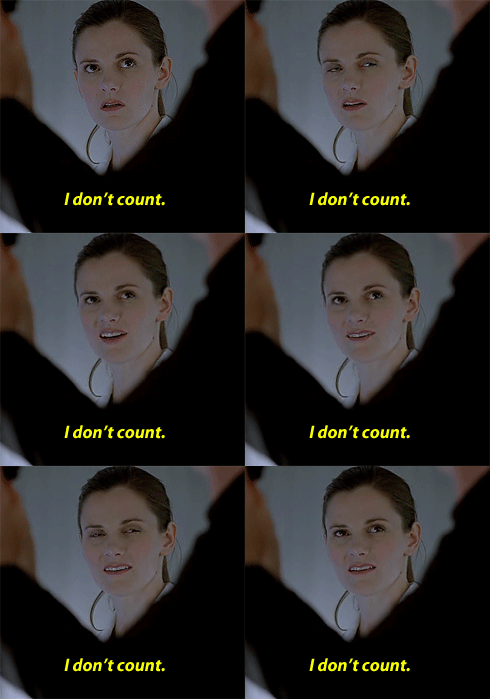
Molly Hooper who didn’t count. Who didn’t have a sniper trained on her because Jim Moriarty didn’t even think that she would count. In A Study in Pink our first cue to notice Sherlock’s eccentricity was through his complete obliviousness when it came to Molly, who was practically invisible to him unless he needed to coax her into letting him in the morgue or use some of the equipment at St. Bart’s.

Molly, who time and time again, went out of her way to help Sherlock with whatever he needed, with unwavering admiration and tolerance despite his very palpable inability to sense when others actually care about him (well, people other than John).

And here it must have been difficult, to be one of the only few people to know that Sherlock Holmes — fraud or not — is still alive, but to let him be dead to the world, because that’s what he asks from her. Dead to the world and, more importantly, dead to the ones who needed him, and were hurting from the loss.

And Molly knows but she won’t say a thing, because Sherlock needs her not to, and she’ll do anything for him.

TL;DR, crying a Reichenbach for my strong, brave lady


How Christmas at the morgue is a mega game changer in terms of how Sherlock percieves Molly 
 (Sherlock meta by bloodysigils, mae-jones and sweet-sweet-escape)


bloodysigils:

I think that the Christmas party in ASIB is a mega game changer in terms of how Sherlock percieves Molly. I think once he full on realises that she likes him, and that may in part cause some of her awkwardness, his view of her kind of changes? He starts to see Molly the person rather than Molly the morgue and lab tech who gives him body parts and kind of annoys him a bit. I mean, just here, this bit where she she says that everyone else was busy with Christmas and he realises that that means that she’s actually alone at Christmas and really has nothing else better to do. And in some ways that’s a lot like Sherlock was before John arrived. And this is before the ‘I don’t count’ scene and that in itself is just… wow. I mean to hear from someone that they don’t think that they count / are worthy to you is in itself shocking, but I do think that Sherlock holds her in quite high regard and the searching sort of look that he gives her after she says that is like a ‘you really think that lowly of yourself?’. I think that that’s why Sherlock goes to her for help just before the roof scene because he knows that with Molly he can trust her implicitly, and that not only does he need someone after it, but that maybe she could do with a friend too and just ugh these two, they make my heart bleed.

mae-jones: 

You know what breaks my heart about this too? She’s still wearing the most cheerful f$%^ing Christmas sweater. She still finds joy in and celebrates the season even though it must be very hard to be without her dad/family.That’s like, the opposite of pathetic.

sweet-sweet-escape:

Sherlock: “You didn’t have to come in Molly.”

Molly: “It’s okay, everyone else was busy with,” pause, looks down uncomfortably, “Christmas.”

She means friends and family. When Molly Hooper says “I don’t count” to Sherlock, she means she doesn’t count to anyone.

My poor darling Molly. Sherlock is percieved to be alone when he’s surrounded. Molly however, Molly is truly all alone and yet she’s never bitter.


Jealous?
 (Sherlock meta by penfairy)

I need to talk about this moment.
From what I’ve seen, a lot of people don’t fully appreciate the gravity of this scene, or else they look at it with the shipping goggles on and say Sherlock’s jealous because he’s spotted Molly’s wedding ring.
But...

I need to talk about this moment.

From what I’ve seen, a lot of people don’t fully appreciate the gravity of this scene, or else they look at it with the shipping goggles on and say Sherlock’s jealous because he’s spotted Molly’s wedding ring.

But I’m almost certain we’re supposed to take this moment as an indication that Sherlock is indeed jealous of Molly Hooper’s intelligence.

Throughout this scene Sherlock hears John’s voice taunting him, saying things like “You forgot to put your collar up.” Being on bad terms with John has caused him to hear John vocalising his insecurities and pointing out his flaws. So when Molly begins to make correct deductions from just a look at this skeleton, he hears John’s voice saying “Jealous?”, which implies, “You just can’t stand anyone being cleverer than you, can you? You can’t handle the fact that Molly is smarter.” 

We’ve known for a long time that Molly is good at what she does. Even before Sherlock took any real notice of her, she was still the person he trusted most with autopsies. He used her as a lab assistant, not because he took any real pleasure in her company as he does later on, but because he knew he could rely on her expertise. He’s “always trusted” Molly, both as a person and as a professional.

And she not only lives up to his impossible standards. She excels them. He is jealous of her. He’s jealous of her anatomical knowledge, of her abilities as a pathologist, of her skill in the medical field. In his mind palace she is even the damn personification of medical knowledge.

Sherlock may be a consulting detective, but Molly is his consulting pathologist. When it comes to dead bodies, Molly Hooper is queen.

Monday, 23 January 2017


"Unsaid words"
 (Sherlock meta by lilyroseluthor, safflowersinautumn and cumberbabe-usa)


lilyroseluthor:

That look was for her. She knew about his plan. She wanted to tell him to be careful. He turned around to tell her that he was worried, indeed; but everything was going to be fine. No words needed.

safflowersinautumn:

This whole scene is really deep. Something must’ve happened inside the ambulance, something intimate and mysterious. The way they both look at each other is quite telling. It’s like he’s reassuring her that, “Don’t worry Molly, I’ll be back.” 

Before this scene, Sherlock specifically tells Molly that he’s worried about her because she seems stressed. Sherlock seldom worries. If he does, he never verbalizes it. But with Molly, he says it out loud.

It breaks my heart because I’m sure Molly is in anguish and Sherlock knows about it, but he doesn’t show anything, even when he knows that she’s worried about him. Why?

Emotional context. Sentiment is a chemical defect found in the losing side.

She’s his weakness. He cares about her. Doesn’t want any harm to befall her. He doesn’t want her to get hurt as he knows full well how dangerous Smith is.

People may say that he’s looking at his best friend, John Watson. I disagree. There is no need for Sherlock to turn around and look at John. Sherlock trusts John, he knows that John is going to follow him to the ends of the earth.

Sherlock is definitely looking at Molly. He’s looking at her like he’s afraid for his own life, for humanity, for her. Smith is the embodiment of evil. Sherlock knows, but nobody believes him.

But Molly can see through him and Sherlock knows this fact, so he’s sending her a message through the visual sense: “I’m helpless right now. You can see me. You do count. Please believe me, Molly. I need help.” 

But on the other hand, it’s like his eyes are begging (the despair and desperation is evident in them), they are trying to convey something to her like: “Do not worry about me, you are already under a lot of stress. I promise you, I’ll be fine. I won’t die.” 

It’s a huge dilemma!

As he leaves, Molly looks helplessly at him. She feels restless. It’s like she wants to say something to him, but one look from him silences her. It’s like she’s keeping a secret. It’s like she’s saying, “Goodbye”. She’s worried about him, she LOVES him. And he bloody knows! But Sherlock isn’t manipulating Molly in this scene.

It’s a mutual talk!

This scene on a whole feels so INTIMATE! They are conversing with their eyes. It’s mind-blowing on a whole new level. Don’t believe me, watch the scene again.

cumberbabe-usa:

Great observations! Particularly the one about why that look is directed at Molly more so than at John. It’s like Sherlock and Molly have their own unspoken language.

Sunday, 22 January 2017


The Holmes siblings in TFP
 (Sherlock meta by sherlolly through mizjoely)

I was chatting with @sherlolly, who is using her phone, and since this was such a good analysis/discussion of Mycroft and Eurus in The Final Problem, I volunteered to transcribe her thoughts in a post (because we all know what a pain it is to do longish posts on a phone!). 

I hurt for Mycroft in this episode. My heart [aches] for all of them, that scene [when Eurus tries to force Sherlock to shoot either John or Mycroft] was essentially Mycroft saying, I love you enough to die so that you can stay with your friend. John loved Sherlock enough to be the one to die if he thought Sherlock would live. And ultimately, Sherlock loves both of them enough that he would have taken his own life so they could live.

Mycroft has always had his own way of doing what he thought was best, which usually involves doing things that no one sees in the same way that he does.

Sherlock understood that when he told their parents that Mycroft had done his best. For Mycroft, the things he did were his best. I’m not saying that they were THE best, that’s an important distinction. I am saying that with all of his understanding, Mycroft did what he thought was best.

To which I replied: Yup, I see it. But I’ve always been ambivalent about Myke and probably always will be. But I like him way better now than I used to. 

I’m not so sure I would want to tell my parents hey, guess what, my sister and your daughter is alive, but damn, she’s a bat shit crazy murderer. Because he doesn’t process emotions the same way that regular people do, Mycroft makes most of his decisions based on his brain. And what he rationally thinks is better. It’s like when Sherlock told Molly that Jim from IT was gay. He thought that he was "saving her some time", and "wasn’t that kinder". Mycroft however, has never believed that the truth is kinder.

I don’t think either one of them are completely right or completely wrong. For all of the things he has done, Mycroft has aspects of a moral code that Sherlock never has. And Sherlock has a code that Mycroft never has. And I’m not entirely sure if Eurus could have been saved even if 5 year old Sherlock could have figured out the code. Would she have gone as far into the Cuckoo’s Nest as she did? Maybe not. But it would always have been inside her, that desire to hurt, that wanting to kill.

See, Eurus knew that she was already too far gone. But Sherlock knew how to bring her back in a way that Mycroft would not have thought of. He showed her that he had not left her, maybe he couldn’t bring her home, but he could land the plane for her in a safe place. She absolutely freaked out that Sherlock was going to kill himself because if he had killed himself, who was going to land the plane for her?

That is the difference between her and Moriarty. Moriarty just kept wanting more and more and more thrills like a junkie. She had been desperately crying out for love and salvation. When she clings to Sherlock when he finds her, at that moment she is the little girl again, the one desperate for her brother’s love. This extraordinary genius, this ruthless killer, reduced to being a terrified little girl wanting her brother to rescue her. And Sherlock’s heart hurt for her, in spite of everything that she had done and I’m sure that although he realizes he could not have saved her ultimately, he probably also has guilt. She retreated into herself because she did not want to be lost again. Then Sherlock started visiting her regularly and playing the violin, showed her that he was there, and reawakened her.


What is "the final problem"?
 (Sherlock meta by ivyblossom)

fencingwithherself:

Hello! As one of the few in my dash that actually liked TFP, and someone whose incredible analysis were my gateway to the fandom, i was wondering if you could please help me understand. With the episode as it has unfolded, what would you say "the final problem" was? Can it be like, verbalised in three or four sentences? Did it got resolved or even addressed? Because i' m lost at this point.

Ivy Blossom:

Oh, sure! The final problem can be summarized in a single word, in fact: the final problem is Sherlock.

The feat of deduction in The Final Problem is also the case at the heart of the entire show: why is Sherlock the way he is? Why does he want to be a sociopath? Why does being alone protect him? Why does he believe himself to be so unloveable, never anyone’s best friend? Why is he so obsessed with solving crimes? What made him what he is?

Sherlock himself is the final problem. And solving it helps him resolve his own internal contradictions and accept the parts of himself he has been rejecting most of his life. Solving the final problem makes Sherlock whole.


Does Sherlock have a personality disorder because of his childhood trauma?
 (Sherlock meta by mizjoely)

While chatting with @sherlolly I had a bit of an epiphany regarding Sherlock, in that he actually has a sort of personality disorder because of his childhood trauma. He now has to integrate the emotional self he truly is with the coldly logical self he imposed upon himself after Eurus killed his best friend and burned down the family house. It’s almost like he suffered from DID, and now he’s merging those two personalities into a new Sherlock Holmes. And I don’t think he could have managed it if it wasn’t for Molly Hooper and John Watson.

He told Molly in TRF that he’d ALWAYS trusted her and that she’d ALWAYS counted. I think it’s because of her that he was able to form a real emotional bond with John Watson, and because of that emotional bond, he was better able to understand and forgive his sister for her actions. Without Molly and John, Sherlock could never have brought her home (or as close to home as she’ll ever be capable of).

Of course I’m not a psychologist and have no background in psychology so I’m sure I’m way off base, but this is how it struck me today and as we all know, I’m crap at meta so we’ll just call this musings.


A delicate question about Sherlock
 (Sherlock meta by Ivy Blossom)

lovewillsaveyoursoul221b: 

I wanted to ask you a delicate question about Sherlock. It's common belief that he's virgin but Sherlock is a man of almost 40 and I believe it to be quite sad? to not have even tried sex once at that age. I'm taking for granted that he's gay, not asexual, because that would make sense. It would still work for him to reject it after having tried it and I know it's left to interpretation but it quite bothers me that many believe him not to have even kissed. What do you think of it?

Ivy Blossom: 

It’s a bit beyond common belief. It is just the truth as the story tells us, quite forcefully and repeatedly.

It is sad, I’d say, not because of the lack of sex, but because Sherlock desperately wants and needs to share some kind of intimacy but refuses to become intimate in any way with anyone. In fact he insists that not only does he not need or want love and affection, he is also completely unloveable and proceeds to behave that way to make sure it’s true. So the sad part, to me, is that Sherlock creates a situation where he cannot get what it is he actually wants, and keeps making sure of it.

For most of this story, Sherlock doesn’t want to become too attached to anyone, and he doesn’t know why. It seems he invents a reason somewhere along the way: he’s just like that, he’s a sociopath. Now, after series 4, we all know the truth. Early on he associated a deep attachment to another person with terrible horror, grief, and guilt. Much more of each than a small boy can make sense of or manage. Because of this, he knows he can’t love or be loved by another person; the consequences are too horrific. it would be a terrible, painful, destructive thing that would destroy the person he loves and tear him to shreds. Sherlock had no idea why this was true, but he knew with certainty that it was.

This revelation makes most of Sherlock’s most inconceivable actions make a lot more sense. In series 2, Sherlock and John are so close that John finally accepts that they’re a couple, albeit a very untraditional, unusual one. And that’s the point where Sherlock thinks the best thing he can do is pretend to die and not tell John. It’s a terrible thing to do; but that’s how Sherlock’s built at that point. People can’t love him, and he can’t love other people. He absolutely takes that for granted as fact, no matter how much the evidence suggests otherwise.

It’s no surprise to me that he wouldn’t have any sexual experience at all, because what good would it have done him to experiment, under those conditions? That’s like “experimenting” with bee stings when you know you’re deathly allergic to bees. It was far too dangerous, and pointless when you already know the outcome. Sherlock knew sex, intimacy, even friendship, was wrong for him, impossible for him, really. He has been avoiding any kind of intimacy since the death of his friend when he was small.

This didn’t have to be about sexuality. He could have divorced the emotional from the physical and experimented all he wanted, but this Sherlock did not do that. The references to Sherlock’s virginity underscore this repeatedly.

Is it sad? Yes, it is, it’s very sad. Not because all people should be having lots of sex, but as a marker of intimacy that he is desperately avoiding, yes, it’s sad. It’s the final problem: fortunately, with series 4, it’s solved, and Sherlock is free. Battered, bruised, and damaged for life, but free to love and be loved.


Let’s talk about Mycroft, pt1
 (Sherlock meta by earlgreytea68)

So let’s talk about Mycroft for a little while, because this episode was SUCH a great Mycroft episode. I was hopeful we would get a good Mycroft episode when he was so absent from last week’s episode, and this episode was fantastic. Poor Mycroft. No wonder he tries not to believe in attachments. Think of what he went through, as an older sibling, watching these two little ones. Mycroft says that all of Sherlock was defined by what Euros did, but all of Mycroft was, too, and I think by the end of it Sherlock is well aware of that. Like, yes, letting Euros talk to Moriarty was a stupid idea, but Mycroft has always behaved stupidly when it comes to Moriarty. I wrote my very first Sherlock fic to try to explain Mycroft’s actions at the end of “Hounds.” Mycroft never handled the Moriarty thing correctly, and Mycroft also always thought that he had things under control. This whole episode was just such classic, tragic Mycroft hubris.

He gave his little sister a Christmas gift: that’s what everyone kept saying in the episode, and it’s what Mycroft did, and it both is and isn’t his fault that the Christmas gift involved putting together two mentally unstable individual who would then play the world’s longest long game to set up this whole elaborate torture scene. Like, maybe Mycroft should have seen that coming, but I am giving even Mycroft Holmes a pass on that one. As Sherlock himself does at the end. Maybe because Sherlock does the same thing and is kind and indulgent toward Euros at the end. These siblings, with their impossible love, with their too-fierce attachments to each other. Holmes killing Holmes, Moriarty? It could never happen.

It makes sense that that’s where the Moriarty-Euros plan broke down. It’s what Moriarty never fully understood. He was fascinated by Sherlock Holmes’s affection for John Watson but he completely missed Sherlock Holmes’s affection for his brother. Sherlock buried it down deep enough that not even Moriarty caught that one. So we end up with Mycroft. Who, at the end—you can’t tell me he doesn’t—gets Lestrade. I still have no idea why this show had to be annoying last week, but that gorgeous little promise by Lestrade to look after Mycroft at the end? Perfection. What a lovely, wonderful end for Mycroft’s story. Let him be the one looked after for a little while. It’s what the entirety of the Mycroft part of the Scotchverse was about.

(And Mycroft even got to execute part of the adventure. His glee at getting to dress up was so cute.)


The hospital scene in TLD
 (A Sherlock meta conversation between 
consultingbeekeepers, addignisherlock, theconsultingdramaqueen, vulgarweed 

consultingbeekeepers:


Smith: I have a question for you. Why are you here?
Sherlock: You know why I’m here. 
Smith: I’d like to hear you say it. 
Sherlock: I want you to kill me.

addignisherlock:

this was one of the most heartbreaking scenes in this episode…..but then again this entire episode is heartbreaking

theconsultingdramaqueen:

Okay but can you imagine John and Lestrade listening to this recording???

addignisherlock:

I almost hope they do. Especially John. Because I think hearing this will really remind them that Sherlock is still just human like everyone else. They seem to easily dehumanize Sherlock and see him as just an addict, or a cock, or a liar, or whatever. That they sometimes forget that Sherlock is human with fears and feelings too. So yeah I hope if John does listen to it, that John would realize how human Sherlock is. And I hope John won’t dismiss it simply as “it’s Sherlock. He’s a good liar”

vulgarweed:

What I get when I watch this scene is that it’s a MAJOR turning point for Sherlock.

As long as we’ve known him, he’s always been reckless with his own life. He’s willingly put himself at fatal risk so many times - yes, sometimes for love but also sometimes just a solve the puzzle, as we see in the ASiP.

His revelation here, and the moment when he breaks, is when he sees his own death in intimate terms, slow moving and close up, cruel and ugly and enjoying his terror and pain, with no redeeming motive of sacrifice just joy in destruction, demanding his attention and not allowing him to deflect or dissociate or intellectualize.

Sherlock breaks because he finally realizes that he is not ready for his life to end. It’s not even about John or Mycroft or anyone else close to him. It’s him realizing that death is the END, and he is not ready to end. He’s been suicidal and flirted with death for so long that he ceased to take death seriously. Now that he must, he knows for sure that he DOES NOT want it.

Sherlock does not want to die. And now even Sherlock knows this. 

I hope that in TFP, we’ll see Sherlock eager and willing to fight for his own life. Because he knows now that he’s important to himself. (As well as yet another belated realization once again of the fact that he’s no help to his loved ones if he’s dead, but that’s secondary.)

astudyinsavage:

If you were dying, if you’d been murdered, in your very last few seconds, what would you say? Please, God, let me live.


Let's talk about Mycroft, pt2
 (Sherlock meta by earlgreytea68)

And let’s, while we’re talking about Mycroft, also talk a little bit more directly about his relationship with Sherlock. Because OH MY GOD. The relationship we get to see between Mycroft and Sherlock in this episode is seriously like everything out of my wildest dreams. I’ve written Mycroft trying to get Sherlock to understand that Sherlock is his greatest weakness, and I just think it’s so *true.* We see here Mycroft as the beloved older brother, getting a hug from Sherlock, and the way Mycroft smiles at the home video so fondly. And what we learn—and what Sherlock learns—is that the entire stiff annoying difficulty in Mycroft’s relationship with Sherlock was never really Mycroft’s fault. Mycroft was just trying, so hard, for so many years, to pick up the pieces of the lives of these younger siblings he loved.

And really, he must have been feeling like he was doing a terrible job of it. There was Euros, which was a disaster, and then there was Sherlock, his drug addict little brother who he had to keep saving from overdoses, and who was so resistant to all of Mycroft’s well-intentioned but terribly heavy-handed efforts. And there he is, watching Sherlock try to manage his own emotional attachments, Sherlock who was such an emotional child, and is it any wonder that Mycroft, watching Sherlock literally rewrite memories, decided the best path to take with the adult Sherlock was to try to nudge him away from loving that fiercely ever again?

And then of course Mycroft tries to sacrifice himself in favor of John Watson. Mycroft recognizing how much his brother needs John, how Mycroft must be the one to go, and then trying to be *kind* about it. And Sherlock actually *recognizing* that Mycroft was trying to be kind. That was such a wonderful scene. And I loved that John had a similar reaction, recognizing the importance of *Mycroft* to Sherlock.

It was part of the gift of this episode: getting to see Sherlock and Mycroft actually liking each other. Sherlock can’t kill Mycroft. The whole conversation about Mycroft’s portrayal of Lady Bracknell was just lovely. And Sherlock explicitly stating that Mycroft did his best. And asking after Mycroft when they all end up separated. So good.


Their only real adult conversation
 (Sherlock meta by brassholio and enigmaticpenguinofdeath)


brassholio: I can't help but feel sad watching TLD again knowing that this is really the only time that Sherlock has had a decent adult conversation with his little sister. That aside, I feel horrible for Mycroft after TFP. He's basically been pressured with keeping his family safe (not just his siblings but his mum and dad) since he was a teenager. He's done his best to spare the family grief, yet when it actually comes to light they seem to blame him for everything. Poor bloke.

enigmaticpenguinofdeath: The Sherlock-”Faith” scenes in retrospect can all mean so much more; I definitely need to have a rewatch of that. I saw a comment about the scars on her arm he deduced were there - so that was from her childhood experiments? And what she said about him being nicer than anyone; when she’s only really spoken to professionals (and Jim, and Mycroft?) as an adult. Lots of layers to unpick there.

Mycroft’s being cruel to be kind ishoos came back to bite him in a big way. And I want to roll around in all the feels that induces.


Sherlock S4 is about family (predictions after TST)
 (Sherlock meta by stephisanerd)

image

In this scene, Sherlock and Karim are playing a game called Happy Families where the goal is to collect complete families. It’s played exactly like Go Fish, which many of you might be more familiar with.

Sherlock: Mr. Baker [the father]. Well, that completes the set
Karim: No, it is not.
Sherlock: Well, who else am I missing?
Karim: Master Bun, [the son] it’s not a set without him. How many more times, Mr. Sherlock?
Sherlock: Maybe it’s because I’m not familiar with the concept. 
… 
Karim: What concept? 
Sherlock: Happy families. 

It occurs to me–when have the games characters have played on this show and the things they have said while playing them/about them ever not been about the themes and plot?

(Never. The answer is never.)

Here’s how Mary talked about AGRA and what they were to her:

Sherlock: Mary, I’m sorry to tell you this, but he wants you dead.
Mary: Sorry, no, no, because we…we were family. 
Sherlock: Families fall out.

We know the fate of that family, just like we now know the fate of the supposedly happy Watson family, but we also know the unhappiness and conflict that lay just beneath the surface.

image

I think this series is all about families and what it means to be one– both the ones that people are born into and the ones they chose for themselves. It’s about the things below the surface– the things that make families and the things that unmake them, as well as the things they can withstand. It’s about the things people do to and for families and how families make people who they are, how they can destroy and hurt people and how they can save them.


Sherlock cares about his clients
 (Sherlock meta by thecutteralicia)


This is a completely underrated scene.

For those who allege that Sherlock doesn’t care about his clients, look at that third gif. There’s real sadness and compassion there. During this scene, Henry is actively suicidal and keeps putting a gun in his mouth, but it’s Sherlock - not John, the soldier and doctor - who talks Henry down.

“Someone needed to keep you quiet; needed to keep you as a child to reassert the dream that you’d both clung on to, because you had started to remember…You couldn’t cope. You were just a child, so you rationalized it into something very different. But then you started to remember, so you had to be stopped; driven out of your mind so that no one would believe a word that you said.”

Does Sherlock only care about the mysteries? At this point in the episode, he already had the solution. He knew the workings behind H.O.U.N.D. and the poisonous gas. He could have left. But he wanted to make Henry understand, to alleviate some of the grief he’d carried since his father’s death. Sherlock even forces Henry to look at the dead dog to drive the point home. “You couldn’t cope. You were just a child.“ 

It’s a remarkable display of empathy on Sherlock’s part.

I had to go back and find and reblog this meta from four years ago because it’s taken on new poignancy in light of The Final Problem. Now we know that Sherlock, too, had conjured a hound of his own.