Showing posts with label sherlockcharacteranalysis. Show all posts

Thursday, 12 January 2017


Will the Real John Watson Please Stand-Up
 (Sherlock Meta about fan fiction by sherlockcharacteranalysis)


So, when I first started reading Sherlock fanfiction, I tried to pinpoint, for every one I read, what exactly about it made it work or not work for me. For me, ultimately, it always came down to the characters. If the characters felt real and fundamentally true to their BBC originals, then I liked the work, even if the plot was a bit jumbled at times.

What I’ve noticed also, over the many fanfictions I have since read, is that John Watson is a much more difficult character to write than Sherlock Holmes. Almost any fic I consider decent as a whole seems to have a pretty good characterization of Sherlock, but I’ve read works that I would consider really well written that doesn’t seem to get John completely right.

I think this happens for two reasons: 1. Sherlock’s personality allows for more interpretations than John’s does and 2. John’s personality is deceptively simple when actually it is as complex and multi-faceted as Sherlock’s.

Sherlock’s personality is loud, and the contradictions inherent in them are out bright and clear in the open. He’s ridiculously confident of his abilities and yet at the same time strangely susceptible to others’ admiration and praise. He claims not to care for people, yet risks his life over and over in service of the greater good, whatever his reasons. He shows kindness when you wouldn’t expect him to, callousness at the most inopportune moments, and from time to time, fierce love for those around him. He’s an enigma, and any writer knows that they have to find a coherent way to reconcile these aspects of his personality in order to do his character justice.

However, with Sherlock, there’s often a great disconnect between what he shows and what’s going on in his head (it’s in fact the source of all the seemingly paradoxical aspects of his personality). What he shows only indirectly conveys what he means. The enigmatic aspect of Sherlock gives the writer a great deal of creativity to fill in that mysterious inner world with whatever they see fit. Sherlock’s character requires that we make up our own interpretations of who he is.

John, on the other hand, is a much more straightforward person than Sherlock in that his actions much more directly convey what he thinks, feels, and believes on the inside. Therefore, the writer cannot stray as far from what we are literally shown about John on the show. Sherlock is a character with many solutions, but with John I think there are at most only a few. Moreover, John is a quieter person than Sherlock, and he doesn’t have the same degree of eccentricities that are just screaming for an explanation. So it’s much easier to overlook important aspects of his personality and end up with a John Watson which, though makes sense as a whole and resembles the original in some way, is missing some crucial aspect of the character.

John Watson is both a doctor and a soldier, which says loads about his personality. He’s both a caregiver and a protector; they both have equal weight in his personality, and mischaracterization of John often happens when one of these aspects is given a disproportionate significance compared to the other. I’m thinking of too-nice John or conversely, too-violent/angry John.

The other important thing about John Watson is that he is the most important person to Sherlock.  Sherlock loves and respects John more than anyone else in his life (including, I’m almost certain, himself), and it’s crucial that any characterization of John be able to show us why. Why has John Watson, and no one else, captured Sherlock Holmes’ heart? I’ve read many John Watson’s who, while interesting characters in their own right, doesn’t seem like the kind of person that Sherlock would love and let himself be influenced by.

To me anyway, the reason John is so special to Sherlock is twofold. One, John admires and appreciates Sherlock’s intellectual abilities for their own sake, not just for the practical results they deliver. (As did Moriarty and Irene, both of who captured Sherlock’s interest.) This means, by the way, that John needs to be pretty intelligent himself, even if he’s not a creative genius. Secondly, and most importantly, John believes in Sherlock in a way that no one else does: he believes that Sherlock Holmes is a good person (or even more:”the best man and the most human, human being I have ever known”), not just potentially (as Lestrade does), but as he is already. He treats Sherlock as just another person with both virtues and flaws, emotions and desires, and the ability to decide for himself what’s best for his own existence.

John loves and accepts Sherlock as he is, and John believes that Sherlock is someone amazing and good and capable of being understood, which I don’t think anyone else does. Even the others who love Sherlock, like Mycroft, Lestrade, Mrs. Hudson, and Molly, probably would like to change some aspect of Sherlock’s personality and/or don’t consider him fully understandable.  Moreover, Sherlock Holmes also believes that John Watson is a Good Person. John retains his composure under the heaviest of pressures and always, always, always tries to do the right thing according to his beliefs. This is something that I think Sherlock actually aspires to himself; he’s just far less clear as to what those beliefs are which leads to huge errors in judgment like risking his life to play the pill game with the cabbie. So the fact that John does this all the time would definitely be extremely admirable to Sherlock, even if he rarely says so. And so, for this Very Good Person to love Sherlock completely unconditionally the way that he does is beyond priceless to Sherlock (or anyone, surely).

So, any characterization of John which goes against this fundamental relationship between Sherlock and John just screams WRONG to me. I’m thinking of any story where John tries to terminate his relationship with Sherlock, or where he won’t forgive Sherlock for Reichenbach or Baskerville or even worse, because Sherlock didn’t act in some conventionally expected way. Especially baffling are the ones where John chooses Mycroft over Sherlock, or becomes some kind of assassin/vengeful killer. The whole point of John Watson is that he is an unassailable moral anchor for Sherlock. A John Watson who would admire Mycroft’s Machiavellian personality or be driven to obviously immoral acts of violence would not have earned Sherlock’s love and would most definitely not have inspired the positive changes in Sherlock that we saw on the show. I doubt such a John Watson would even be capable of committing to and loving Sherlock the way that he so obviously does.

Anyway, with all that aside, here are a list of fanfictions that I think really highlight John Watson’s character. (There are definitely others with good characterizations out there as well—basically any fanfiction I’ve recommended does unless I mention otherwise, but these really stood out to me):

Only Intelligent by Basser

Here, John is an amazing human being who will do anything to help Sherlock, but he also doesn’t put up with Sherlock’s enormous amount of bullshit. That’s John Watson in a nutshell.

To Light Another’s Path by Beautiful Fiction

Here, John is even better than how he is on the show, displaying an emotional understanding of Sherlock that I don’t think he currently has but will easily get to after some more time with the mad detective.

Sympathy for the Devil and Mycroft Holmes by scifigrl47

I love John in this, even though I think John on show definitely does not have this level of astuteness. Like above though, I can definitely see him getting there after some more time dealing with the Holmes brothers. (John was already way more astute about Mycroft’s schemes in Reichenbach than he was in The Great Game, for example.) Yet the idealized version here makes it extremely clear all that is good and admirable about John Watson.

(And here’s hoping I won’t make the same characterization mistakes in my own writing!)

Tuesday, 23 September 2014


Growing Pains: John and Sherlock in The Blind Banker
 (Sherlock Meta by sherlockcharacteranalysis)

marryxmasmollyhooper: Hello! I just discovered your blog, and while I do Ship Johnlock, I think your analyses are spot on. One question, though, could you specify what behavior of John's in The Blind Banker would have made Sherlock insecure/defensive about their relationship? Was there anything more than the "colleague" correction? Thanks!

sherlockcharacteranalysis: Thank you for this question! (I’m assuming it must be about this post.) I’ve actually wanted to do an analysis of how The Blind Banker portrays John and Sherlock’s friendship for awhile now, and this is just the motivation I need.

The Blind Banker starts with both Sherlock and John coming off the honeymoon period in A Study in Pink, and then the episode is basically a series of growing pains that they overcome to reach a better understanding of each other.


(Go to the bolded part at the end if you want a short, not-so-detailed answer, because this is a bit long.)

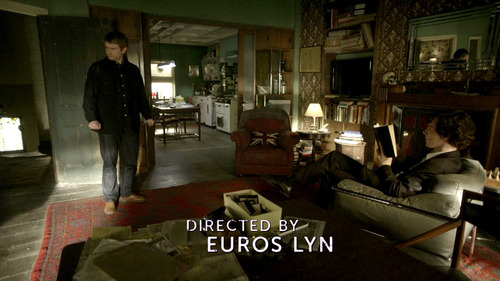
At the beginning, after the row with the self-checkout, John comes home irritated and assumes the worst conclusion from what he sees i.e. that Sherlock sat around doing nothing all day, when we know otherwise. This is the opposite of A Study in Pink when John always gave Sherlock the benefit of the doubt or just straight up assumed the best of him even in the face of overwhelming evidence (like the drug bust). Here, he has almost no evidence and just assumes the worst (wrongly), just like everyone else.

Instead of getting irritated though, Sherlock decides to be magnanimous and sends John off with his credit card, because John is his friend and friends help each other, right? John comes back and is still irritated though, says he needs a job, asks Sherlock if he can borrow money. Sherlock ignores him, goes off to meet Sebastian instead, John in tow.

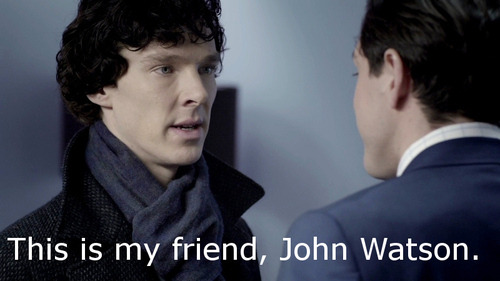
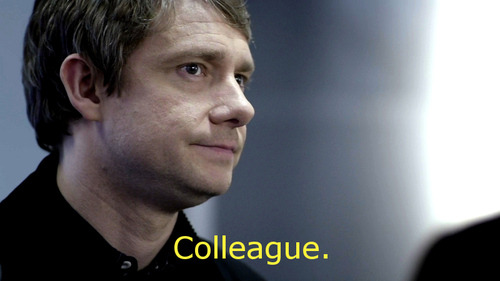
By the time Sherlock introduces John as his “friend,” John is pretty tiffed. In John’s world, a friend is someone who doesn’t just let you struggle up the stairs yourself with all the shopping, and most definitely would not ignore you when you’re in financial straits. At the moment, John doesn’t really feel like Sherlock considers him a friend, he’s more like some kind of live-in help…so “colleague,” he corrects. Now, I don’t think John said that entirely out of frustration; there’s also the fact that Sherlock introduced him as a colleague in A Study in Pink, not to mention that a “colleague” is connected to The Work, which Sherlock values, where as a friend is connected to human relationships, which are “dull”. That being said, I think if he had been less frustrated, he might have just let it go.


Now, however, from Sherlock’s POV the events are completely different:

First, as indicated above, Sherlock is actually trying to be nice this whole time. He doesn’t correct John, he tries to lighten the mood, he gives John his credit card. John comes back; he obviously doesn’t need help with the shopping. He’s a strong man, and look he even said he doesn’t need help. Hmm, but John is still irritated. Now he’s fussing about the bills. Dull. Besides, isn’t that suppose to be John’s strong point? Practical stuff like that? Why is he talking to Sherlock about it? Now he’s asking to borrow money. Sherlock just gave him his own credit card; what more can he need?

At this moment Sherlock decides to go to the bank and help Sebastian, something he had been ambivalent about before. Why? I think he actually does this for John. John likes the excitement of cases; it lets him escape the dull drudgery of ordinary life which is what weighs him down. Sherlock decides then that this case will cheer John up, just like it did before. Too bad John doesn’t understand any of this and Sherlock doesn’t think to explain at all, because to him it’s just obvious.

So he goes to the bank to help Sebastian whom he despises just for John, because he cares about John who is his friend, even introduces him properly as such…and then John goes and throws it back in his face. John considers himself a “colleague,” you know like Lestrade and everyone else down at the yard who thinks Sherlock’s a freak and not anyone to be admired or even respected. Sherlock had thought John was different, but now he’s wondering if maybe he’s not. Then to make matters worse, when Sebastian makes fun of him, John smiles right along. (In John’s defense, I think he thought Sebastian was just joking around, like old college mates do, and doesn’t notice how hurt Sherlock looks in that scene.)


When you look at it that way, it’s hard not to imagine Sherlock feeling extremely hurt and insecure about his whatever with John from then on. And I think not coincidentally, the next two places they go investigate, Sherlock intentionally shuts John out. (Or, very intentionally doesn’t let him in.)

The thing is, however he introduced him to The Yard, Sherlock hasn’t really been bringing John as a colleague. He’s been bringing John to cases as a friend; it’s “two people who like each other going out to have fun.”  Although eventually Sherlock starts to realize that John is actually quite crucial to the his work as well, I think this is always the primary motivation for Sherlock bringing John along. At any rate, at this point, he still thinks he’s been bringing John along mainly for John’s own sake: he took John to see the pink woman because John was frustrated about staying behind, to chase the cabbie to cure John’s limp, and now to the bank to distract John from his mundane worries.

So at this moment, I imagine Sherlock thinking (if subconsciously) something like this: “colleague? Do you really think I need you for my work John? You think that’s why I bring you along? Well that’s not why; let me show you.” Annnnnnnnd he leaves John locked outside Eddie van Coon’s flat.

Eventually Sherlock does let John in (dead body, would be good for John to check), but then John refuses to help out. Then he inadvertently betrays Sherlock again by  siding with D.I. Dimmock’s (wrong) theory over Sherlock’s.


Sherlock then retaliates by leaving John to fend for himself when the cops show up behind the museum and accuse John of vandalism, and then again outside of Soo Lin Yao’s flat. Except this time the assassin jumps Sherlock and his life is threatened…oh shit, maybe he does need John after all. (Not to mention that it was John who figured out that Van Coon and Lukis went to the Lucky Cat, which is where I think Sherlock gets the idea to “train” John on The Bruce Partington Plans case in The Great Game.)

After that Sherlock finally admits that having John along benefits him as well, so he decides to bring him along from now on if only for physical safety purposes…only to have John reject his offer because of his date with Sarah. So from Sherlock’s point-of-view this is three acts of betrayal by John already in this episode. (Now, John only does this because he feels like Sherlock doesn’t really need him, and Sherlock doesn’t tell John that he wants him along because it might be dangerous. Otherwise I have no doubt that John would have cancelled the date to go protect Sherlock.)

Still, Sherlock manages manipulate John into coming along anyway, and by the end of the episode John (and Sarah!) comes through for Sherlock, saving him TWICE.

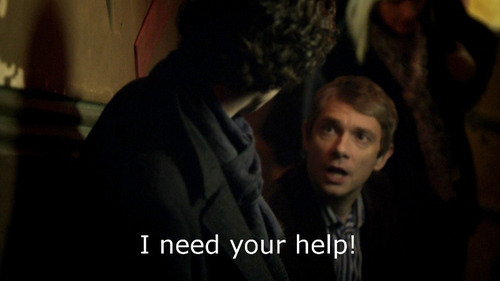
Basically, in A Study in Pink, John makes Sherlock feel accepted, and Sherlock makes John feel useful, which was what they both craved and needed, hence their almost immediate friendship. In The Blind Banker though, they do the complete opposite to each other: Sherlock makes John feel useless by leaving him in the dark/locked out of the crime scenes, and John makes Sherlock feel rejected with the “colleague” comment, and then by siding with all the “normal people” (Sebastian, Dimmock, and Sarah) instead of Sherlock. However, they’re able to reverse this: after saving his life a couple of times again, John realizes that he is actually necessary to Sherlock, and Sherlock even says “I need your help” at the circus. Meanwhile, John slowly realizes that Sherlock is right and eventually sides with him against both Sebastian and Dimmock (and he breaks-up with Sarah in the long run). Then of course by saving Sherlock again despite his own life being in danger, he shows that he does actually care quite a bit about Sherlock.


But I think after this Sherlock becomes a bit wary and questions John’s unconditional acceptance of him which he had assumed after the events in A Study in Pink, and it’s not until John offers to die for him at the pool that Sherlock is sure of it again.

Sherlock really, really, really likes John by the end of A Study in Pink; I might even argue that he’s already in-love with John by this point, even if he doesn’t acknowledge it. By the end of The Blind Banker though, he’s not sure if John loves him back or if he’s protecting Sherlock out of some sense of obligation/duty. Then at the pool, Sherlock realizes that even if it’s not love, it’s goddamn close enough.

The thing is too though, that I’m not sure if John himself knows either why exactly he’s with Sherlock, whether it’s out of gratefulness or love or what, because Sherlock just doesn’t fit any of John’s notions about those things. It’s very likely that John discovers that he does indeed love Sherlock at about the same moment Sherlock does, when both of their lives are seriously threatened.


Their Beautiful Friendship Starts Here
 (Sherlock Meta by sherlockcharacteranalysis)


(It’s been awhile since I’ve posted anything of my own. I am currently working on a few of the more “official” entries, but they take a lot of time to write and I’ve been rather busy in my offline life recently. In the meantime though, I thought I’d post a few short scene analysis. Might help me with the main posts as well.)

This is absolutely one of my favorite scenes in the series. (Actually, the whole lead up to this is wonderful in general.) I see this as the moment when Sherlock and John become friends, when they first become aware of the each other’s potential.

Up until now they’ve both been intrigued by the other, but it’s not until this scene that they finally understand just what the other person is capable of. When John first meets Sherlock in the lab, he’s astounded by how much Sherlock knows about him. Sherlock rattles basically every salient fact about John’s recent past (which, as an ISFJ, is what John would most strongly identify with). Sherlock even points things out that John would have thought were only known to himself, such as the fact that Harry leaving her wife bothers him more than her alcoholism (loyalty is tantamount to John, after all), or the fact that his limp is psychosomatic.

In fact, Sherlock seems to know things about John that even John doesn’t know, despite the fact that John would consider himself a pretty self-aware person. For right now thanks to Sherlock, John is sitting in a cab going to a crime scene and thrilled about it (despite himself), even though it probably would have never occurred to him that this was something he wanted to do. To John, it seems like Sherlock has seen him for who he really is.

However, John didn’t know how Sherlock knows these facts. Here, he finds out. It’s through logic, something that John deeply respects (he is a doctor). It’s what John also uses to understand himself and the world (not that he ever knew it could be used like this!) As a man of honesty and integrity, John care more about how Sherlock came about his information than the fact that Sherlock knows the information itself. Had Sherlock gotten his information through illicit means, such as spying, I doubt John would have been so full of admiration.

(Which is why, by the way, I almost always find fanfiction where John becomes emotionally invested in Mycroft rather unbelievable. It’s not just Sherlock’s intelligence that John admires, but his particular kind of intelligence. John does not and would not respect the kind of sinister manipulations that Mycroft thrives on.)

Meanwhile, Sherlock himself is also impressed by John. Up to this point, he’s already been impressed by John’s composure. Not once during the scene at Bart’s does John appear unsettled by Sherlock’s deductions the way that I’m pretty sure almost everyone else does. (By the time John looks uncomfortable, Sherlock has already left the room.) Here, John finally reacts, and Sherlock is surprised not by John being impressed so much as what John is impressed about.

Whereas most people are impressed (positively or negatively) by the results of Sherlock’s deductions, John seems completely unaffected by them and is instead  impressed by the process itself. What John Watson admires is the elegant tying-together of seemingly disparate facts through logical connections. That is what surprises Sherlock, that here is someone who, though maybe not as clever as himself, also shares the same appreciation for the beauty of logical analysis of everyday facts. Here is someone who can love what I love, with whom I can share with what I love, he realizes. That is an amazing discovery to make about someone else, for anyone.

In that moment, Sherlock lets his guard down. Up to this point, he was always playing  the role of the aloof, mysterious, somewhat mad and possibly dangerous genius; but when he asks “you think so?” it is Sherlock the actual person who is talking. In that brief moment he shows his vulnerability to John. I don’t think Sherlock realizes the full emotional implications of what he says after that moment either, when he tells John that most people just tell him to piss-off. Sherlock basically just told John that John “gets him” in a way that other people don’t.That John is special.

But John gets it, so he turns and grins. He’s over the moon by this point. Just yesterday, John was feeling useless and hopeless, and suddenly this person unlike anyone he’s ever known before turns up and completely transforms his previously-dull world.John didn’t know what to do with himself, and while other people had ideas for him, he didn’t trust any of them because John felt like they didn’t understand him or he didn’t trust their methods. However, Sherlock seems to completely understand John and uses methods that John highly respects, so John can trust him. Decides to, actually in this moment, trust him, even if Sherlock’s ideas for John’s future seem completely crazy.

On top of all this, this extraordinary person more or less just told John that John also understands him like no one else does. So in one day John has gained a new life, a new view on the world, and a new friend. No wonder he’s grinning like mad. In that moment in the cab, John catches a glimpse of the future, a glimmer of hope of something new, of exciting possibilities in his life where none had seemed to exist before.

As for Sherlock, for a brief moment, he finally feels a genuine connection to another person, something he’s longed for so long that he’s completely given up hope. He tries to tamp his feelings back down, stuff it back into his aloof shell, but you can see it in the traces of his own grin that he’s trying hard to not show.

Here, in the cab, both Sherlock and John realize that they have found someone special. Someone who understands them in a way that other’s don’t, in a way that they had long yearned to be understood. While it takes a few more incidents to cement their commitment to each other, it is here that it begins. Their beautiful friendship starts here.


They’re Both (Platonically) In-Love
 (Sherlock Meta from before S3 by sherli-holmes and sherlockcharacteranalysis)

sherli-holmes:


“I imagine John Watson thinks love’s a mystery to me, but the chemistry is incredibly simple and very destructive”

I always wanted to know the canon behind that line: Sherlock says it to Irene, with Mycroft in the room. And you wonder: Mycroft’s the one who accused him of knowing nothing of sex: wouldn’t it make more sense to direct that comment at him? But Sherlock doesn’t say “I imagine my brother thinks love’s a mystery to me.”
He says John Watson. As if there’s a need to clarify that. Moreover, he says John Watson to the woman who told John that he was in a relationship with Sherlock Holmes. 
My headcanon: John’s the one in love. And Sherlock’s deduced that after listening in on John and Irene’s meeting.  But, for some reason, John never says anything. And Sherlock assumes it’s because he doesn’t want it known or doesn’t want a relationship and so he’s a bit resentful of sentiment overall that evening. 

Interesting. Steven Moffat also thinks it’s John who’s in love with Sherlock.
(Btw, just in case I need to clarify, you can be in love with all sorts of things…a subject, a piece of art, a show *cough cough cough*, even your friends as friends.)
Their relationship is definitely complicated, like any friendship that’s actually based on love and not companionship. I think in a lot of ways, it’s actually much harder to have an emotionally intense friendship in our society than it was in the Victorian era, especially between two men. People automatically assume that it’s romantic/sexual, as we see in the show.
I actually think they’re both in love with each other, but Sherlock is the one who is more aware of it. Sherlock has a weakness for people who admires his intelligence, who seem to like him for him. (Well, given how lonely he must be, this is not surprising.) He admires John as well, so he gets attached to him really quickly. He basically spends almost all of Study in Pink trying to impress John; it’s Sherlock who takes most of the initiative early on in their friendship. However, I think John’s behavior in Blind Banker made him insecure/defensive so he pulls away a bit until the pool scene at The Great Game, when he’s slapped in the face with both how much John means to him, but also how much he means to John. (It’s funny that on John’s blog he credits Sherlock’s “humanization” to Irene Adler (it’s near the end), when I think it’s much more likely to be John’s influence.) 
As for Sherlock’s last speech to Irene, I actually think what he means is that he knows John Watson thinks Sherlock doesn’t understand love, and therefore didn’t know that he was falling for Irene. But Sherlock did know, even if he couldn’t seem to control it, and it did prove to be very destructive to him. And yes, perhaps part of it is also frustration that John doesn’t seem to realize that Sherlock knows that John loves him, and also loves John in return. There is nothing conventional about Sherlock, and so many of things he does to express his love is imperceptible to John (though the two of them seem to be learning a bit of compromise in that area).
The thing about John is that, even though he’s definitely not “ordinary” or “normal,” he is still overall a much more conventional person than Sherlock. Unless he has a reason to question what he thinks he knows, he doesn’t. (Whereas Sherlock won’t accept anything without adequate proof/reasoning.) And for awhile John is able to fit Sherlock into pre-existing categories: friend, flatmate, leader, and someone he owes his life to. So he’s fascinated by Sherlock; why shouldn’t he be? The man’s bloody fascinating! So he does all sorts of things for Sherlock that he wouldn’t do for an ordinary friend or flatmate. Well, but Sherlock isn’t ordinary, and John likes to help people. Plus, he owes the man his life; buying groceries (and letting Sherlock use his computer, and fetching Sherlock whatever he wants) isn’t really too much to ask. Sherlock’s kind of like John’s leader too, and orders are orders.
In the meantime, John’s still out looking for a girlfriend because that’s just what a straight man with needs does, and nothing has happened that tells John that maybe he doesn’t want a girlfriend in the same way he used to anymore. Well until all of his girlfriends breakup with him because of Sherlock, and Irene Adler shows up to make him jealous.  
In the warehouse, when John tells Irene that he’s not gay, and Irene says “well I am. And look at us both,” John doesn’t respond. I’d like to think that what Irene is trying to tell him is that sexuality is separate from love, that he can be straight and still be in love with Sherlock. As he evidently is. I think John maybe starts to actually try to figure out what his relationship with Sherlock entails after that moment. We see that John doesn’t really try to refute the inn owner’s assumptions about him and Sherlock in Hounds the way he used to. Part of it could be that he’s tired of it, but part of it could be that even though he’s still not gay, he can see that there is something between him and Sherlock that’s way beyond friendship as well.
It’ll be interesting to see how their friendship goes in season 3, especially if they bring on Mary Morstan. I think both Sherlock and John realize that they’re the most important person in each other’s lives and want it to stay that way (especially Sherlock), but Sherlock is not used to being emotionally vulnerable and John doesn’t quite know how to reconcile Sherlock with the other more conventional things that he also wants. (Or at least thinks he wants.) Back in the Victorian era, it was quite common for both men and women to have just as strong if not stronger emotional bonds with one’s same-sex friends than with one’s spouse, but in our days your spouse/romantic partner is supposed to be your best friend/most important person. So in a lot of ways, how their friendship will progress depends a great deal on John, as he is the one who is both more attached to conventionality and has greater romantic/sexual needs that Sherlock can’t/won’t fulfill. 

sherli-holmes:

“I imagine John Watson thinks love’s a mystery to me, but the chemistry is incredibly simple and very destructive”

I always wanted to know the canon behind that line: Sherlock says it to Irene, with Mycroft in the room. And you wonder: Mycroft’s the one who accused him of knowing nothing of sex: wouldn’t it make more sense to direct that comment at him? But Sherlock doesn’t say “I imagine my brother thinks love’s a mystery to me.”

He says John Watson. As if there’s a need to clarify that. Moreover, he says John Watson to the woman who told John that he was in a relationship with Sherlock Holmes.

My headcanon: John’s the one in love. And Sherlock’s deduced that after listening in on John and Irene’s meeting.  But, for some reason, John never says anything. And Sherlock assumes it’s because he doesn’t want it known or doesn’t want a relationship and so he’s a bit resentful of sentiment overall that evening.

sherlockcharacteranalysis:

Interesting. Steven Moffat also thinks it’s John who’s in love with Sherlock.

(Btw, just in case I need to clarify, you can be in love with all sorts of things…a subject, a piece of art, a show *cough cough cough*, even your friends as friends.)

Their relationship is definitely complicated, like any friendship that’s actually based on love and not companionship. I think in a lot of ways, it’s actually much harder to have an emotionally intense friendship in our society than it was in the Victorian era, especially between two men. People automatically assume that it’s romantic/sexual, as we see in the show.

I actually think they’re both in love with each other, but Sherlock is the one who is more aware of it. Sherlock has a weakness for people who admires his intelligence, who seem to like him for him. (Well, given how lonely he must be, this is not surprising.) He admires John as well, so he gets attached to him really quickly. He basically spends almost all of A Study in Pink trying to impress John; it’s Sherlock who takes most of the initiative early on in their friendship. However, I think John’s behavior in The Blind Banker made him insecure/defensive so he pulls away a bit until the pool scene at The Great Game, when he’s slapped in the face with both how much John means to him, but also how much he means to John. (It’s funny that on John’s blog he credits Sherlock’s “humanization” to Irene Adler (it’s near the end), when I think it’s much more likely to be John’s influence.)

As for Sherlock’s last speech to Irene, I actually think what he means is that he knows John Watson thinks Sherlock doesn’t understand love, and therefore didn’t know that he was falling for Irene. But Sherlock did know, even if he couldn’t seem to control it, and it did prove to be very destructive to him. And yes, perhaps part of it is also frustration that John doesn’t seem to realize that Sherlock knows that John loves him, and also loves John in return. There is nothing conventional about Sherlock, and so many of things he does to express his love is imperceptible to John (though the two of them seem to be learning a bit of compromise in that area).

The thing about John is that, even though he’s definitely not “ordinary” or “normal,” he is still overall a much more conventional person than Sherlock. Unless he has a reason to question what he thinks he knows, he doesn’t. (Whereas Sherlock won’t accept anything without adequate proof/reasoning.) And for awhile John is able to fit Sherlock into pre-existing categories: friend, flatmate, leader, and someone he owes his life to. So he’s fascinated by Sherlock; why shouldn’t he be? The man’s bloody fascinating! So he does all sorts of things for Sherlock that he wouldn’t do for an ordinary friend or flatmate. Well, but Sherlock isn’t ordinary, and John likes to help people. Plus, he owes the man his life; buying groceries (and letting Sherlock use his computer, and fetching Sherlock whatever he wants) isn’t really too much to ask. Sherlock’s kind of like John’s leader too, and orders are orders.

In the meantime, John’s still out looking for a girlfriend because that’s just what a straight man with needs does, and nothing has happened that tells John that maybe he doesn’t want a girlfriend in the same way he used to anymore. Well until all of his girlfriends break up with him because of Sherlock, and Irene Adler shows up to make him jealous.

In the warehouse, when John tells Irene that he’s not gay, and Irene says “well I am. And look at us both,” John doesn’t respond. I’d like to think that what Irene is trying to tell him is that sexuality is separate from love, that he can be straight and still be in love with Sherlock. As he evidently is. I think John maybe starts to actually try to figure out what his relationship with Sherlock entails after that moment. We see that John doesn’t really try to refute the inn owner’s assumptions about him and Sherlock in The Hounds of Baskerville the way he used to. Part of it could be that he’s tired of it, but part of it could be that even though he’s still not gay, he can see that there is something between him and Sherlock that’s way beyond friendship as well.

It’ll be interesting to see how their friendship goes in season 3, especially if they bring on Mary Morstan. I think both Sherlock and John realize that they’re the most important person in each other’s lives and want it to stay that way (especially Sherlock), but Sherlock is not used to being emotionally vulnerable and John doesn’t quite know how to reconcile Sherlock with the other more conventional things that he also wants. (Or at least thinks he wants.) Back in the Victorian era, it was quite common for both men and women to have just as strong if not stronger emotional bonds with one’s same-sex friends than with one’s spouse, but in our days your spouse/romantic partner is supposed to be your best friend/most important person. So in a lot of ways, how their friendship will progress depends a great deal on John, as he is the one who is both more attached to conventionality and has greater romantic/sexual needs that Sherlock can’t/won’t fulfill.